Commercial roof leaks are a common problem that many building owners will eventually need to address. Metal roofs and other commercial roofing systems can develop leaks over time because of aging, weathering, movement, damaged materials, failed details, or installation problems.
Where Do the Leaks Spring Up?
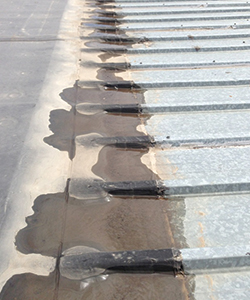
You may be wondering if there are any specific areas of a commercial roof that are more likely to develop leaks. Common locations include:
- seams
- fasteners
- gutters and drainage areas
- vents and penetrations
- air conditioning units and other rooftop equipment
- caps and terminations
- flashing
- skylights
- access hatches
These areas require proper installation, inspection, and maintenance because they often involve transitions, penetrations, fasteners, or other details where water entry can occur if materials deteriorate or become damaged.
Buildings in wet climates or areas with frequent storms may require particularly close attention to drainage, flashing, seams, and other vulnerable roof details.
What Can You Do About It?
When a commercial roof begins leaking, the first step is to determine the source and extent of the problem. Temporary measures inside the building may help control water until repairs can be made, but the underlying roof problem still needs to be addressed.
Depending on the condition of the roof, the appropriate solution may involve localized repairs, restoration, recover, or full roof replacement.
The Replacement Route
Full roof replacement may be appropriate when the existing system has extensive deterioration, widespread wet insulation, structural problems, serious drainage issues, or other conditions that cannot reasonably be corrected through repair or restoration.
Replacement can be more expensive and disruptive than other options, but in some situations it provides the most appropriate long-term solution.
The Restoration Route
When the existing roof is structurally sound and otherwise suitable for restoration, a roof coating system may provide a cost-effective alternative to complete replacement.
Before coating, the roof should be inspected for wet insulation, structural deterioration, drainage problems, damaged roofing materials, failed seams or penetrations, corrosion where applicable, and other conditions that may need to be corrected first.
A compatible coating system can provide a continuous protective surface over properly prepared roof areas and may help extend the useful life of the existing roof. Seams, penetrations, fasteners, flashing, and other leak-prone areas may require repairs or reinforcement before or during the restoration process.
A commercial roofing contractor can inspect the roof and discuss whether repair, restoration, recover, or replacement is appropriate for the conditions present.


