
Commercial roofing contractors who want to grow are always looking for ways to expand their services, improve margins, and offer building owners better long-term solutions. While single-ply roofing, coatings, repairs, and maintenance programs remain important parts of the commercial roofing industry, metal roofing systems continue to stand out as a strong growth opportunity.
In a recent industry conversation with Jeff Henry, Executive Director of the Metal Construction Association, several important points were shared about the role of metal roofing and wall systems in today’s building envelope. For contractors who already work in commercial roofing, understanding metal roofing can help open the door to new projects, better sales conversations, and stronger relationships with building owners.
The Metal Construction Association: A Valuable Resource
 The Metal Construction Association, often referred to as MCA, is a trade organization that represents manufacturers, suppliers, panel fabricators, steel mills, paint companies, and other companies involved in the architectural metal roofing and wall industry.
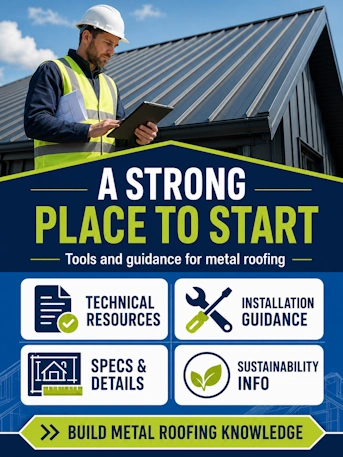
Its purpose is to promote the use of metal roofing and wall products in the building envelope. For roofing contractors, MCA offers technical resources, installation documents, specifications, environmental product declarations, and best-practice guidance related to metal roofing systems.
Many of these resources are available to the public through the MCA website. Contractors who want to better understand metal roofing, improve their technical knowledge, or begin offering metal roof systems can use these resources as a starting point.
Common Misunderstandings About Metal Roofing
One reason some contractors hesitate to offer metal roofing is that there are still common misconceptions in the marketplace. Building owners may worry that metal roofs are loud during rain, more likely to attract lightning, or too expensive compared to other roofing systems.
As Jeff addressed in the interview, these concerns are often misunderstood. A properly installed metal roof is not meaningfully different from other roof systems when it comes to noise or lightning concerns. The larger point contractors should focus on is the long-term value of metal roofing.
A quality metal roof, installed correctly, can last for the serviceable life of the building. While the initial investment may be higher in some situations, the life-cycle value can make metal roofing a smart investment for building owners who are thinking long term.
Metal Roofing Can Be a Smart Business Move
 For commercial roofing contractors, metal roofing can provide several business advantages.
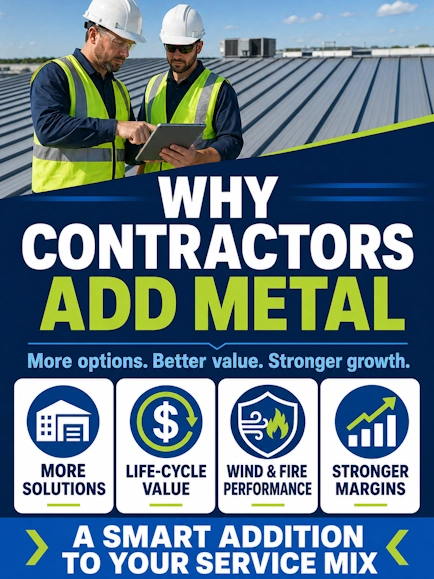
First, metal roofing gives contractors another solution to offer when a building owner needs long-term performance. Not every project is ideal for coatings, single-ply systems, or repeated repairs. In some cases, standing seam metal roofing or another metal system may provide the best long-term outcome.
Second, metal roofing often fits well with conversations around durability, sustainability, resiliency, and life-cycle value. Metal roofing is fire resistant, can perform well in demanding weather conditions, and offers strong wind performance compared to other systems. These benefits can be especially relevant for commercial properties, industrial buildings, agricultural facilities, and buildings in regions where severe weather is a concern.
Third, metal roofing can create stronger margins for contractors. Contractors who are looking to expand beyond repair or coating work may find that metal roofing adds a valuable service category to their business.
Quality Products and Proper Installation Matter
One of the most important points from the interview was that success with metal roofing depends on quality.
Contractors need to align themselves with reputable panel manufacturers that provide quality substrates, paint finishes, accessories, and support. Metal roofing is not a one-size-fits-all category. Different manufacturers have different panel systems, details, edge trims, connection methods, and specifications.
That means contractors cannot assume that installation details from one manufacturer apply to another. If a contractor is installing Manufacturer A’s panel, the details may not match Manufacturer B’s system. Understanding those differences is critical.
Proper installation is just as important as product selection. A high-quality metal roof can perform for decades, but only when it is installed correctly. Contractors who take shortcuts or fail to follow the manufacturer’s details can create problems that lead to callbacks, leaks, warranty issues, and dissatisfied customers.
On the other hand, contractors who invest the time to learn proper installation techniques can build a strong reputation in their local markets. A properly installed metal roof can lead to satisfied customers, referrals, and future project opportunities.
How to Get Started
For contractors who are new to metal roofing, the first step is education. Reviewing MCA resources, studying technical documents, and learning best practices can help build a foundation.
The next step is developing relationships with quality panel manufacturers. Contractors should look for manufacturers that provide strong technical support, clear installation guidance, and reliable products.
Training is also important. Metal roofing requires attention to detail, and crews should understand the specific system they are installing. Before promoting metal roofing heavily, contractors should be confident that their team can install the system properly or work with experienced partners who can support them.
Finally, contractors should begin improving the way they talk about metal roofing with building owners. Instead of treating metal as simply a more expensive option, contractors can explain the long-term value, durability, sustainability, and life-cycle performance of a properly installed metal roof.
Metal Roofing Is an Opportunity Worth Exploring
Commercial roofing contractors do not need to move away from the services they already offer to benefit from metal roofing. Instead, metal roofing systems can become another valuable part of the contractor’s service mix.
For contractors who are already receiving requests for standing seam metal roofing or losing projects because they cannot confidently discuss metal systems, now is the time to start learning.
With the right manufacturer relationships, technical training, and sales messaging, metal roofing can help contractors serve building owners better, improve project opportunities, and strengthen their position in the commercial roofing market.