
Roof coatings are a proven commercial roofing solution, yet many projects stall because owners hesitate at the decision point. These objections rarely mean the coating is wrong for the roof. More often, they signal uncertainty, past experiences, or confusion about what coatings can and cannot do.
Contractors who succeed with roof coatings understand that selling is less about persuasion and more about education. Objections are not roadblocks. They are openings for clarification, trust-building, and positioning yourself as a knowledgeable advisor rather than a product pusher.
This article outlines the most common objections commercial property owners raise about white roof coatings and how contractors should respond in a way that strengthens credibility and moves the conversation forward.
Objection 1: “We Tried a Coating Before and It Failed”
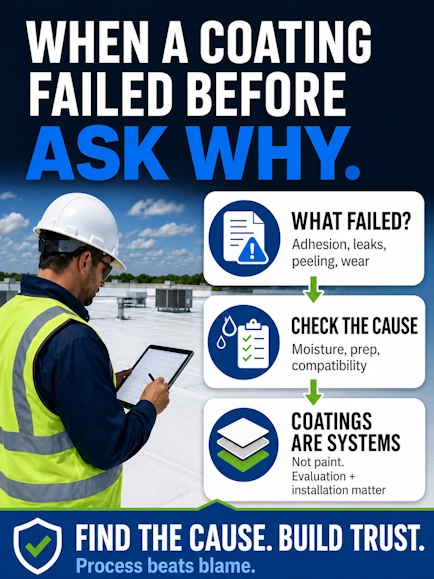 Few objections carry more weight than a bad prior experience. Contractors should never dismiss or downplay this concern. Instead, they should seek context.
Ask what failed and why. Was the failure related to adhesion, leaks, or premature wear? Was the roof inspected for moisture before application? Was surface preparation performed correctly?
In many cases, failed coatings are the result of poor prep, incompatible materials, trapped moisture, or applying coatings to roofs that should have been repaired or replaced instead. Contractors can explain that coatings are systems, not paint, and performance depends heavily on proper evaluation and installation.
This approach reframes the conversation away from blame and toward process.
Objection 2: “Energy Savings Claims Sound Exaggerated”
Commercial owners are increasingly skeptical of energy-related claims, and rightly so. Contractors should welcome this objection because it gives them an opportunity to demonstrate professionalism.
Rather than focusing solely on arbitrary savings percentages, contractors should explain the physics. White roof coatings reflect solar rays and reduce surface temperature. Lower surface temperatures can reduce heat transfer into the building, which will directly reduce HVAC strain and improve interior comfort.
You can also emphasize that energy impact depends on many factors, including insulation levels, equipment efficiency, occupancy, and climate. Position coatings as contributors to improved efficiency rather than standalone energy solutions.
Owners respond better to realistic expectations than optimistic projections. This honesty builds long-term trust.
Objection 3: “We Plan to Replace the Roof Eventually”
Free Guide: How to Switch to Commercial
Explain that roof coatings can serve as a strategic bridge. If the roof is structurally sound, a coating can protect the asset, slow deterioration, and allow the owner to plan replacement on their own schedule rather than reacting to failure.
This framing resonates strongly with portfolio managers and facility directors who need predictability. The coating is not replacing the eventual roof replacement. It is helping manage risk and cash flow until that replacement occurs.
Objection 4: “This Feels Like a Temporary Fix”
Some owners equate coatings with shortcuts. Contractors should respond by clearly defining what coatings are and what they are not.
Roof coatings are not designed to correct structural problems, saturated insulation, or failed roof systems. They are designed to extend service life when the roof is fundamentally sound.
Explain the inspection standards used to determine eligibility, including moisture detection, adhesion testing, and visual assessment. When owners understand that coatings are only recommended under specific conditions, confidence increases.
This objection is best handled by transparency. Clear limitations actually strengthen the recommendation.
Objection 5: “How Long Will It Really Last?”
Contractors join our network to receive:
- Support from Fellow Roofers
- Shared Marketing Strategies
- Group Discount Purchasing
- Assistance with Projects
Longevity questions reflect concern about value. Contractors should explain service life in terms of systems and maintenance rather than fixed timelines.
Discuss expected performance ranges based on coating type, roof conditions, and maintenance practices. Explain that periodic inspections and recoating cycles can extend performance and protect warranties.
This naturally positions coatings as part of an ongoing roof management strategy rather than a one-time transaction.
Education Is the Most Powerful Sales Tool
Roof coatings do not require aggressive selling. They require clear explanations, honest limitations, and a thorough roof assessment.
Contractors who address objections with patience and professionalism earn trust that extends far beyond a single coating project. That trust leads to maintenance contracts, future replacements, and long-term client relationships.
When education replaces pressure, roof coatings become an easy decision.