The roofing industry is undergoing a significant shift with metal roofing emerging as one of the fastest-growing segments. Insights from our latest webinar featuring Renee Ramey, the executive director of the Metal Roofing Alliance (MRA), highlight how buyer behavior and long-term trends are reshaping the landscape.
Whether you’re a contractor exploring new service offerings or a property owner researching roofing options, understanding these changes is critical.
The Rise of Metal Roofing Adoption
 Over the past 25 years, metal roofing has experienced steady and substantial growth. In the late 1990s, metal roofs accounted for only about 3% of the residential roofing market. Today, that number has climbed to nearly 18%, signaling a major shift in both awareness and demand.
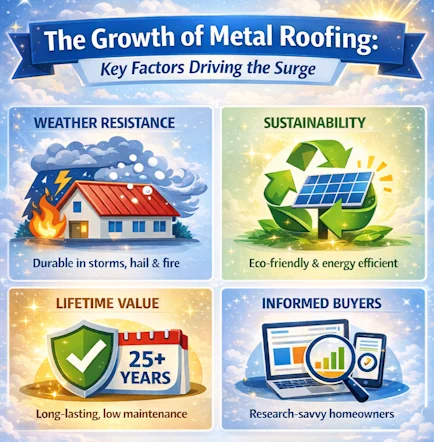
This growth is driven by several key factors:
- Increased consumer education
- Strong performance in extreme weather
- Long-term durability and lifespan
- Sustainability and recyclability
Homeowners and building owners are no longer making roofing decisions based solely on upfront cost. Instead, they are evaluating lifetime value, energy efficiency, and resilience.
Smarter, More Informed Buyers
One of the biggest changes in the roofing industry is how buyers approach decisions. Today’s roof shoppers are far more informed before ever speaking with a contractor.
With access to online research, AI tools, and educational content, buyers now:
- Understand material differences before consultations
- Ask more technical questions
- Compare long-term return on investment rather than just price
This shift creates both an opportunity and a challenge for contractors. Educated buyers are easier to sell to, but only if you can meet their expectations with accurate information.
This increased awareness is ultimately a positive trend because informed purchasers are more likely to recognize the value of metal roofing.
Why Metal Roofing Is Gaining Momentum
Performance in Severe Weather
Extreme weather events are becoming more common, including hurricanes, hailstorms, wildfires, and high-wind events.
Metal roofing consistently outperforms traditional materials in these conditions. Homeowners and building owners are noticing that properties with metal roofs often remain intact while neighboring properties suffer significant damage.
This real-world performance is one of the strongest drivers of adoption.
Sustainability and Energy Efficiency
Modern buyers, especially younger homeowners, are prioritizing sustainability. Metal roofing aligns with these values in several ways:
- Often made from recycled materials
- Fully recyclable at end of life
- Reflects solar heat, reducing cooling costs
- Ideal for solar panel installation
These benefits position metal roofing not just as a building component, but as part of a long-term energy strategy.
The “Lifetime Roof” Concept
Unlike asphalt shingles that may need replacement every 20 years or so, metal roofing is often positioned as a long-term or “lifetime” solution.
This resonates with buyers who want fewer maintenance concerns, long-term peace of mind, and predictable ownership costs.
As this concept becomes more widely understood, adoption continues to grow.
Opportunities for Roofing Contractors
The expansion of the metal roofing market is creating significant opportunities for contractors willing to adapt.
Less Competition, Higher Value Work
Unlike traditional roofing segments that may have dozens or even hundreds of competitors in a region, metal roofing typically has fewer qualified installers.
This results in:
- Higher perceived expertise
- Less price-driven competition
- Access to more premium projects
Additionally, customers seeking metal roofing tend to be more educated and value-focused, which often leads to more efficient and productive sales conversations.
Expanding Service Offerings Builds Credibility
Contractors who diversify their services, including metal roofing, gain a key advantage: credibility.
When a contractor offers only one solution, customers may question whether it is truly the best option. Offering multiple systems allows you to provide more tailored recommendations and build trust.
This is especially important in commercial roofing, where clients expect a consultative approach rather than a one-size-fits-all pitch.
Training and Entry Tips for Contractors
For contractors looking to enter the metal roofing space, preparation is essential.
Start with Product Selection
Not all metal roofing systems are the same. Contractors should:
- Research different product types
- Choose a focus area such as standing seam or metal shingles
- Align with reputable manufacturers
Each manufacturer may have unique installation methods, making product-specific knowledge critical.
Invest in Proper Training
Training is one of the most important steps to success in metal roofing. Many manufacturers and industry organizations offer:
- Installation training programs
- Certification opportunities
- Technical guides and resources
Organizations like the Metal Construction Association (MCA) and the National Roofing Contractors Association (NRCA) provide valuable education and certification pathways.
Proper training reduces costly mistakes and accelerates business growth.
Workforce Challenges and Recruitment Trends
Like many trades, roofing continues to face labor shortages. However, the industry is taking proactive steps to address this issue.
Growing Interest in Skilled Trades
Efforts to recruit younger workers are increasing through partnerships with high schools, trade programs, and community colleges. Industry awareness campaigns are also helping introduce roofing as a viable and rewarding career path.
Some initiatives even introduce roofing concepts at an early age to spark long-term interest in the trade.
High Demand for Installers
There is significant unmet demand for metal roofing installation. In many areas:
- Qualified contractors are limited
- Backlogs are long
- Customers struggle to find experienced installers
This creates a strong opportunity for contractors entering the market with proper training and positioning.
Leveraging Third-Party Education for Marketing
One of the most effective yet underutilized strategies in roofing marketing is leveraging third-party validation.
Organizations like the Metal Roofing Alliance produce:
- Educational guides
- Consumer-facing content
- Verified performance data
Contractors can use these materials to build trust with prospects, reinforce their messaging, and avoid recreating foundational content. To learn more, visit: Metal Roofing Alliance’s website.
Using established industry resources strengthens authority and improves marketing efficiency.
Final Thoughts: A Market Built on Value and Education
The roofing industry is shifting toward a more informed, value-driven marketplace. Metal roofing plays a central role in this evolution, offering durability, sustainability, and long-term performance that modern buyers demand.
For contractors, the opportunity is clear. Focus on expanding services strategically, invest in training, and leverage trusted industry resources. As demand continues to rise, those who adapt early will be best positioned to capture high-value projects and long-term growth.