A roof coating can bond well to an existing membrane while the insulation or attachment beneath it still needs repair. If the assessment stops at the surface, those problems can remain after the job is complete.
John T. Hull, president of Gulf Coast Infrared and an instructor at American Roofing Educators, addressed that concern at the 2026 Roof Coatings Manufacturers Association (RCMA) Fall Meeting in Atlanta. His session, “Before the First Gallon: How to Qualify a Roof for Successful Restoration,” explained how to investigate and determine what can remain in a roof and what needs to change.
John brought examples from his work evaluating roofs, investigating failures, and developing restoration plans. These examples revealed why a roof that looks suitable for coating may need more work than a surface inspection reveals.
Look Below the Coating Adhesion Test
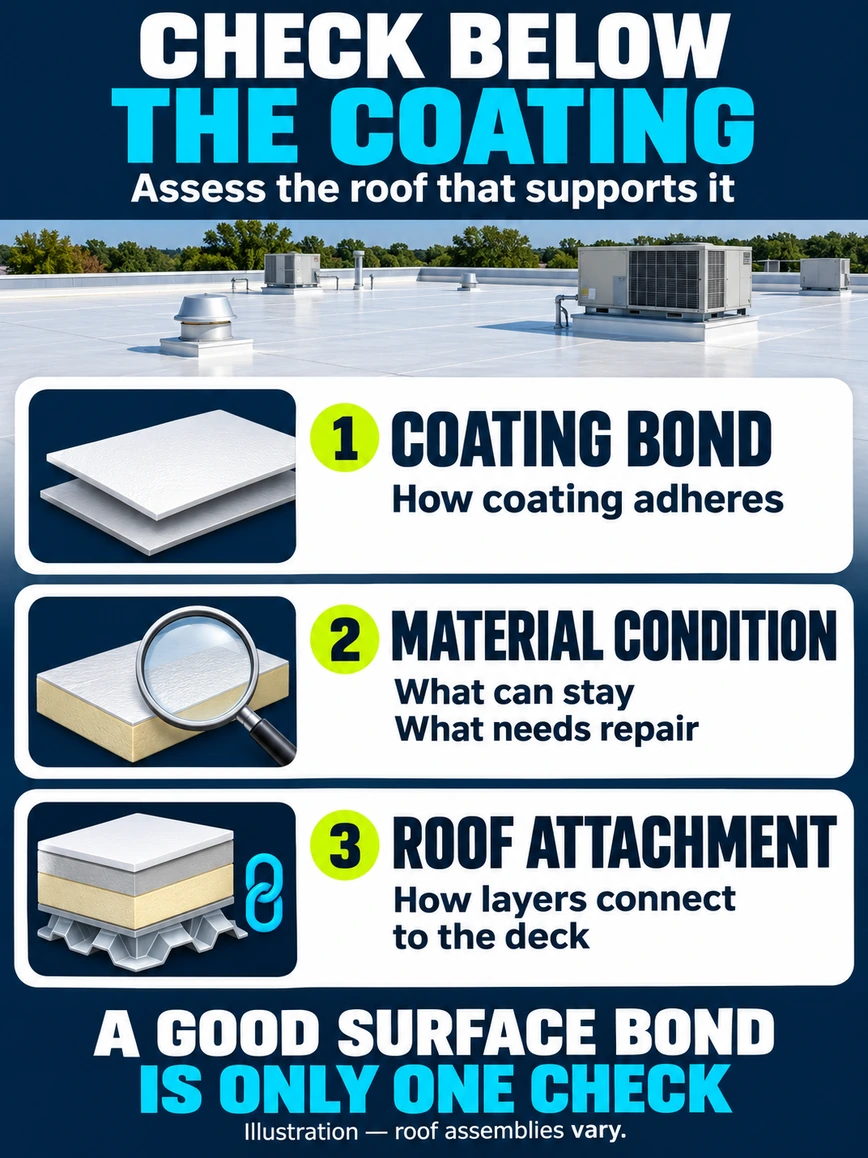 An adhesion test helps determine how a coating would bond to the prepared surface. The result needs to be considered alongside the condition of the materials supporting that surface.
John explained that a roof assembly can have several connections between the membrane and the deck. Layers may be secured with adhesives, mechanical fasteners, or a combination of both. It only makes sense that a coating test at the top does not verify every connection below it.
If an insulation facer has deteriorated or an adhesive bond between layers has failed, a well-adhered coating does not repair that weakness. The assessment needs to establish whether the existing layers are stable enough to remain a reliable part of the restored roof.
John showed examples of recently installed roofs where testing found attachment problems associated with moisture between layers. The roofs looked good, but portions of the tested assemblies did not meet the required wind-uplift performance.
Those examples also showed why roof age alone isn’t enough to determine whether restoration makes sense. A newer roof can have installation problems, while an older roof may still have sound materials worth preserving.
Where attachment is uncertain, John discussed involving specialists and using appropriate testing to better understand the assembly. The contractor and manufacturer need enough information to decide whether it can be retained, must have corrective work, or needs further investigation.
Find Out Why the Roof Is Wet
One of his examples involved a roughly five-year-old roof on a condominium in Destin, Florida. A coating had been proposed to address leaks. Further investigation found widespread moisture and problems with the construction details.
John described gaps beneath the coping, the metal cap at the top of the parapet wall, along with problems where the roof membrane terminated. Those conditions helped explain how moisture was entering the assembly. Coating the main roof surface would have left those entry points unresolved.
A moisture survey can help locate areas that need attention. John emphasized combining that information with an understanding of the roof’s construction, physical inspection, and selected openings or other appropriate tests. An unusual reading needs to be investigated in the context of the materials and conditions present.
Finding wet insulation is only part of a larger task. The assessment also needs to establish how the water or moisture is getting in, the extent of the damage, and what work will be necessary to get to the cause.
Our article on Roof MRI and ReDry covered the importance of identifying moisture before settling on a price. John’s examples show why the repair scope also needs to account for the conditions that allowed that moisture to enter.
Include the Roofing Work Needed for Restoration
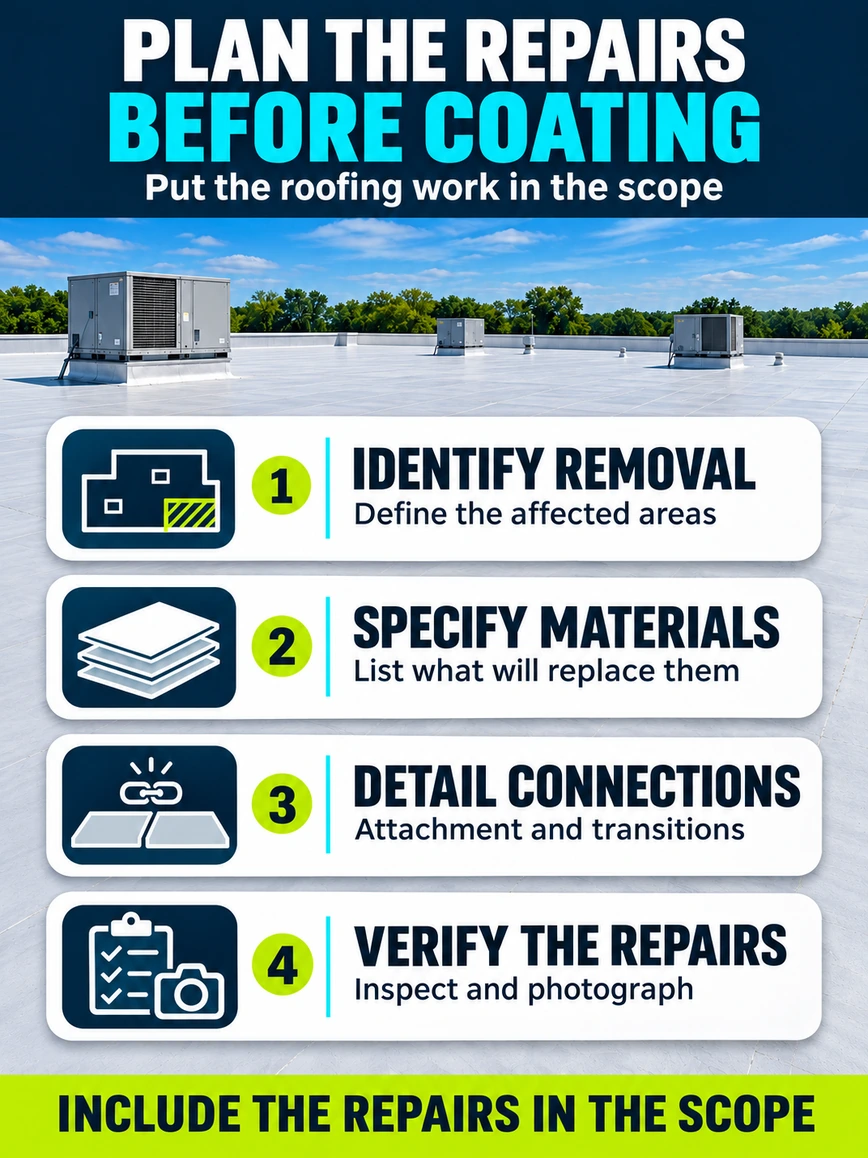 John described an approach he called hybrid roof restoration. Depending on the roof, the project may combine selective removal, conventional roofing repairs, targeted improvements, and a liquid-applied system.
That can include replacing damaged materials, rebuilding flashings, improving drainage, or correcting attachment. The scope has to explain how the repaired areas will connect to the roof being retained.
John gave an example of repairs that created low areas because the new material did not meet the surrounding roof at the correct height. The repairs addressed one condition while creating places for water to collect. Paying attention to those transitions is an essential part of the restoration plan.
He also discussed improving attachment around vulnerable areas and correcting details at skylights, equipment curbs, drains, and roof-to-wall transitions. The work depends on what the assessment finds and the requirements of the proposed system.
A restoration contractor needs the ability to perform those repairs. If part of the work falls outside the crew’s experience, John suggested working with a qualified roofing contractor or subcontractor who can handle it.
This approach gives the owner a much better proposal. It identifies which materials are being preserved, which areas need removal, what will replace them, and how the repairs will be integrated into the finished system.
Verify Repairs Before They Are Covered
Once the roof is coated, much of the work beneath that finished surface becomes difficult for the owner to see. John emphasized inspecting and documenting underlying issues before they are concealed.
He encouraged taking photographs of the areas opened and the completed repairs. Those records help verify that the planned work was carried out and preserve information that could be useful during later inspections.
For example, a photograph of an open repair can show the materials that were removed and the condition found beneath them. Additional photos can record replacement materials, attachment, and the connection to the surrounding roof before coating covers the area.
John also discussed daily reports and environmental monitoring. He described investigating failures where the weather and timing of installation helped explain why a material had not bonded as expected. A report should record the conditions relevant to the work, along with the testing and inspections required for the project.
It’s important to follow the manufacturer’s instructions, applicable test methods, and project specifications. Also, before the work begins, establish who will perform each inspection and what approvals the crew needs before moving to the next stage.
Help the Owner Understand What Is Included
We recently mapped out the general considerations in determining whether a commercial roof is ready for coating. John’s presentation added real-world examples of the investigation and corrective work that can sit behind that decision.
Think about when an owner compares proposals. One contractor may include replacing deteriorated materials, rebuilding a flashing, and correcting drainage. Another proposal may simply list standard preparation and application of the coating system. Which contractor do you think will win the job?
Showing the owner what you found and explaining why you’re recommending the work is important. Photos and test results can help them see which parts of the roof can stay and where repairs or replacement are needed. You should also let them know how those repairs will be checked before they’re covered.
There’s real value in preserving a roof that still has a lot of life to it. John’s examples showed how much that depends on the work done before coating begins. For contractors offering restoration, knowing how to evaluate and repair the existing roof deserves just as much attention as choosing the coating system.