Roof coatings are often a great way to add years of extra life to an aging commercial roof, but not every roof is ready for that treatment. Successful restoration depends on the condition beneath the coating and the quality of installation.
A good candidate has a sound roof assembly, repairable deterioration, and a surface that supports reliable adhesion. Evaluating these factors before selecting a product helps distinguish a worthwhile restoration from a temporary cover-up.
Identify the Existing Roof
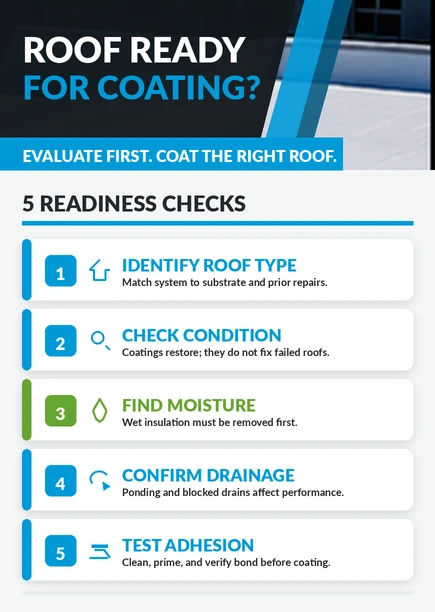
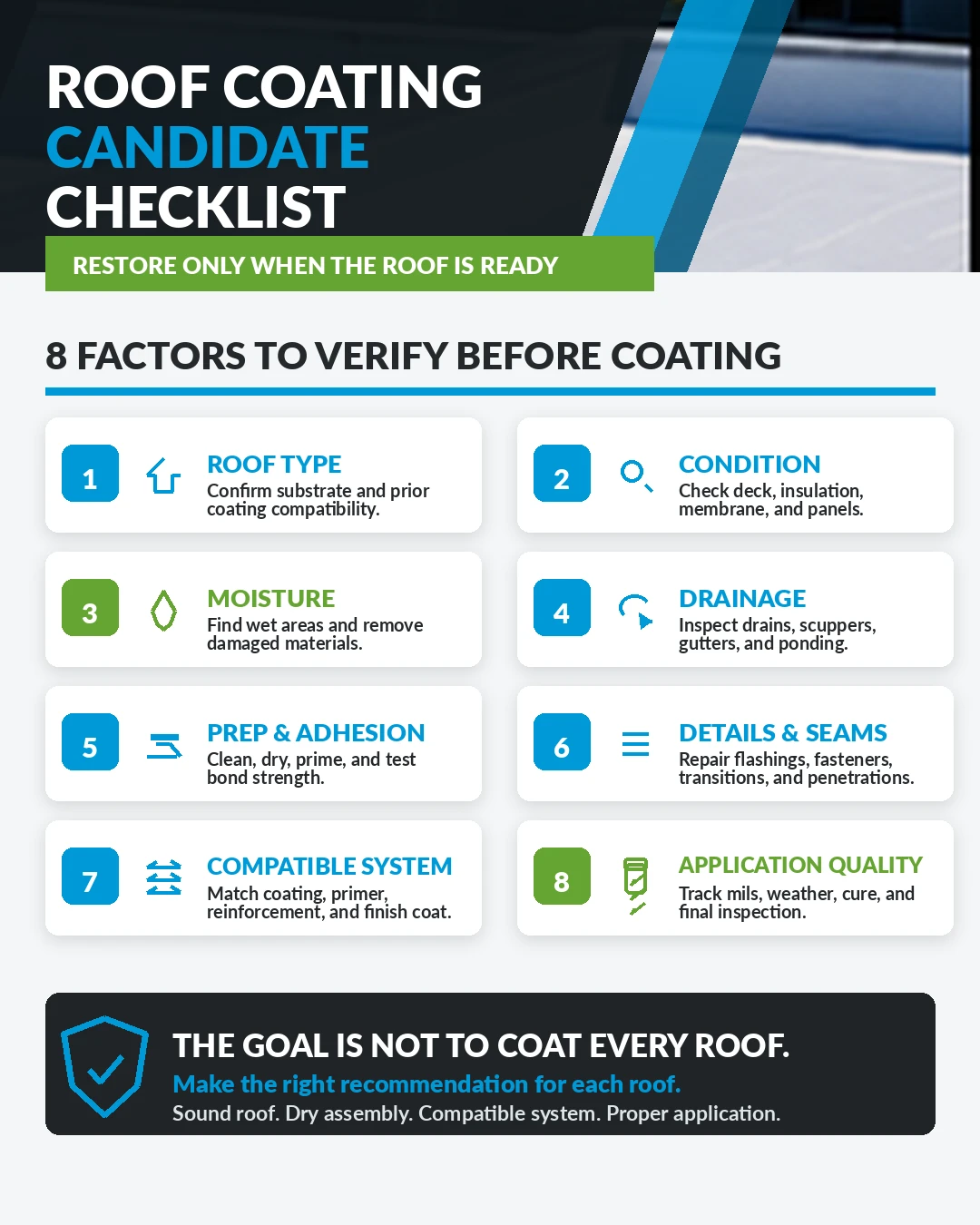
Metal, modified bitumen, built up roofing (BUR), single-ply membranes, and spray polyurethane foam each require different evaluation and preparation. Existing coatings and previous repairs also affect compatibility. For aged TPO, PVC, and EPDM roofs, identify the membrane and confirm the manufacturer’s approved restoration approach. A system suited to one substrate is not automatically appropriate for another.
Assess Overall Condition
Coatings protect and restore suitable roof surfaces; they do not repair structural damage. Inspect decking, insulation, membranes, and metal panels for deterioration. Localized defects may be repairable, while widespread failure or severe corrosion can make replacement more practical. Roof age provides context, but condition and the scope of necessary repairs determine whether restoration makes sense.
Find Hidden Moisture
Need a Local Expert?
Our group works together to provide:
- Larger Base of Knowledge
- Group-Wide Accountability
- Set Standards for Service
- More Peace of Mind
Evaluate Drainage
Inspect drains, scuppers, gutters, and low areas where water collects. Coating does not correct inadequate slope or blocked drainage. Consider the frequency and duration of ponding when specifying a restoration system. Water-exposure requirements and limitations vary by product, so selection should follow manufacturer guidance rather than broad assumptions about an entire coating chemistry.
Prepare for Strong Adhesion
Reliable adhesion starts with a clean, sound surface. Remove dirt, oils, loose coatings, and other contaminants using methods appropriate for the roof. Address rust and complete necessary repairs. Allow the surface to dry, apply primers where specified, and conduct manufacturer-directed adhesion testing. An unsuccessful test signals that preparation or system selection needs attention before full application begins.
Repair Vulnerable Details
Seams, penetrations, flashings, fasteners, and transitions deserve attention before the main roof surface is coated. Secure loose components and repair open joints or deteriorated sealants. Specified treatments may include compatible sealants, reinforcement fabric, or other accessories. These details are part of the restoration system, not optional work to address after the coating is installed.
Choose a Compatible System
Acrylic, silicone, polyurethane (urethane), and other coating technologies offer different performance characteristics. No single chemistry is the best fit for every roof. Match the system to the substrate, climate, drainage, rooftop exposure, and performance requirements. Evaluate primers, repair materials, reinforcement, and finish coats together. Product compatibility and manufacturer specifications matter more than selecting a familiar coating name.
Verify Application Quality
Follow specified coverage rates and required wet-film and dry-film thicknesses. Thickness is commonly measured in mils, with one mil equaling one-thousandth of an inch. Weather conditions, surface temperature, humidity, cure times, and intervals between coats also matter. A quality assurance and quality control (QA/QC) plan should document preparation, adhesion results, material usage, thickness checks, repairs, and final inspection.
Understand the Long-Term Benefits
Properly planned restoration can extend roof service life and help maximize the existing assembly’s lifespan. Preserving suitable roofing avoids unnecessary tear-off and reduces waste. Reflective coatings reduce solar heat absorption and improve cooling efficiency where applicable, with results influenced by climate, insulation, and building operation.
A restored roof still needs inspections, clear drainage, timely repairs, and manufacturer-directed maintenance. Its value comes from a maintainable protective surface supported by sound roofing beneath it, not simply a fresh appearance. Keep inspection reports, product records, and maintenance instructions together so future repairs use compatible materials.
Start With an Evaluation
Before choosing a roof coating, arrange a thorough evaluation of the roof’s condition, repair needs, and restoration suitability. Building owners should understand the proposed scope, while contractors should document their findings and follow manufacturer specifications. The goal is not to coat every roof. It is to make the right recommendation for each one.