 Today’s blog post takes a look at the “urban heat island” effect. This effect refers to urban areas being warmer than nearby rural areas because buildings, pavement, and other developed surfaces absorb and retain heat.
Another topic we’ll examine is one strategy used to help reduce heat absorption: a white, reflective roof coating system.
According to the United States Environmental Protection Agency, urban areas can be warmer than surrounding rural areas, particularly after developed surfaces absorb solar energy throughout the day and release heat later.
Buildings, roadways, parking areas, and dark-colored roofs can all absorb and retain solar heat. In more vegetated areas, plants and soil generally absorb and release heat differently than dense concentrations of buildings and paved surfaces.
Consequences of the Urban Heat Island Effect
The urban heat island effect can contribute to several concerns, including:
- Higher cooling demand during hot weather
- Higher air-conditioning costs in some buildings
- Greater stress on the electric grid during peak periods
- Higher local temperatures
- Potential impacts on air quality and heat-related health risks
The extent of these effects varies by climate, city design, vegetation, building density, weather conditions, and other local factors.
White Roofs as One Heat-Reduction Strategy
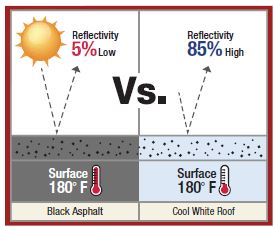 One strategy used to reduce solar heat absorption is the white or reflective roof. Reflective roofing materials are designed to reflect more sunlight and absorb less heat than many darker roofing surfaces.
When a roof absorbs less solar energy, its surface temperature can remain lower under similar conditions. This may reduce heat transfer into the building and, in some cases, lower cooling demand.
On a larger scale, widespread use of reflective roofing can be one part of broader urban heat-reduction strategies. The effect on local temperatures, energy use, air quality, and public health depends on many factors and should not be attributed to any individual roof alone.
White Roof Coatings and Commercial Roof Restoration
White and reflective coatings may also be used as part of a commercial roof restoration system when the existing roof is structurally sound and otherwise suitable for restoration.
Potential benefits of a properly selected and installed reflective coating system can include:
- A continuous protective surface over properly prepared roof areas
- Reduced solar heat absorption
- Potential reductions in cooling demand depending on the building and climate
- Reduced tear-off and disposal when restoration is appropriate
- Potential extension of the existing roof’s useful life
- Repair and recoating options for some systems when conditions allow
Reflective coatings are not appropriate for every commercial roof. Before restoration, the roof should be evaluated for wet insulation, structural deterioration, severe corrosion, drainage problems, damaged roofing materials, failed seams or penetrations, and other conditions that may need to be corrected first.
Performance characteristics such as reflectivity, durability, weather resistance, warranty terms, maintenance requirements, and expected service life vary by product and roofing system. These should be evaluated using current manufacturer documentation and the specific conditions of the project.
A commercial roofing contractor can inspect the existing roof and discuss whether repair, restoration, reflective coating, or replacement is appropriate for the building.


