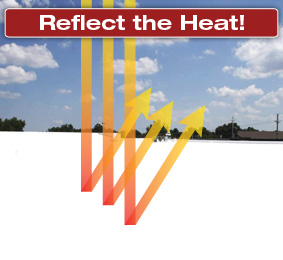
 Today’s blog post is of particular interest to building owners and facility managers, as it provides an overview of the energy-saving potential of white roofs. Other posts have examined the credibility of white roof coatings and if white roof coatings are more effective than white roof paint.
What sort of energy savings could someone see with a white roof? The answer depends on several factors, including climate, insulation, building use, HVAC efficiency, roof construction, utility rates, and the specific reflective roofing system.
Studies and energy-efficiency programs have reported savings from reflective roofing in certain buildings and climates. In warmer areas, the benefits may be more noticeable during periods of high cooling demand. However, results from one building or study should not be assumed to apply to every commercial property.
With these studies and others in hand, it is clear that white roof coatings have attracted attention because of their potential to reduce solar heat absorption and cooling demand. That becomes even more interesting when considered in light of how the white roof became prominent in commercial roofing.
The White Roof, a Disruptive Force in Commercial Roofing
Roofing Services
Our professional commercial roof contractors provide:
- Roof maintenance & repair
- Inspections & leak detection
- Energy efficient roof systems
- Complete roof replacement
- Roof life-extending solutions
When white roof coatings appeared as a way to reflect more solar energy and, in suitable situations, restore an existing roof instead of replacing it, energy efficiency became another factor for evaluating roof performance alongside protection and service life.
Today, white roof coatings are a recognized option in commercial roofing. Reflective roofing has also been used in a number of municipal and energy-efficiency initiatives aimed at reducing roof surface temperatures and solar heat absorption.
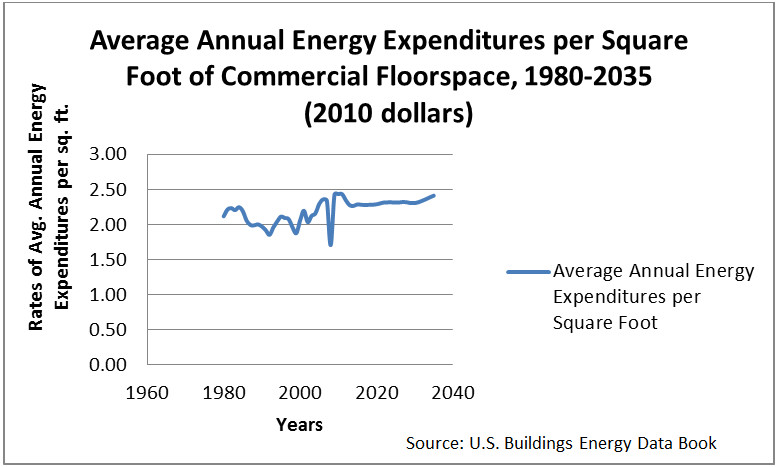
Studies on White Roofs’ Energy-Saving Potential
In addition to a white roof study conducted by Lawrence Berkeley National Laboratory, other studies have examined how reflective roofs may affect roof temperatures and building cooling demand.
- In one Tucson, Arizona example, a commercial building was coated with a white elastomeric roof coating and its energy use was compared before and after installation under similar summer conditions. The study reported lower energy use following the coating application. The actual savings from a similar project would depend on the building, weather, insulation, HVAC system, utility rates, and roof conditions.
- In an Austin, Texas retail-building study, researchers compared roof temperatures and air-conditioning demand before and after installation of a white roof. The white roof had a lower surface temperature and the study reported reductions in cooling use and peak demand. As with other case studies, the results should not be assumed to apply uniformly to every commercial building.
Some Thoughts on the White Roof and Its Energy-Saving Potential
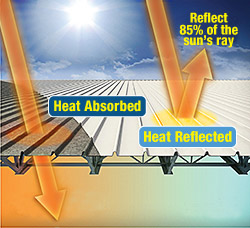 Some people have raised concerns about a possible “winter penalty,” or a period during colder months when a highly reflective roof may reduce useful solar heat gain.
Whether this has a meaningful impact depends on climate, insulation, heating demand, roof exposure, snow cover, and other building-specific factors. In many buildings, annual cooling benefits may still outweigh additional heating demand, but this should be evaluated for the particular project.
For calculating energy-saving potential, building owners can use current energy-modeling tools or work with qualified professionals who can evaluate the building and roof conditions.
White Roof Coatings and Roof Restoration
White roof coatings can provide both reflective performance and roof-restoration benefits when they are used on an appropriate existing roof.
Potential benefits may include:
- Reduced solar heat absorption
- Lower roof surface temperatures
- Potential reductions in cooling demand
- A continuous protective surface over properly prepared roof areas
- Reduced tear-off and disposal when restoration is appropriate
- Potential extension of the existing roof’s useful life
- Repair and recoating options for some systems
A coating system should not be expected to stop every leak or correct serious underlying problems. Before restoration, the roof should be evaluated for wet insulation, structural deterioration, drainage problems, damaged roofing materials, failed seams or penetrations, and other conditions that may need to be corrected first.
Performance characteristics such as reflectivity, durability, weather resistance, maintenance requirements, warranties, and expected service life vary by roofing product and system. These should be evaluated using current manufacturer documentation and the specific conditions of the project.
A commercial roofing contractor can inspect the existing roof and discuss whether a white roof coating, repair, restoration, or replacement is appropriate for the building.


