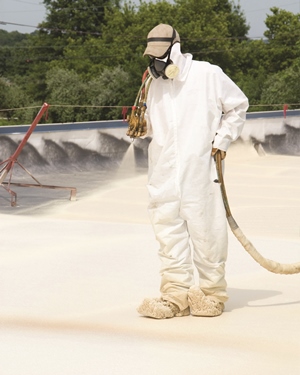
 Today, we take a look at the growing demand for “green” construction and how spray foam roofing can help reduce building energy costs. We then examine the market opportunities this creates for commercial roof contractors.
The Need for Spray Foam Roof Insulation Today
According to the U.S. Department of the Interior, American energy usage is expected to increase 40 percent by 2025. That increase in consumption corresponds with a rise in demand for “green” nonresidential construction, as commercial and industrial buildings account for a significant portion of the United States’ total energy usage.
The Freedonia Group, a market research firm, projects that demand for U.S. green building materials will increase 11 percent annually and reach $86.6 billion in 2017. Moreover, the ENERGY STAR® program reports that construction of green buildings has also reached a new high. As EnergyStar.gov relates, “in the United States, the green share of the U.S. nonresidential construction market grew from two percent in 2005 to 44 percent in 2012.”
Spray foam roofing offers one way to help building owners reduce energy costs. It can be applied to many types of commercial roof systems when the existing roof is a suitable candidate. With its insulating properties and seamless application, a properly designed spray foam roof system can reduce heat transfer and help improve a building’s energy performance.
Why Spray Foam Roofing?
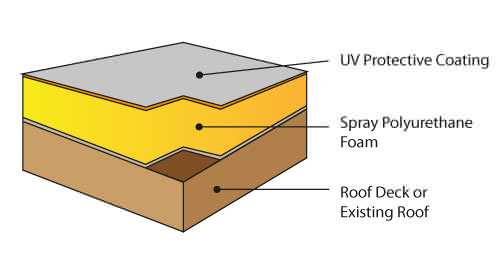 We covered the extensive benefits of spray foam roofing and took a look at spray foam roofing problems in previous blog posts. Spray polyurethane foam roofing has been used as a commercial roofing solution for decades. Its insulating value, seamless application, and renewable service life are among the features that make it attractive for suitable commercial roofing applications.
Build Your Commercial Roofing Network
Choice Roof Contractor Group members benefit from:
- Shared knowledge and practical experience
- Professional connections and collaboration
- Sales and marketing resources
- Partner introductions
- Ongoing support
- Reduces heat transfer through the roof assembly, helping lower heating and cooling demands
- Can help limit air leakage when seams, penetrations, and transitions are properly detailed
- Creates a seamless, adhered roofing surface
- Can perform well in a variety of climates when properly designed, installed, and maintained
- Can be applied to many existing roof surfaces after appropriate inspection and preparation
- May help reduce sound transmission through the roof assembly
- Can provide strong wind-uplift resistance when the complete roof assembly is properly designed and installed
- Can be applied to improve slope and drainage, although underlying drainage problems must still be addressed
- Requires periodic inspections, maintenance, and recoating to protect the foam and extend its service life
- Can be paired with a reflective protective coating to reduce solar heat absorption
- May provide favorable long-term costs when the roof is a suitable candidate and the system is properly maintained
Not every commercial roof is an appropriate candidate for spray foam. The existing roof should be evaluated for wet insulation, structural deterioration, drainage problems, adhesion concerns, and other conditions before a system is recommended. When the roof is suitable, spray foam can provide contractors with an opportunity to offer building owners an energy-efficient restoration or reroofing option.
Equipment and Training Considerations
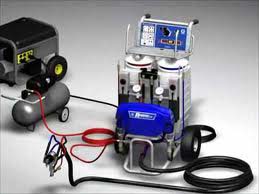 Spray polyurethane foam roofing requires specialized proportioning and application equipment, along with appropriate training and careful quality control. Contractors entering this market should consider equipment reliability, access to replacement parts, supplier support, material compatibility, worker protection, and the technical requirements of each project.
Whether a contractor is new to commercial roofing or already experienced, proper training and support are essential. Choice Roof Contractor Group helps members build professional connections, exchange practical knowledge, and receive partner introductions as they evaluate new commercial roofing opportunities.
Support and Resources for Spray Foam Contractors
Ready access to technical guidance, equipment service, parts, and supplies can make a significant difference on spray foam projects. Contractors should work with qualified suppliers that understand the equipment and materials being used and can provide reliable support when questions or problems arise.
Choice Roof Contractor Group is a nationwide alliance of independently owned commercial roofing contractors. Members meet the group’s current membership requirements and benefit from shared knowledge, sales and marketing resources, professional connections, and the experience of a larger contractor network. Learn more about our nationwide commercial roofing network.


