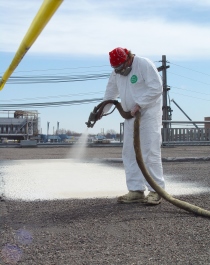
 Today, we discuss some common questions and misconceptions about spray polyurethane foam roofing.
For building owners looking for a commercial roofing system that can provide both roofing and insulation value, spray polyurethane foam roofing can be a useful option when the building, roof condition, and project requirements are suitable.
SPF roofing has been used for decades, but its performance depends heavily on proper roof evaluation, surface preparation, application conditions, foam proportioning, protective coating, drainage, and ongoing maintenance.
Spray Foam Roofing Problems and Myths Answered
Pros & Cons of Various Roofing Systems
Learn More- Spray polyurethane foam technology does not have a track record in commercial roofing.
SPF roofing has been used on commercial buildings for many years. Its long-term performance depends on proper design, installation, protective surfacing, inspection, and maintenance.Older studies and case histories have reported favorable performance for properly installed SPF roof systems. For example, Texas A&M University has been cited in industry case-study material for extensive use of SPF roofing across its campus.
Individual project results should not be treated as guarantees for every SPF roof.
- Spray polyurethane foam may be suitable for insulation, but not for roofing.
Spray polyurethane foam is used in both insulation and roofing applications. In a roofing system, the foam is applied over a suitable substrate and protected by a compatible coating or other surfacing material.The complete roof assembly, rather than the foam alone, provides the required roofing performance. The system needs to be properly designed and installed for the particular building and climate.
- Spray foam roofs are always too expensive.
The cost of SPF roofing varies by project. Factors include roof size, existing roof condition, required repairs, foam thickness, protective coating, access, labor, and regional conditions.SPF can provide insulation value that may reduce heating or cooling demand in some buildings. It may also reduce tear-off when an existing roof is suitable for restoration. However, energy savings and total project economics vary considerably by building.
Case studies such as the Texas A&M project have reported favorable energy-performance results, but those results should be viewed as project-specific rather than expected outcomes for every SPF installation.
- Larger Base of Knowledge
- Group-Wide Accountability
- One Source for All Projects
- Set Standards for Service
- More Peace of Mind
- Spray polyurethane foam roofing does not last.
The service life of an SPF roof depends on the quality of the original installation, the protective coating, climate, roof traffic, physical damage, drainage, and ongoing inspection and maintenance.SPF systems can be repaired and recoated when the foam and underlying roof remain in suitable condition. Recoating can help protect the foam and extend the useful life of the system, but there is no single lifespan that applies to every SPF roof.
- Spray foam roofs cannot be walked on.
SPF roofs can accommodate normal maintenance access when they are properly installed and protected, but they can still be damaged by sharp tools, dropped equipment, excessive traffic, or concentrated loads.Walk pads or other protective measures may be appropriate in frequently traveled service areas. Any puncture or surface damage should be repaired so the foam remains protected.
Need an Expert?
Our group works together to provide:
What Can Cause Spray Foam Roofing Problems?
Many SPF roofing problems are related to design, installation, weather conditions, physical damage, or maintenance rather than to the foam material alone.
Potential problems can include:
- Improper surface preparation
- Applying foam to wet, dirty, or unsuitable substrates
- Incorrect foam proportioning or application
- Application under unsuitable temperature, wind, humidity, or moisture conditions
- Insufficient or inconsistent protective coating thickness
- Leaving foam exposed to ultraviolet radiation
- Punctures or other physical damage
- Poor drainage or unresolved ponding-water conditions
- Failure to inspect and maintain the protective coating
For these reasons, SPF roofing should be installed according to the current requirements of the specific roofing system and by contractors with appropriate training and experience.
SPF roofing is not suitable for every project. Before installation or restoration, the roof should be evaluated for wet insulation, structural deterioration, drainage problems, damaged roofing materials, failed seams or penetrations, and other conditions that may need to be corrected first.
A commercial roofing contractor can inspect the existing roof and discuss whether SPF roofing, another restoration system, repair, recover, or replacement is appropriate.