- BUR (built up roofing)
- Single-Ply Membranes such as EPDM, TPO and PVC
- Modified bitumen
There are pros and cons associated with each of these types of flat roof systems, but which choice is the best? Keep reading to find out!
BUR
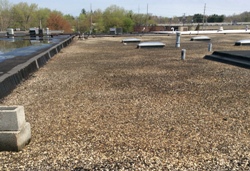 Built up roofing is one of the traditional types of flat roofing systems used on commercial buildings. BUR systems typically consist of alternating layers of bitumen and reinforcing fabrics that form a finished membrane. This bitumen is generally asphalt, coal tar or cold-applied adhesive. The surfacings used for BUR systems include aggregate, such as gravel, mineral granules or slag; glass-fiber or mineral surfaced cap sheets; or hot asphalt mopped over the whole surface. Asphalt BUR is composed of multiple layers of reinforcing plies and asphalt, which forms a redundancy of waterproofing layers.
Considerations: The degradation of asphalt is a concern. Asphalt surfaces are oxidized by UV rays, and asphalt BURs can become brittle and begin cracking and, eventually, leaking. BUR systems can also require ongoing maintenance and may absorb a significant amount of heat depending on the roofing surface.
Single-Ply Membranes
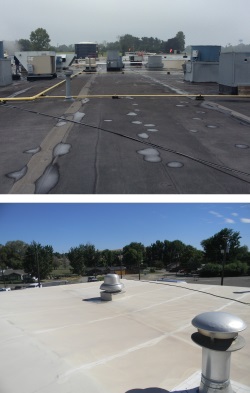 Single-ply membranes are sheet membranes that are manufactured in factories and are typically classified as thermoset (EPDM) or thermoplastic (TPO or PVC), the key difference being that thermoset materials are irreversibly solidified after heating, and thermoplastic materials can be softened and hardened repeatedly when heated and cooled.
EPDM roofing is a synthetic rubber roof style that is used on low-slope roof surfaces and is most commonly used in single-ply roofing. The most common type of this roofing is vulcanized EPDM. During installation, the sheets of synthetic rubber are joined together using adhesives or other approved seam methods.
TPO and PVC are the most common types of thermoplastic roof membranes, which can be repeatedly softened by heating and hardened by cooling. The membranes are generally joined together by heat welding, melting the membrane sheets together to form a strong bond. TPO sheets contain substances that include colorant, flame retardants and UV absorbers to attain the desired physical properties. PVC sheets are made through calendaring, spread coating or extruding. They are generally reinforced using polyester, glass-fiber mats or scrim and contain plasticizers, stabilizers and other additives to achieve flexibility and other desired physical properties. The sheets are usually secured with fasteners, but some installs are fully adhered to the substrate.
Considerations: Single-ply membrane roofing can be less expensive and easier to install than BUR and is known to be durable and efficient. On the other hand, if water gets underneath the membrane, leak detection can sometimes become difficult. Seams, penetrations and other roof details also need to be installed and maintained properly to prevent potential leaks.
Modified Bitumen
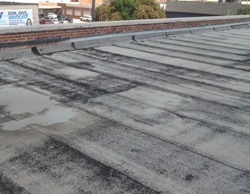 Polymer-modified membranes are made up of reinforcing fabrics, which act as carriers for hot polymer-modified bitumen as it is made into a roll material. Like BUR membranes, modified bitumen roof system membranes are made up of multiple layers. They are usually installed as a two-ply system and are often fully adhered. The surfacings of these membranes include aggregate surfacing, metal foil-laminate surfacing, mineral surfacing and smooth liquid-applied surfacing.
Considerations: Like built up roofing and EPDM, darker roofing surfaces can absorb a significant amount of heat rather than reflecting it. Bitumen roofs can also be damaged and prematurely aged by persistent ponding or standing water.
The Best Choice in Most Cases
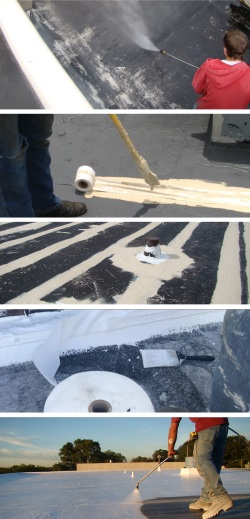 For many commercial flat roofs, a high-quality roof coating or restoration system may be worth considering when the existing roof is still a good candidate for restoration.
A properly installed roof restoration system can address many of the common issues associated with commercial flat roofs, including chronic leaking and deterioration caused by weather. Depending on the condition and type of the existing roof, restoration can also help a building owner avoid the considerable cost and disruption of a complete roof replacement.
Roof coating systems are designed to create a seamless, protective membrane over the existing roof surface. Seams, penetrations, fasteners and other vulnerable areas can be carefully sealed and reinforced as part of the restoration process. The finished system can provide another layer of protection against water, sunlight and weather while extending the useful life of a commercial roof.
Here are just a few of the potential advantages of restoring a commercial roof:
- Extends the useful life of an existing roof when it is still suitable for restoration.
- Reflective coating options can reduce the amount of solar heat absorbed by the roof.
- Reduced labor and disposal costs compared with many complete tear-off and replacement projects.
- Seamless, water-resistant protection over the existing roofing surface.
- Less roofing material sent to landfills when an existing roof can be restored rather than replaced.
Need an Expert?
Our group works together to provide:
- Larger Base of Knowledge
- Group-Wide Accountability
- One Source for All Projects
- Set Standards for Service
- More Peace of Mind
Roof restoration is not the right answer for every building. The existing roof should first be inspected to determine its condition, identify any wet or damaged areas and determine whether restoration, repair or replacement makes the most sense.
Learn More About Your Commercial Roofing Options
Choice Roof Contractor Group provides information and resources about commercial roofing systems, maintenance, restoration and replacement options.
For more information, please call (800) 670-5583.


