 Today we build on top of our blog post about “The Benefits of Energy-Efficient Buildings”.
Cost reduction is a top priority for any business owner or facility manager. With the appearance of energy-efficient building materials in the construction industry, consumer interest has increased in what energy-efficient roofing (or “cool roofs”), among other materials, can do for cutting costs.
The United States Environmental Protection Agency’s (U.S. EPA) ENERGY STAR® program has been of particular benefit in labeling products and buildings that meet energy-efficiency criteria. But what exactly is the ENERGY STAR® program? And why has it become so relevant in the construction industry? We take a look at some answers below.
What is ENERGY STAR®?
According to EnergyStar.gov, ENERGY STAR® is an EPA-established “voluntary program that helps businesses and individuals save money and protect our climate through superior energy efficiency.”
In its legislation in 2005, the Energy Policy Act, Congress declared ENERGY STAR® to be a “voluntary program to identify and promote energy-efficient products and buildings in order to reduce energy consumption, improve energy security, and reduce pollution through voluntary labeling of or other forms of communication about products and buildings that meet the highest energy efficiency standards.” Since then, thousands of ENERGY STAR® products and services have been brought to market.
American consumers and investors have also adopted stronger consumer commitments to energy-efficient products and services. The public’s knowledge of ENERGY STAR® is shown by the fact that approximately 85 percent of the American public today recognizes the program’s blue label.
“ENERGY STAR Roofs” – Earning Qualification
 For a product or building to be qualified for the ENERGY STAR® logo, it must meet applicable program requirements, including testing, certification, or verification requirements where required. The ENERGY STAR® program makes use of testing, third-party review, and compliance screening for strengthening consumer trust in qualified products and buildings meeting energy-saving requirements.
Generally speaking, the program breaks down products and buildings into four categories, with products having its own “Products” category and buildings being broken down into “New Homes”, “Commercial Buildings”, and “Industrial Plants” categories. Over 4.5 billion qualified products have been sold in the program’s 20 years of existence, and at present over 1.4 million new homes and over 20,000 facilities have the program’s blue logo.
These categories are where the program becomes relevant to the construction industry. Industrial plants must be certified and approved by a professional engineer to meet an energy performance score of 75 or higher. They must also pass an EPA compliance screen test. For qualification, commercial buildings must achieve an energy performance score of 75 or higher on Portfolio Manager, an online tool for measuring building energy efficiency, and be verified by a qualified licensed professional.
According to the program, around 40 percent of commercial building space is benchmarked for energy efficiency by the program’s Portfolio Manager tool.
Cool Roofs and Energy-Efficient Buildings
Roofing Services
Our professional commercial roof contractors provide:
- Roof maintenance & repair
- Inspections & leak detection
- Energy efficient roof systems
- Complete roof replacement
- Roof life-extending solutions
For ENERGY STAR® qualification, roofing products must meet applicable solar reflectance requirements, including initial and aged reflectance values. Another consideration in cool-roof performance is a roofing product’s thermal emittance, or its ability to release absorbed heat.
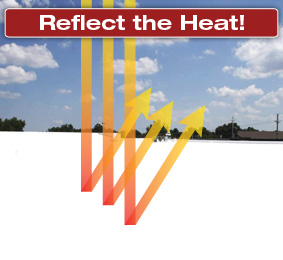
Reflective roofing products can reduce the amount of solar heat absorbed by the roof. The resulting effect on roof temperature and building cooling demand varies according to climate, insulation, roof construction, HVAC systems, building use, and other conditions.
Cool Roof Systems
A variety of roofing products and systems can be used to create reflective roof surfaces. Depending on the existing roof and project requirements, options may include reflective coatings, single-ply membranes, metal roofing, or other materials designed to reduce solar heat absorption.
When an existing roof is being considered for restoration, it should first be evaluated for wet insulation, structural deterioration, drainage problems, damaged roofing materials, and other conditions that may need to be corrected.
The potential benefits of a cool roof can include lower roof-surface temperatures and reduced cooling demand in some buildings. Actual energy savings, service life, warranty coverage, and project performance depend on the specific roof system, building, climate, installation, and maintenance conditions.