 If you’re a commercial or industrial building owner in need of a new roof or looking to put up a new structure, it can seem overwhelming as you compare the many different types of commercial roofing materials available. How can you know which one is the best choice for your specific building project?
Some common types of commercial roofing materials include:
- EPDM (ethylene propylene diene monomer)
- TPO (thermoplastic polyolefin)
- PVC (polyvinyl chloride)
- SPF (spray polyurethane foam)
- Asphalt-based roofing systems
- Acrylic coatings
Keep reading as we explore some of the pros and cons of these roofing materials to help you better understand the options.
EPDM
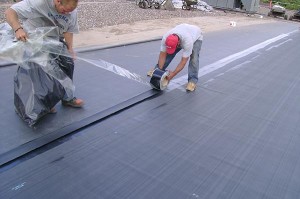 Ethylene propylene diene monomer (EPDM) roofing is commonly known as rubber roofing.
PROS: EPDM has a long history of use in commercial roofing and is available in several installation configurations. It is relatively lightweight and can provide long service when properly designed, installed, and maintained.
EPDM membranes are also known for flexibility and weather resistance. Different membrane colors and configurations are available depending on the project.
CONS: Dark-colored EPDM can absorb substantial solar heat, which may increase roof surface temperatures compared with lighter or more reflective roofing materials.
Like other single-ply membranes, EPDM can also be damaged by punctures, sharp objects, heavy traffic, falling debris, or other impacts. Seams, flashings, penetrations, and attachment points require proper installation and maintenance.
Some EPDM systems use adhesives or tapes at seams, while installation methods vary by system. If water enters beneath a membrane, locating the source of the leak can sometimes be difficult because water may travel within the roof assembly.
TPO
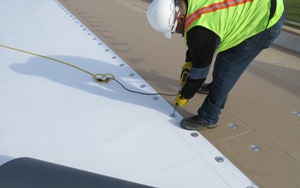 Thermoplastic polyolefin roofing, or TPO, is a widely used single-ply roofing option for commercial buildings.
PROS: TPO membranes are commonly available in reflective colors, which can help reduce solar heat absorption. They are lightweight and may be mechanically attached, fully adhered, or installed using other approved methods depending on the system.
TPO seams are typically heat-welded, creating a continuous bond when properly installed. The membrane is also available in different thicknesses and formulations for different roofing applications.
CONS: TPO performance can vary by manufacturer, membrane formulation, installation quality, roof design, and project conditions.
As with any single-ply system, seams, flashings, penetrations, attachment, drainage, and rooftop traffic need to be properly addressed. Membrane thickness alone should not be used to judge overall system quality.
Fire performance, weather resistance, puncture resistance, and other characteristics should be evaluated using current product documentation and the requirements of the complete roof assembly.
PVC
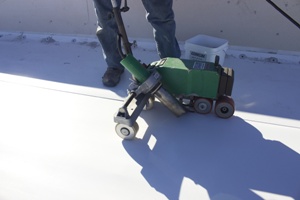 PVC, or polyvinyl chloride, roofing is a reinforced thermoplastic single-ply membrane used on many low-slope commercial buildings.
PROS: PVC roofing can provide good durability and is known for resistance to many chemicals, oils, and grease. Like TPO, PVC seams are commonly heat-welded.
PVC membranes are also available in reflective colors, and different systems may provide fire, wind, chemical, and weather-performance characteristics appropriate for particular buildings.
CONS: PVC roofing can be more expensive than some other membrane options. Older or weathered PVC membranes may also become more difficult to repair depending on their condition and compatibility with new materials.
Shrinkage, movement, punctures, failed details, and other problems can occur if a roof is poorly designed, installed, or maintained.
PVC and TPO are often compared because both are thermoplastic membranes with heat-welded seams. Their suitability depends on the building, roof design, chemical exposure, climate, traffic, fire requirements, budget, and other project-specific factors.
SPF
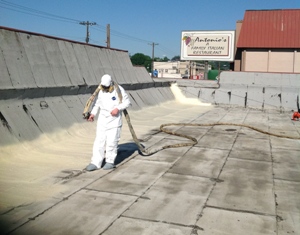 A spray polyurethane foam (SPF) roof is created by spraying liquid components that react and expand to form a rigid foam layer, which is then protected by a compatible coating or other protective surface.
PROS: SPF can provide both roofing and insulation value in a single system. Because it is spray-applied, it can conform around penetrations, curbs, and other roof details.
A reflective protective coating over SPF may also help reduce solar heat absorption. Properly designed SPF systems can sometimes be used to improve roof slope or drainage, although underlying drainage problems still need to be properly evaluated and addressed.
CONS: SPF installation requires specialized equipment, careful proportioning, suitable weather conditions, and experienced applicators. Poor installation can result in defects or premature deterioration.
SPF also requires ongoing inspection and maintenance of its protective coating. Damage from foot traffic, tools, birds, hail, or other sources should be repaired promptly to protect the foam beneath.
Asphalt-Based Rolled Roofing
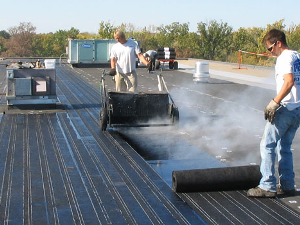 Asphalt-based rolled roofing products are used in some low-slope roofing applications. Their construction and installation methods vary by product and roof system.
PROS: Some asphalt-based roofing materials can provide a cost-effective solution for particular buildings and applications. They are familiar materials that many roofing contractors have experience installing and repairing.
CONS: Service life varies considerably depending on the product, roof design, installation, climate, drainage, maintenance, and exposure.
Seams, laps, flashings, and penetrations need proper installation and maintenance. Dark asphalt surfaces can also absorb substantial solar heat unless a reflective surface or coating is incorporated into the system.
Acrylic Roof Coatings
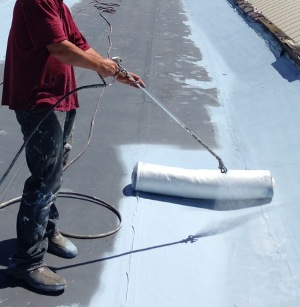 Acrylic roof coatings can be used as part of a restoration system on a variety of compatible commercial roof substrates.
The exact installation process depends on the existing roof and coating manufacturer. Some systems may use primers, base coats, reinforcement fabric, seam treatments, and one or more finish coats.
PROS: Acrylic coatings can provide strong reflectivity and UV resistance and may offer a cost-effective way to restore a suitable existing roof.
When properly selected and installed, a coating system can provide a continuous protective surface and may extend the useful life of the existing roof. Some systems can also be repaired or recoated in the future when conditions allow.
CONS: Acrylic coatings can lose thickness through weathering over time and generally require suitable temperature and weather conditions during application.
Performance in areas of persistent ponding water varies by product. Drainage problems should be identified and corrected rather than relying on a coating alone to solve standing-water conditions.
Acrylic coatings are not appropriate for every roof. Before restoration, the roof should be evaluated for wet insulation, structural deterioration, serious drainage problems, damaged roofing materials, failed seams or penetrations, trapped moisture, and other conditions that may need to be corrected first.
Get Advice from a Commercial Roofing Contractor
Need an Expert?
Our group works together to provide:
- Larger Base of Knowledge
- Group-Wide Accountability
- One Source for All Projects
- Set Standards for Service
- More Peace of Mind
When you are deciding which roofing material or system is appropriate for your commercial building, a Choice Roof Contractor Group member can inspect the roof or project conditions and discuss available options.
Members are independent commercial roofing contractors that perform their own inspections, provide their own recommendations to customers, and perform their own roofing work.
The right roofing system depends on factors such as existing roof condition, building use, climate, drainage, insulation, structural capacity, chemical exposure, rooftop traffic, energy goals, budget, and maintenance expectations.


