Roofing Tools and Equipment List


Setting Up Shop

Some tools are so fundamental to the roofing industry that they should be included in every roof contractor’s inventory. Following is a roofing tools list of basic equipment, commercial roofing tools, and the special items required to perform certain tasks.

General Equipment

Free Guide: How to Switch to Commercial
Commercial Roofing Book

    • Ladder (30’ to 40’) – used for access to the roof. Choose the most stable, heavy-duty model you can find. Do not skimp on safety for you or your employees.
    • Hard hats – head protection generally required when working on new construction. Many industries require that hard hats be worn by crew in all plant manufacturing areas. Ensure the hard hat is OSHA approved.
    • Soft-soled, steel-toed shoes – should be worn to provide maximum traction on the commercial roof, protect your feet, and prevent damage to the newly-installed roofing system.
    • Caulking guns – required to dispense caulk from tubes. A high-quality caulking gun such as one made by COX or Albion will speed your project and add more money to your pocket.
    • Paint brushes – used to apply bulk caulk and coating in detail areas.
    • Electric or cordless drill and assorted drill bits and drivers – used to drill holes in concrete, metal, etc., for securing blockings. May also be used to install screws and fasteners as needed. Mixing attachment is needed to agitate products before application. Helpful hint: Make sure the extra battery for your unit is also charged.
    • Pop-rivet gun – used in the attachment of sheet metal work.
    • Wheelbarrow – used in carting aggregate, debris, roofing materials, etc., across the roof.
    • Scissors – used to cut fabric. Long-bladed fabric shears work best.
    • General tool kit – should include hammers, mallets, hacksaw, screwdrivers, chisels, punches and an assortment of wrenches. A coring tool for taking cores and roof samples, a black sharpie pen, utility knife, gasoline or other cleaner and baggies to keep the samples separated. You should also have a box of baggies for samples that may need to be taken.
    • Roof hoist – extremely helpful in raising and lowering equipment and supplies from roof deck.
    • Bunghole mixer – mixing blade attachment for electric drill.
    Pre-Inspection Tools

    How to Get Commercial Roofing Jobs

    Learn More
    • Core-cutter – Designed to cut a 2” hold in a built-up roof (BUR) for the purpose of determining the composition of the roof and deck.
    Moisture Detection Tools

    In determining the soundness and dryness of a roof surface and underlying insulation, a device such as a Delmhorst meter is indispensable. These meters measure the moisture content of roofing materials.

    Post-inspection Equipment

    Optical Comparator – The optical comparator is a magnifying eyepiece with a measuring scale on one end, used for determining the thickness of a coating sample. The reticle (measuring scale) is placed against the edge of the sample. The eyepiece is then focused to read the thickness to the nearest mil. It is essential that a very sharp cutting instrument such as a razor blade be used in trimming the sample edge for optimum accuracy. FineScale reticle number 121 is recommended for use with the optical comparator in this procedure.

    Roof Cleaning Equipment

    The commercial roofing tools and equipment listed below are needed for proper preparation:

    Contractors join our group for:

    • Network-backed Guarantees
    • Support from Fellow Roofers
    • Group Discount Purchasing
    • Shared Marketing Strategies
    Learn More

    • Stiff bristled hand broom – used for sweeping gravel and loose debris from the roof surface.
    • Power broom – large motorized rotary brush used for thorough sweeping of large commercial roof areas. It weighs 400 to 500 pounds and requires use of a roof hoist.
    • Spud bar (hand) – a long-handled, flat-bladed device used in much the same manner as an ice scraper for chipping and loosening embedded gravel.
    • Power spudder – a motorized device which looks like a rotary lawn mower with steel blades. It removes embedded gravel quickly and completely. It weighs 300 to 400 pounds and requires use of a roof hoist.
    • Garden hose with nozzle – used in conjunction with a hand or power broom for washing and scrubbing the substrate to remove all adhered or embedded dirt and contaminants.
    • Shovel – used for removing aggregate and debris from the roof surface. Choose a sturdy industrial model.
    • High pressure washer – machine to disperse water at very high pressure; used for water-blasting embedded dirt and poorly-adhered material from the roof surface.
    • Vacuum/Hydrovac – Vacuum is a large truck or trailer mounted vacuum cleaner utilizing long, flexible hoses to vacuum loose aggregate from the roof surface. Note: Due to high equipment cost, this procedure is usually subcontracted. Hydrovac is an advanced vacuum which simultaneously vacuums loose material while washing and scrubbing the commercial roof with a rotating steel power broom and water spray attachment. The power broom and water serve to scrub the surface and flush out embedded dirt, which is then vacuumed away. This is a superior cleaning system, which does not introduce an excessive amount of water onto the roof, thereby avoiding delays due to a damp substrate.
    • Backpack blower – a lightweight, motorized air blower which is strapped to the worker’s back, freeing the hands to use the flexible hose to blow loose debris from the roof surface.
    • Air compressor – a large air compressor usually powered by a gasoline/diesel engine capable of producing a minimum air pressure of 100 psi with a minimum volume of 100 cfm. This high air pressure is used to blast loose material and debris from the roof surface.
    • Trash chute – can be purchased or constructed from plywood and 2”x4” lumber. It is used to safely lower trash and debris from the rooftop to the truck or dumpster.
    • Dumpster or truck – a dumpster, which can be rented, or a truck, which can be rented or purchased, is required when removing a significant amount of material from a roof.
    Application Equipment
    • Paint type roller – 9” or 18” paint roller frame utilizing 1” or 1 ¼” nap rollers. These may be used to apply Conklin Roofing Systems.
    • Large paint pan – for use with rollers.
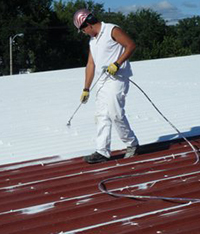
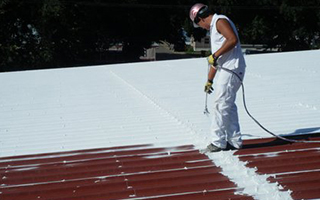
    • Airless sprayer – used for applying liquid coating to the roof surface. It can be used for application of all Conklin liquid-applied roof coatings. The specifications for this sprayer are:

    Capacity – Interior paints – minimum of one gallon per minute (1 gpm)
    Roof Coatings – minimum of two gallons per minute (2 gpm)

    Pressure – Interior paints – minimum pressure 2,000 psi
    Roof Coatings – minimum pressure 3,000-5,000 psi

    Nozzle or tip size – commonly .031 to .034
    Set-up and use of this equipment should be accomplished in accordance with manufacturer’s directions.

    • Seam roller – a small hand-held roller, usually silicone free, used to press or roll the Hy-Crown seams together during the welding process.
    • Hot air gun – the electric hot air gun is used to heat weld single ply systems:

    SPECIFICATIONS FOR THE STEINEL HG2300 Heating Gun:

    Voltage:                      120 V
    Output:                        1750 W
    Max Temp:                  1250 degrees F/700 degrees C
    Max Air Flow:            15.4 cfm
    Air Pressure:                3,000 Pa

    Motor:                         Brushless/5,000 hours +

    Roof Removal Equipment
    • Spud bar (hand) – a long-handled, flat-bladed device used in much the same manner as an ice scraper for chipping and loosening embedded aggregate and for cutting built-up roof into sections for removal
    • Power roof cutter – a gasoline engine-powered cutter, which is used for cutting existing roofing material into small sections for easier removal. Weighs 100 to 400 pounds and requires use of a roof hoist or an Enforcer that is a walk-behind power machine that will essentially remove the top part of the coating or system.
    • Pry-bar – a long-handled metal bar used for prying up sections of a built-up roof. A spud bar may also be used for this purpose.
    • Shovels – used for removing loose debris from the roof.
    • Roof hatchet – used for cutting existing roofing materials such as built-up roofs into small sections for easier removal.
    • Hand broom – used for sweeping gravel and loose debris from the roof surface.
    • Linoleum-type knife – a stiff, short-bladed knife for cutting asphalt material such as built-up roofs, rolled roofing, etc.
    Free Guide: How to Switch to Commercial

    10 Complete Steps Developed by Members

      eBook version is emailed immediately.

      Commercial Roofing Industry, Manufacturers & Industry Standards

      Changes in Traditional Materials

      For many years, traditional built-up roofs, composed of layers of roofing felts and bitumen, were the mainstay of the roofing industry.

      cr1During the energy crisis of the early 1970s and recent energy concerns, the material used in built-up roofs declined in quality. During refining, more of the petroleum-based chemicals used in asphalts were extracted for use in gasoline and other more profitable items. The content of roofing felts also changed. Felts originally contained natural rag for strength and flexibility. But today, felts contain synthetic fabric and fibers, lowering the performance standard.
      Changes in Performance Expectations

      Today, it has become common practice to increase insulation thickness to reduce heat flow. With substantial insulation as part of most roofing systems, increased thermal stresses due to membrane heat gain, expansion rates and compatibility are placed on the built-up roof.

      Emergence of Liquid-Applied and Single Ply Systems

      rr1As a result of changes and performance-related issues with built-up roofs, new options became prominent in the market. One option that drew considerable attention was the liquid-applied system. Seamless or monolithic application, lightweight materials and reflective surfaces helped liquid-applied systems gain momentum in commercial roofing. Architects, after years of specifying primarily traditional built-up roofs, also became more receptive to new systems and techniques. Single-ply membranes became another choice for many commercial projects due to their ease of application, various methods of attachment, durability and relatively low cost.
      Why Contractors Join Our Network

      • Lead Generation
      • Mentorship Program
      • Complete Training
      • Discounted Pricing
      • Marketing Support
      Learn More

      Roofing Design: An Overview

      To the roofer, the basic design of a roof is the first factor that comes into play. The roof design is important because it either implies a system that successfully handles the demands placed on it, or one that chronically fails. Most architects and engineers rely on the advice of a select few local roofing professionals when designing buildings. This helps ensure that the design of the roof is executable.

      Ideally, each roof design reflects a team approach with the roofer, architect and general contractor working to develop a viable system. Because of the technology and skills unique to each profession, all three parties have input in the final design.

      The History of Drainage Problems

      In the early 1920s, American architecture became strongly influenced by the Bauhaus School of Design in Germany. This concept called for sleek, severe lines topped with a flat or minimally-sloped roof. While this concept is still popular among designers today, it is considerably less popular with roofers and contractors.

      Low-slope roofs require careful drainage design because accumulated snow or standing water can add significant load and contribute to roofing problems. If drainage problems are not corrected, the resulting conditions can damage the roof system and, in severe circumstances, may create structural concerns.

      When the roofer’s desire for adequate drainage and the designer’s creative concepts are in conflict, it is important that the roof be designed so water can move efficiently toward the intended drainage system. Some of the ways this can be accomplished are described later in the Surface Preparation section.

      Industry Standards

      Over the years, the Army Corps of Engineers, Building Officials and Code Administrators, the Department of the Navy, the National Roofing Contractors Association and other roofing organizations have published recommendations and guidance relating to roof drainage. Examples discussed in roofing literature have included:

      • A minimum slope of ¼” per linear foot of roof in many low-slope roof applications.
      • The use of appropriately designed interior drains, scuppers, or other drainage components based on the building, climate, applicable codes, and roof design.
      • The use of expansion joints where required by the building and roof design.

      Other drainage recommendations have addressed matters such as the number of drains, spacing between drains, and drain sizing. These requirements should be determined according to the applicable building and plumbing codes, roof area, drainage design, rainfall conditions, and project requirements rather than by one universal rule.

      An adequate slope helps direct water toward the roof’s drainage system. If a crown or peak is designed into the center of the roof, scuppers or other drainage components may be spaced around the perimeter as required by the design. Interior drains, incorporating slope in the central areas of a roof, are another way to improve drainage.

      One effective way to establish drainage is for the designer to slope the structural frame during construction. Other alternatives include spray-in-place polyurethane foam, lightweight insulating concrete and tapered boardstock insulation, which may be used to create slope and, depending on the material, provide insulation. The suitability and amount of these materials should be determined as part of the roof and structural design.

      Professional Associations

      There are a number of sources of information that provide the knowledge and training to start you on your way as a roofing contractor. Through seminars, magazines, newsletters and conventions, they promote the exchange of ideas and technology among members with the goal of nurturing a healthy economic climate for roofing and construction, and fair standards for labor, workmanship and pay.

      NRCA

      The oldest and best known of these organizations is the National Roofing Contractors Association (NRCA). With a membership of over 2,900 contracting groups, representing all fifty states plus twenty-eight foreign countries, the NRCA is dedicated to the advancement of the roofing industry and serves contractors engaged in the installation of roof decks, coatings, and waterproofing materials. A variety of programs are offered to members, including trade publications, educational seminars, management conferences, safety reports, insurance, technical information and a national convention/tradeshow each February.

      O’Hare International Center
      10255 W. Higgins Rd, Suite 600
      Rosemont, IL 60018-5607
      Phone: (847) 299-9070
      Fax: (847) 299-1193

      RIEI

      The Roofing Industry Educational Institute (RIEI) provides objective and current technological information about quality roof design, materials and applications.

      10255 W. Higgins Rd, Suite 600
      Rosemont, IL 60018-5607
      Phone: (847) 299-9070
      Fax: (847) 299-1183

      SPRI

      The Single Ply Roofing Institute (SPRI) is another nonprofit organization founded in 1982, comprised of manufacturers and marketers of sheet-applied membrane roofing systems.

      77 Rumford Ave, Suite 3B
      Waltham, MA 02453-3872
      Phone: (781) 647-7026
      Fax: (781) 647-7222

      Spray Polyurethane Foam Alliance

      Spray Polyurethane Foam Alliance (SPFA) is a national trade organization which focuses on key issues and events in the spray-applied urethane foam industry. The SPFA holds an annual convention in February to keep foam contractors abreast of technology and other matters of interest. Membership is open to all interested parties.

      4400 Fair Lakes Court, Suite 105
      Arlington, VA 22033-3801
      Phone: (800) 523-6154
      Fax: (703) 222-5816

      Western States Roofing Contractors Association

      The Western States Roofing Contractors Association (WSRCA) has been shaping the western states’ roofing profession since 1974. Their 800 members are educated, professional roofing contractors and industry-related associate members including manufacturers, distributors, architects, consultants, engineers and various other segments of the roofing and waterproofing industry, who are committed to providing the highest quality service to customers.

      1098 Foster City Boulevard, Suite 204
      Foster City, CA 94404-2300
      Phone: (650) 570-5441
      Fax: (650) 570-5460

      Midwest Roofing Contractors Association

      The Midwest Roofing Contractors Association (MRCA) is an association of roofing contractors who have joined together to develop and administer programs and services that help member companies build their business and save them money, while continually working to improve the roofing industry.

      4840 Bob Billings Pkwy, Suite 1000
      Lawrence, KS 66049
      Phone: (800) 497-6722
      Fax: (785) 843-7555

      Other organizations of importance to new contractors include the local Better Business Bureau and the Small Business Administration, whose purpose is to assist in financing and advertising start-up businesses and to oversee the successful operation of existing small businesses.

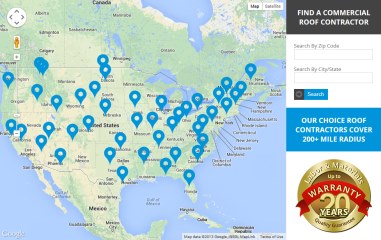
      Find a Local Commercial Roofing Contractor with Easy to Use Interactive Map

      Here at Choice Roof Contractor Group, leak3we are always looking for ways to help anyone who owns or manages a piece of commercial real estate. Commercial roofs will require some regular routine maintenance, and there are times when they will need repair work or replacement. This leaves commercial real estate owners looking for local roofing contractors who can successfully repair, replace or maintain their roofs. Commercial property is an investment, and a good leak-free roof helps to protect this investment.

      We have assembled a nationwide team of experienced roofing contractors, and we have made it super easy for any commercial real estate owner to find and locate these highly trained commercial roofing specialists in their area. We are proud to introduce our easy to use interactive roofing contractor map. It gives commercial building owners a bird’s eye view of the entire United States. From Florida to Washington and from California to Maine, there is an experienced local commercial roofing company within our network.

      Commercial property owners can search by city, state or zip. It is as simple as clicking on the contractor closest to you. From there, you can contact the Choice Roof Contractor by either phone or a contact form. Now it is easier than ever to locate an experienced commercial roofing contractor in your area.

      What Type of Commercial Roofs Do You Service?

      Our nationwide group of contractors perform repairs and restore every single type of commercial roof that exists including:

      ● Metal roofsrr3
      ● Flat roofs
      ● Slate roofs
      ● Low slope roofs
      ● Built-up or BUR
      ● Asphalt both rolled and shingle
      ● EPDM rubber roofs
      ● Hot tar and gravel
      ● Thermoplastic TPO

      Every type of commercial roof is covered!

      Why Choose a Choice Roof Contractor?

      All of our members use Conklin roofing products not because they have to, but because Conklin roofing products are the best within the entire commercial roofing industry. Conklin has been leading the roofing industry for over 40+ years when they introduced their first commercial roofing products way back in 1977. Since then, Conklin roofing products have been applied to over 2 billion square feet of roof.

      The Conklin Benefit

      Conklin roofing products offer several great benefits that are very difficult to ignore. A Conklin roof coating can extend the life of an existing commercial roof system by as long as 20 years with just one application, and our members back this with up to a 20-year, non-prorated guarantee. There is no need for expensive roof replacement or costly tear-off expenses!

      Conklin roofing products are also ENERGY STAR® compliant. This means that Conklin roofing products have met or exceeded the strict standards put in place by the Environmental Protection Agency for energy conservation.

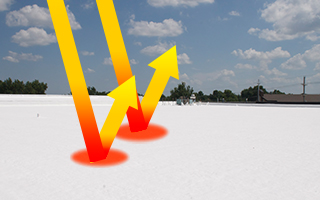
      Conklin roofing products are rr4leading the industry in energy efficiency. They have been labeled “cool roof” systems because they reflect as much as 85% of the sun’s heat from the roof. This can reduce the temperature of a roof by as much as 90 degrees. A cooler roof can equate to massive energy savings. In fact, the entire roof can pay for itself in as little as 7 years’ time!
      Finding a trusted commercial roofing contractor in your area is no longer a problem. Our new interactive map will help you find the right local roofer for the job in a matter of seconds! To access our map, click “Find a Local Contractor” on the top-right corner of any page, or visit https://www.choiceroofcontractors.com/find-a-commercial-roof-contractor.

      Metal Roof Restoration is the Smart Choice

      Add Decades of New Life
      Cut A/C Costs up to 50%
      Free On-Site Inspections
      Leak-Proof Your Roof
      Warrantied Up to 20 Years

      Commercial metal roofs can develop leaks and other signs of wear over time. In some cases, building owners may find themselves repeatedly repairing the same problem areas and wondering whether full replacement is the only remaining option.

      Why Does This Happen?

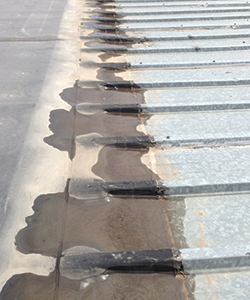
      Metal roofing systems are exposed to temperature changes, weather, movement, and aging over their service life. As metal heats and cools, it expands and contracts. Over time, this movement can place stress on seams, fasteners, flashing, penetrations, and other vulnerable areas of the roof.

      Leaks can also develop for other reasons, including corrosion, failed sealants, damaged panels, drainage problems, installation issues, or deterioration around penetrations. For that reason, the source of a leak should be properly identified before deciding how the roof should be repaired or restored.

      What Can You Do About It?

      It may seem like the most obvious solution is to replace the entire roof and start over. In some cases, replacement is the appropriate choice. However, when the existing metal roof is structurally sound and otherwise suitable for restoration, a coating system may provide an alternative to complete tear-off and replacement.

      A properly selected roof coating system can help protect the existing roof surface, address appropriately prepared seams and fasteners, and extend the useful life of a metal roof when restoration is suitable. Reflective coatings may also reduce the amount of solar heat absorbed by the roof.

      Before restoration is recommended, the roof should be evaluated for severe corrosion, structural deterioration, wet insulation, drainage problems, damaged panels, and other conditions that may need to be corrected first. A coating should not simply be applied over serious underlying problems.

      The cost and performance of restoration will depend on the existing roof condition, required repairs and preparation, coating system, installation, maintenance, and other project-specific factors. In suitable situations, restoration may reduce tear-off, disposal, and disruption compared with full roof replacement.

      A commercial roofing contractor can inspect the existing metal roof and discuss whether repair, restoration, coating, or replacement is the appropriate approach for the conditions present.

      Go Green with a New Cool Roof System

      The pressure is on for business owners to start going “green.” It seems that everywhere you look, people are thinking about ways to use energy more efficiently and reduce unnecessary waste. Business owners may also be looking for practical changes that can benefit both their buildings and their operating costs.

      Certifications and Approvals

      • ENERGY STAR®
      • Underwriters Laboratory (UL)
      • US Green Building Council
      • Cool Roof Rating Council (CRRC)
      Going green can offer several potential benefits. Energy-efficient improvements may reduce energy use and operating expenses while also lowering a building’s environmental impact. Business owners who own commercial properties may find that the roof is one area worth evaluating.

      Cool Roof Systems

      A cool roof system uses reflective roofing materials designed to reflect more sunlight and absorb less solar heat than many darker roof surfaces.

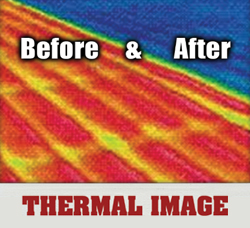
      By reducing roof surface temperatures, a reflective roof may reduce heat transfer into the building and lower cooling demand in some situations. The actual effect on energy costs depends on factors such as climate, insulation, building use, HVAC efficiency, roof construction, and the specific roofing system.

      Another potential benefit is roof restoration. When an existing roof is structurally sound and otherwise suitable for restoration, a reflective coating system may help extend its useful life while reducing the need for complete tear-off and disposal.

      Before a coating system is applied, however, the roof should be evaluated for wet insulation, structural deterioration, drainage problems, damaged roofing materials, failed seams or penetrations, and other conditions that may need to be corrected first. Proper surface preparation and installation according to the selected system’s requirements are also important to long-term performance.

      Energy Efficiency and Product Performance

      Reflective roofing products vary in their solar reflectance, thermal performance, durability, warranties, maintenance requirements, and suitability for different roof types. Building owners, architects, contractors, and facility professionals should review current product documentation and applicable ratings or requirements when evaluating an energy-efficient roofing system.

      A cool roof is not automatically the right solution for every building, but when the roof and building conditions are suitable, reflective roofing may provide a practical way to reduce solar heat absorption while supporting broader energy-efficiency and roof-restoration goals.

      Getting to Know Conklin Rapid Roof III

      Conklin® has numerous great roofing products that can help extend the life of a commercial roofing system. One of the premier roofing systems is called Rapid Roof III, and it lives up to its name. It allows contractors to quickly apply an entire roof coating that adds years of added protection to the roof in order to save the building owner money without effecting long-term durability. Let’s take a closer look at this great roofing product.

      The Basics of Rapid Roof III
      Rapid Roof III is an elastomeric, acrylic, monolithic roof coating, but what does all that mean exactly? Let’s look at each word a little closer to find out. Elastomeric refers to the Rapid Roof’s unique elastic like ability. The material can expand and contract during heat fluctuations. Acrylic refers to a product that is made from polymers or acrylates. Monolithic means that the roofing system is large, powerful and uniform.os1

      Rapid Roof III comes in three colors. It can be applied in bright white for maximum efficiency, light tan, or light gray. All three color choices help to actively reflect light away from the roof. This helps keep energy costs down, and helps keep the entire building cooler.

      Rapid Roof III has been designed to create a waterproof coating on metal roofs, membrane roofs, spray polyurethane foam, and Conklin’s Fabric Reinforced System.

      Some Technical Specifications
      Rapid Roof III is an ENERGY STAR® rated product as approved by the US Department of Energy. It has a UL-790 Class A fire rating, and it has been approved by the Cool Roof Ratings Council (CRRC).

      One gallon of Rapid Roof III will cover 100 square feet of roofing, but the roof can’t be below 40 degrees during application; however, a separate Conklin coating can be used in cooler temperatures. Inclement weather must be avoided as well. It takes approximately 2-8 hours for Rapid Roof III to properly dry.

      Rapid Roof III can reflect up to 85% of the sun’s solar energy. This is what makes Rapid Roof III such a great product for commercial roofs. It helps reduce the heat of the roof which results in energy savings.

      It is easy to see why Conklin’s Rapid Roof III is becoming one of the most popular choices for contractors and roofing companies all over the United States. When you engage a Choice Roof Contractor, you get access to this superior roofing system as well as all other industry-trusted Conklin products.

      Choice Roof Contractor Group Adds Another Top-notch Contractor

      All Star Roofing has joined our nationwide network. repair1The Choice Roof Contractor Group continues to expand, and today we announce the addition of another top-class roofing contractor. Mahlon Lee of Trout Creek, MT, a veteran commercial roof contractor who owns He provides specialized services in the areas of commercial roofing flat roof repair, energy efficient roofing, and others. This symbiotic association between Choice Roof Contractor Group and the expert roofing contractor will have a big impact on the state of Montana.
      Mahlon Lee has joined the brigade of contractors, who became a part of the Choice Roof Contractor Group in order to avail the many benefits that its members enjoy. The contractors who join our network get an opportunity to take their business to new heights by offering best-in-class commercial roofing systems. They also get to enhance their skills and credibility through Conklin® roof systems training and Choice Roof Contractor Group™ certification. Contractors are able to boost their profit margins, because they get all Conklin Roofing Systems at wholesale prices.

      Contractors also get access to a support system encompassing various facets such as expert sales coaching, nationwide positive reputation, solutions to all questions facing the company’s development, and comprehensive support from top roof contractors. However, the biggest benefit of becoming a part of the choice roof contractor group is that you get access to priority service from Top Roof Marketing, a premier company offering specialized marketing services to the commercial roof contractors.

      We Need More Contractors!

      Join our network to receive:

      • Free Lead Generation
      • Complete Training
      • Marketing Support
      • Wholesale Pricing
      • Mentorship Program

      Learn More

      Choice Roof Contractor Group chose to partner with Top Roof Marketing for all advertising and marketing activities due to their experience and expertise in offering first-rate solutions to the commercial roofing industry.

      Top Roof Marketing excels in various aspects of lead generation and conversion for the commercial roofing niche. With the help of their expert services, contractors can push their sales through the roof. Contractors get to focus their efforts on doing what they know best, and leave lead generation and other marketing activities to the experts.

      Becoming a part of the Choice Roof Contractor Group offers a myriad of benefits and opens a whole new world of business opportunities to contractors like Mahlon Lee. If you are a commercial roof contractor looking to send your business soaring, its time you join Choice Roof Contractor Group, and among other benefits avail expert services of Top Roof Marketing.

      The Answer to Saving Thousands of Dollars on Commercial Energy Costs is Right Above Your Head

      It is no secret that business owners are always looking for ways to reduce operating costs. One area that can affect building performance is the roof. Depending on the building, climate, insulation, HVAC system, and roofing materials, a reflective or cool roof may help reduce solar heat absorption and lower cooling demand.

      Cool Roof Systems

      commercial roof thermal performance
      Many commercial roofing systems can become very hot under direct sunlight. Reflective roofing systems are designed to reflect more solar energy and absorb less heat than darker roof surfaces.

      Reducing roof surface temperatures may help reduce heat transfer into the building and, in some cases, lower the load on air-conditioning or refrigeration equipment. Actual energy savings depend on factors such as climate, insulation levels, building use, HVAC efficiency, roof construction, and the specific reflective roofing system.

      Extending Roof Life

      Lower roof temperatures are not the only potential benefit of reflective roofing. When an existing roof is structurally sound and otherwise suitable for restoration, an elastomeric roof coating may help protect the existing roof surface and extend its useful life.

      Coating systems can provide a continuous protective surface over properly prepared roof areas and may help address appropriately repaired seams, fasteners, and other vulnerable locations. Many elastomeric coatings can also expand and contract as temperatures change.

      However, a coating system should not be expected to prevent every future leak or correct serious underlying problems. Before restoration, the roof should be evaluated for wet insulation, structural deterioration, drainage problems, damaged roofing materials, failed seams or penetrations, and other conditions that may need to be corrected first.

      The useful life and performance of a restored roof depend on the existing roof condition, preparation, product selection, installation, drainage, climate, inspections, and ongoing maintenance.

      Saving money is an important part of running a business, and the roof may be one area worth evaluating for potential energy and restoration benefits. A commercial roofing contractor can inspect the existing roof and discuss whether a reflective coating, repair, restoration, or replacement is appropriate for the building.

      For more information, visit our Cool Roof Systems page.

      Put a Stop to Commercial Roof Leaks

      Commercial roof leaks are a common problem that many building owners will eventually need to address. Metal roofs and other commercial roofing systems can develop leaks over time because of aging, weathering, movement, damaged materials, failed details, or installation problems.

      Where Do the Leaks Spring Up?

      You may be wondering if there are any specific areas of a commercial roof that are more likely to develop leaks. Common locations include:

      • seams
      • fasteners
      • gutters and drainage areas
      • vents and penetrations
      • air conditioning units and other rooftop equipment
      • caps and terminations
      • flashing
      • skylights
      • access hatches

      These areas require proper installation, inspection, and maintenance because they often involve transitions, penetrations, fasteners, or other details where water entry can occur if materials deteriorate or become damaged.

      Buildings in wet climates or areas with frequent storms may require particularly close attention to drainage, flashing, seams, and other vulnerable roof details.

      What Can You Do About It?

      commercial roof leak

      When a commercial roof begins leaking, the first step is to determine the source and extent of the problem. Temporary measures inside the building may help control water until repairs can be made, but the underlying roof problem still needs to be addressed.

      Depending on the condition of the roof, the appropriate solution may involve localized repairs, restoration, recover, or full roof replacement.

      The Replacement Route

      Full roof replacement may be appropriate when the existing system has extensive deterioration, widespread wet insulation, structural problems, serious drainage issues, or other conditions that cannot reasonably be corrected through repair or restoration.

      Replacement can be more expensive and disruptive than other options, but in some situations it provides the most appropriate long-term solution.

      The Restoration Route

      When the existing roof is structurally sound and otherwise suitable for restoration, a roof coating system may provide a cost-effective alternative to complete replacement.

      Before coating, the roof should be inspected for wet insulation, structural deterioration, drainage problems, damaged roofing materials, failed seams or penetrations, corrosion where applicable, and other conditions that may need to be corrected first.

      A compatible coating system can provide a continuous protective surface over properly prepared roof areas and may help extend the useful life of the existing roof. Seams, penetrations, fasteners, flashing, and other leak-prone areas may require repairs or reinforcement before or during the restoration process.

      A commercial roofing contractor can inspect the roof and discuss whether repair, restoration, recover, or replacement is appropriate for the conditions present.