The following blog consists of brief descriptions of the most common types of roof decks encountered, their particular strengths, liabilities and suitability for coating with Conklin roofing systems. To learn why Choice Roof Contractor Group and its commercial roof contractors exclusively use Conklin for all projects, visit the following page: The Conklin Difference.
Steel Decks
Roofing Services
Our professional commercial roof contractors provide:
The rib is considered the width of the channel between the flat upper sections of the metal sheet. Steel decks are typically installed onto steel framing and fastened by means of welding or mechanical fasteners. Corrugating allows greater spans and amount of load per square inch (psi). Rib style and type are determined by a structural engineer and are given in specifications details. Another type of deck or roof is standing seam metal roofs. These roofs are classified as either structural panels of architectural panels. For specific details on stand seam roofs, contact the Conklin Building Products Department.
Solid wood boards and plank were a very popular choice in construction many years ago. Today, they are still occasionally used, along with the more prevalent composite boards, but plywood is by far the more commonly used deck material. Plywood is a manufactured material comprised of a composite wood core sandwiched between solid wood veneers, which are “laminated” or glued together. The grades of plywood considered acceptable decking by the American Plywood Association (APA) are APA structural I and II rated sheathing, exterior or exposure 1.
The panels are also assigned span ratings indicating the maximum distance allowable between supporting rafters. To ensure that plywood meets Conklin specifications, an APA rated board, rather than a mill-certified board, is needed. Mill-certified boards are not tested as thoroughly as APA-rated boards and may be more subject to buckling or delamination.
Plywood Under Special Coatings
Chemical coatings for roofs have increased the range of design possibilities, particularly in larger commercial structures where contoured or steel-pitched roof surfaces are exposed to view.
Exterior plywood is recommended for use under special coatings for roofs. When the coating requires a very smooth base, use APA A-C Exterior or APA B-C Exterior plywood. When maximum smoothness is not essential, use APA C-C PLUGGED Exterior. Tongue-and-groove plywood (½” or thicker)or lumber blocking at panel edges is recommended. A 1/8” space is recommended at all edge and end joints unless otherwise indicated by panel manufacturer. If high-performance coatings are to be used for finish, check coating manufacturer’s recommendations for panel joint treatment.
Grades should also be specified when the structural wood deck is to be overlaid with a separate plywood layer to serve as substrate for special roof coatings. A 1/8” space is recommended at all edge and end joints unless otherwise indicated by panel manufacturer. Although minimum ¼” plywood may be used over structural decks, 15/32” or thicker panels should be considered for best performance over uneven surfaces or when rain or high humidity is anticipated prior to application of roof coating.
APA – The Engineered Wood Association has several publications available containing extensive information on plywood and Oriented Strand Board (OSB) and its uses.
They can be obtained at the following location:
APA – The Engineered Wood Association
P.O. Box 11700
Tacoma, WA 98411-0700
(206) 565-6608
www.apawood.org
Precast Concrete Deck Systems
Typically, precast concrete deck systems are concrete slabs, most commonly found with metal edges or tongue and groove edges. The slabs are reinforced with wire fabrics or preformed steel bars and are either slipped to the steel frame members or welded to concrete frames by means of metal plates. Depending on the design of the slab, they span anywhere from four to twelve feet. The joints between the slabs are sealed with flexible grouts or other seals.
Gypsum Concrete
Gypsum concrete is a poured system composed of a mixture of gypsum, wood chips, and shavings combined with water. After mixing at the job site, the substance is poured over a wire mesh, which is supported on form boards of either fiberglass, gypsum board, or other material. The minimum acceptable thickness of a gypsum concrete deck is 2”. One advantage of this system if the feasibility of varying the thickness to provide slope for good drainage.
One cautionary note: Because the material is applied in a wet state, it is very important to allow sufficient drying time before installing a roofing system over a new gypsum.
Further, gypsum concrete is not suitable for direct application for Conklin coatings because its chalky surface prevents proper adhesion. Before roofing over this system, some method of moisture detection must be used to ensure that the deck is dry, followed by a recommended “divorcing material” to act as a buffer between the concrete and coating.
Cement-Wood Fiber Panel Roof Deck (Tectum)
Cement-wood fiber roof deck panels are composed of treated wood fibers that are bounded together with Portland cement or other binder and compressed or molded into flat panels. The panels provide both acoustical and thermal insulation. They are furnished either as tongue-and-groove planks suitable for application directly to joists or with rooted edges, which must be secured with bulb-tees.
Reinforced Concrete Roof Decks
Reinforced concrete is produced by mixing aggregate (usually stone or crushed gravel and sand) with Portland cement, water, and in some cases, chemical additive. Steel bars, welded steel mesh or both are used to reinforce the concrete. Then, the surface should be finished to a texture equivalent to either a light power-trowel finish or a firm wood-trowel finish. The density of these decks is from 100 to 150 pounds per cubic foot. Reinforced concrete should not be confused with either lightweight structural concrete or lightweight insulating concrete.
Lightweight Insulating Concrete
Lightweight insulating concrete is usually made of perlite or vermiculite and Portland cement. Occasionally, a foaming agent is also added to create bubbles within the concrete, lessening its density. Minimum standard density is twenty-two pounds per cubic foot. This is a poured system, which is installed over wire mesh or form boards much like the gypsum deck. The material used in making these units can also be used as a fill over pre-cast and pre-stressed deck systems at a minimum thickness of 2”.
Note: Lightweight insulating concrete is not suitable for direct applications of Conklin coatings due to its high water absorption properties. Before roofing over this system, use some method of moisture detection to ensure that the deck is dry. Then, use a recommended “divorcing material” to act as a buffer between the concrete and coating. Conklin Building products Department will provide specific recommendations for this procedure.
Do not apply Benchmark or Rapid Roof III where temperatures exceed an ambient of 100o F and a surface temperature of 120o F. Do not apply at temperatures below 40o F, during inclement weather, when temperatures may drop below 40o F within forty-eight hours of when the temperature is not at least 5o above the dewpoint.
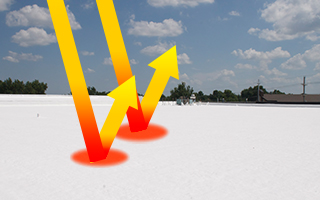
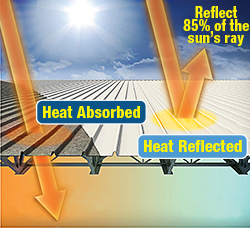
White and reflective roofing systems can offer a number of benefits for commercial buildings. By reflecting more sunlight and absorbing less solar heat than darker roof surfaces, they can help reduce roof surface temperatures and may contribute to improved building energy performance.
The actual benefits depend on factors such as climate, roof type, insulation, building use, HVAC efficiency, coating or membrane properties, and the condition of the existing roof.
Top White Roof Benefits
Add Decades of New Life
Cut A/C Costs up to 50%
Free On-Site Inspections
Leak-Proof Your Roof
Warrantied Up to 20 Years
Potential energy savings: Reflective roofing can reduce the amount of solar heat absorbed by the roof. In some buildings and climates, this may reduce cooling demand and help lower energy use. Actual savings will vary based on the roof assembly, insulation, HVAC system, building use, climate, and other conditions.
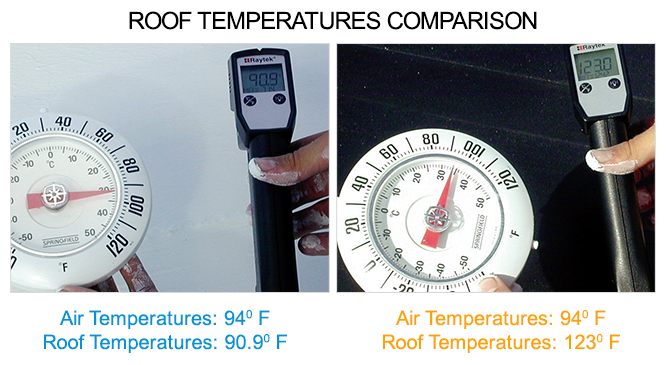
Lower roof surface temperatures: White and reflective roof surfaces can remain cooler under direct sunlight than darker roofing materials. Lower roof temperatures may reduce heat transfer into the building and can also reduce temperature-related stress on some roofing materials.
Potential urban heat benefits: Reflective roofing is one of several strategies that may help reduce heat absorption in developed areas. The overall impact on local temperatures or air quality depends on many factors beyond any individual roof.
Potential for longer roof service life: Reducing extreme roof surface temperatures and temperature swings may help limit some forms of thermal stress. However, roof life depends on many factors, including the roofing material, installation, drainage, weather exposure, maintenance, and the condition of the underlying system.
Maintenance remains important: White roofs still require regular inspection and maintenance. Dirt, biological growth, drainage problems, membrane damage, coating wear, seams, penetrations, and other conditions should be monitored and addressed as needed. Cleaning frequency will depend on the system, environment, and manufacturer recommendations.
Possible incentives or efficiency programs: Some reflective roofing products or energy-efficiency improvements may qualify for incentives, rebates, or programs depending on the location, project, product, and current regulations. Building owners should verify any available incentives with the appropriate local, state, federal, utility, or program authority.
Additional Considerations for Reflective Roofing Systems
It is clear that white and reflective roofing systems can offer meaningful benefits, but the right solution depends on the building and existing roof condition. Reflectivity alone should not determine which roofing system is selected.
Roof condition matters: Before applying a reflective coating or restoration system, the existing roof should be evaluated for wet insulation, structural deterioration, drainage problems, failed seams, damaged roofing materials, and other conditions that may need to be corrected first.
Restoration may reduce tear-off: When the existing roof is structurally sound and otherwise suitable for restoration, a reflective coating system may help extend its useful life while reducing the amount of material that must be removed and disposed of.
Performance varies by system: Reflectivity, durability, weather resistance, fire ratings, approvals, warranties, and service life vary among products and roofing systems. Product-specific claims should be evaluated using current manufacturer documentation and applicable project requirements.
Repairs and recoating may be possible: Some coating systems can be repaired or recoated as part of a long-term maintenance strategy. Whether recoating is appropriate depends on the condition of the existing system, adhesion, preparation requirements, and manufacturer specifications.
Proper installation is essential: The performance of any reflective roofing system depends on proper substrate preparation, installation, detailing, drainage, inspections, and maintenance.
With the right roof conditions and system selection, white or reflective roofing may provide a useful combination of solar reflectivity, roof protection, and restoration benefits. A commercial roofing contractor can inspect the roof and discuss whether repair, restoration, coating, or replacement is appropriate for the building.
A substrate is the surface upon which a roofing system is applied. It can be the roof deck, an insulation system or a complete preexisting roof system. Choice Roof Contractors select particular Conklin roofing systems for roof repairs and restoration projects depending on the substrate that currently exists on the commercial roof.
Built-up roofs (BURs) are constructed by alternating roofing felt layers with coats of either coal tar pitch or asphalt. The number of roofing felt layers with coats of either coal tar pitch or asphalt. The number of roofing felt plies varies, as does the weight of the felts themselves. Roofing felts come in weights of fifteen, thirty, forty-five, and ninety pounds – indicating the weight of 100 square feet of one ply of felt. Most often, a roof either has a smooth surface, with a top flood coat of asphalt or coal tar pitch, or a top layer of gravel set into the asphalt while it is still liquid.
Bitumen
The word bitumen refers to either asphalt or coal tar pitch used in creating built-up roofs. Coal tar pitch is a by-product of coal. To successfully install coal tar pitch, a roof’s slope must be ½” per foot or less. This is because pitch tends to liquefy and slide or “sag” off steeper roofs upon exposure to the sun’s heat.
Modified Bitumen
Roofing Services
Our professional commercial roof contractors provide:
Membranes are interesting hybrids that incorporate the high tech formulation and prefabrication advantages of single-ply with some of the traditional installation techniques used in built-up roofing. These materials are factory-fabricated layers of asphalt, “modified” using a rubber or plastic ingredient for increased flexibility, and combined with reinforcement for added strength and stability.
There are two primary modifiers used today: APP (atactic polypropylene) and SBS (styrene butadiene styrene). The type of modifier used may determine the method of sheet installation. Some are mopped down using hot asphalt and some use torches to melt the asphalt so that it flows onto the substrate. The seams are sealed by the same technique.
Asphalt
Asphalt is a by-product of petroleum. There are four types of asphalt, which are selected according to the slope of a given roof.
Type I asphalt (also known as dead level asphalt) can be used only when slopes are ¼” per foot or less. These asphalts are said to be self-healing. On warm sunny days, type I asphalt may soften and even become liquefied. It may fill any cracks or voids that have occurred, which is beneficial, but may also slide off sloped roofs, which is disastrous.
Type II asphalt can be used on slopes of ¼” to 1” per square foot.
Type III asphalt is a sag-resistant material suitable for slopes ranging from ¼” to 3” per foot.
Type IV asphalt is known as “steep asphalt” because it softens only at the highest temperature range. Resisting sagging better than any other asphalt type, it can be used on slopes up to 6” per foot.
Note: A roof showing any evidence of sagging is an unstable substrate and must not be coated until the problem has been corrected. This usually calls for removal of the sagging portions and replacement with sag-resistant roofing materials.
CAUTION: The two bitumens, asphalt and coal tar pitch, cause a strong chemical reaction when they come into contact and should never be used on the same surface. Coal tar pitch is also very hazardous to the mucous membranes and requires great caution in handling. Skin and eyes should be well protected and filtering masks worn when working with this substance.
Surfaces of Built-up Roofs
A built-up roof may have any number of different surfaces. A quick overview follows:
A “glaze coat” (flood coat) or asphalt can be spread over the surface of the roof membrane. To be effective, this must be a thin layer – no more than twenty-five pounds per 100 square foot. Thicker, heavier applications are likely to flow and crack over time.
Installation of “aggregate” (a top later of stone or gravel) is a popular strategy for protecting the black flood coat against the sun’s heat and ultraviolet light while permitting light foot traffic on the roof surface. Common aggregate materials include gravel, sag, crushed stone, limestone, marble chips and volcanic rock. A top pour coat of bitumen, at a rate of about sixty to seventy-five pounds per 100 square foot, is then applied. It is immediately followed by about forty pounds per square foot of aggregate. Although this system has its strengths, its drawbacks include the considerable structural load it places on the roof deck. It is for this reason that “stacking” built-up roofs is a risky practice.
NOTE: Aluminized surfaces offer insufficient adhesion for Conklin coatings. They must be removed by power washing or sandblasting before direct application can take place.
Plywood
Mentioned previously as a roof decking, plywood also can be used as a substrate over an existing roof. A sound, stable substrate, plywood offers excellent adhesion for Conklin coatings. Plywood panels bearing the American Plywood association stamp are recommended and should meet minimum requirements of 15/32” Exterior – CC plugged or better and rated for exterior exposure.
Because plywood panels have a tendency to expand and contract with changes in temperature, a gap of 1/8” must be left at all panel edges to allow for movement. Failure to leave such gaps can lead to buckling of the panels. These gaps must be thoroughly caulked, then reinforced with SpunFlex, Conklin’s 4” reinforcing fabric. To lend extra strength and durability to the system, a 38” SpunFlex should be embedded throughout the roof.
However, when left unreinforced, plywood is apt to develop “grain checking” (a small crack in the wood grain). This phenomenon is inherent in the wood itself, and is not preventable by the plywood mill. Another common problem with plywood is “delamination,” wherein the individual layers of the panel come unglued and begin to pull apart.
Oriented Strand Board (OSB)
Oriented Strand Board (OSB) consists of panels of compressed, strand-like particles arranged in layers oriented at right angles to one another. Some OSB panels bearing the APA stamp are recommended and must meet the 7/16” minimum thickness requirements. Contact your Conklin product specialists for a current approved substrate list. Conklin recommends several panels and must be approved for application.
Contact the Conklin Building Products Department for a current approved substrate list. Conklin recommends several panels and must be approved for application.
Spray-in-Place Polyurethane Foam
Sprayed Polyurethane Foam (SPF) has quickly grown in the past several years due to its insulation characteristics. However, SPF performs several functions on a roof. Aside from its insulation value, it can be applied to provide slope on a previously flat roof. It also functions as a new substrate for the appropriate Conklin Roofing System.
Since Polyurethane foam degrades quickly and becomes chalky upon exposure to ultraviolet light, the protective Conklin coating must be applied within two to twenty-four hours after foam application. Conklin Roofing Systems are designed to be applied directly over foam, offering outstanding protection against ultraviolet light and moisture. Yet the success of these coatings is limited by the quality of the foam application. Optimum performance is achieved only when the foam substrate is properly applied by a professional.
The Spray Polyurethane Foam Alliance was formed to provide information on product development, technology and application techniques to the roofing industry. They are an excellent resource for all Conklin roofing contractors, especially those interested in acquiring the skills needed to apply foam with Conklin jobs. They can be contacted at:
Spray Polyurethane Foam Alliance
4400 Fair Lakes Court, Suite 105
Arlington, VA 22033
Phone: (800) 523-6154
Fax: (703) 222-5816
Metal Roofs
There are two basic classifications of metal roofing; structural and non-structural (also known as architectural). Structural metal roofing attaches directly to purlins or lathe boards and does not require any sort of solid support beneath it. Non-structural metal roofing requires a solid substrate beneath it, typically plywood, oriented strand board, or a metal roof deck.
Structural metal roofing is broken down into low slope and steep slope categories. Low slope products are available for roof pitches from 1/4:12 to 3:12 while steep slope products are designed for roof pitches greater than 3:12. Low slope structural metal roofing consists of interlocking panels, commonly called standing seam roofing, that run vertically on the roof surface. These products can have a painted, mill-finish, or clear acrylic finish. To ensure a watertight seal on roofs of less than 3:12 pitch, some products will require machine seaming during installation. These special machines are rolled along the panels to crimp the panel seams together.
Steep slope structural metal roofing is available in both vertical and horizontal profiles. The vertical panels include standing seam systems that are fastened to underlying purlins with hidden clips or fastening flanges. A wide variety of corrugated or tile facsimile metal roofs that are attached with exposed fasteners directly through the metal roofing panels are also available. These products overlap or interlock on their side and end laps to form a watertight seal. Special seaming machines are typically not required. Most non-structural metal roof panels are designed for roof pitches of 3:12 or greater. Rather than transmit gravity loads through to purlins or lathe boards beneath them, non-structural systems transfer gravity loads to the roof deck beneath them.
Non-structural systems are available in a variety of styles including vertical standing seam, corrugated, and tile profiles as well as a wide variety of horizontal panels. The horizontal panels simulate the look of standard shingles, wood shake, slate, and tile. Most non-structural metal roofing will have a coating for aesthetics and durability. Coatings include various paint finishes, such as Kynar or siliconized polyester. Other coatings or treatments include galvanized finishes, galvalume or stainless steel.
Single-Ply Membranes
Single-Ply Membranes are flexible sheets of compounded synthetic materials that are manufactured in a factory to strict quality control requirements. This is in contrast to other roofing, typically known as BUR (built up roofs), which utilize hot asphalt and other hazardous components as the roof is constructed in place. Single-ply roof systems provide strength, flexibility, and long-lasting durability. The inherent advantages of pre-fabricated sheet are the consistency of the quality of the products that are manufactured, the versatility in their attachment methods, and therefore, their broader applicability. The Single Ply Roofing Industry (SPRI) identifies three major categories of single ply membranes: thermosets, thermoplastics, and modified bitumens.
Thermoset membranes are compounded from rubber polymers. The most commonly used polymer is EPDM (often referred to as “rubber roofing”). Another thermoset material is neoprene, although this particular formulation is no longer widely used for roofing. Thermoset membranes are successful for use as roofing materials because of their proven ability to withstand the potentially damaging effects of sunlight and most common chemicals generally found on roofs. Hypalon is a unique material because it is manufactured as a thermoplastic, but because it cures over time, it becomes a thermoset. Hypalon materials are heat sealed at the seams.
Thermoplastic Membranes are based on plastic polymers. The most common thermoplastic is PVC (polyvinyl chloride) which has been made flexible through the inclusion of certain ingredients called plasticizers. Also available are TPO (thermoplastic polyolefin). A number of different products in this category are available, each having its own unique formula. Thermoplastic membranes are identified by seams that are formed using either heat or chemical welding. These seams are as strong, or stronger, than the membrane itself. Most thermoplastic membranes are manufactured to include a reinforcement layer, usually polyester or fiberglass, which provides increased strength and dimensional stability.
Single Ply membranes offer the flexibility of three means of attachment: Ballasted, mechanically-fastened and fully-adhered. If the structural part of the roof (the deck) can withstand the weight, a ballasted roof may be the best option. But if the slope of the roof is greater than 2” in 12,” then this system may not be appropriate. There may be other limitations to the use of a ballasted system, such as roof height, proximity to shorelines and other high wind zones, and availability of ballast. A deck that accepts fasteners easily, such as steel or wood, makes a good substrate for a mechanically fastened membrane. These systems can be designed to provide the necessary resistance to known wind forces and are not subject to slope limitations. Another alternative is the fully adhered system, in which the membrane is attached to the substrate using a specified adhesive. Depending on the membrane, the adhesive may be solvent or water-based. The finished surface of an adhered roof is smooth. Colored membranes may be used, which may make an attractive aesthetic contribution to the building’s appearance.
For additional information on single-ply membranes, the Singly Ply Roofing Industry (SPRI) is an excellent resource for objective information about various products and systems. SPRI offers many valuable documents and publications to help educate contractors, architects, and building owner and maintenance personnel about roofing and the many options that are available today. SPRI publications range from generic technical guidelines for design and application to general information about roof maintenance and emergency repairs.
Single Ply Roofing Industry
77 Rumford Avenue, Suite 3B
Waltham, MA 02453
In addition to the benefits and incentives offered by the Choice Roof Contractor Group, Conklin itself offers a number of strong motivators and accolades to those who achieve great success with their commercial roofing businesses. All the benefits of being a Conklin Master Contractor, as well as qualifications that need to be met, are fully explained below. If more information is needed, contact Conklin’s building product specialists using the information at the bottom of this page.
Master Contractor Title
Conklin recognizes contractors who have established roofing businesses with a reputation for integrity, commitment to quality, and excellence in application, sales, service, and professionalism.
Preferred Contractor Title
Applicants qualifying for the program for the first time will earn the Preferred Contractor title for a minimum of one year before being recognized as Master Contractors.
Personal purchase and shipment of a minimum of $125,000 (Qualifying Volume), $160,000 (Gold Level) in Building Products during the Qualifying Period.
3-year average can be considered if personal volume for the Qualifying Period is greater than $93,750.
Foam and/or boardstock purchases may account for up to 25% of the Qualifying Volume.
Conklin credit account is in good standing.
No active warranty issues.
Personally completed Roof Systems Training in the last five years.
Ownership or legal business partnership (with a minimum of 33% ownership) in a roofing business. Proof of business ownership must be submitted with application.
Agreement to roof evaluations conducted by Conklin Building Products staff.
Preferred Contractor applicants must agree to an evaluation of a minimum of three roofs.
Previous Master Contractors may also be subject to evaluations at the discretion of Conklin’s Building Products staff in order to maintain the Master Contractor title and benefits.
Evaluations must be completed between September 1 and October 14, 2013.
A formal review process will be held by Conklin’s Executive team to determine program eligibility. Conklin reserves the right to withhold the Master or Preferred Contractor title at its discretion.
Notification e-mails will be sent to contractors meeting all requirements. Current e-mail address is required on application.
Master & Preferred Contractor Benefits:
2% discount on acrylic products during the Benefits Period.
Conklin Master Contractor Logo for use on vehicles, trailers, websites, letterheads and business cards during the Benefits Period only.
Priority to receive roof quote requests from Conklin’s website.
Master Contractor Destinations trip for the qualifying Independent Business Owners and spouse, or Independent Business Owner and legal business partner (proof of 33% ownership required).
Invitation to participate in the business meeting during the Master Contractor Destinations trip and provide input into the future direction of Conklin’s Building Products Division.
Preference for field-testing privileges on new Conklin building products.
A press release from the Conklin Company, announcing your Master Contractor status.
One year free VoiceLink service or $149 credit towards a Conklin Business website upon yearly application, effective January 1, 2014.
$100 transferred to Independent Business Owner’s deposit account for the purchase of sales literature, effective January 1, 2014
Anniversary awards:
1st year qualifying : Jacket with the Preferred Contractor logo
2nd year qualifying : Jacket with the Master Contractor logo
5th year qualifying : Choice of a gold ring or watch with Master Contractor logo
7th year qualifying : Diamond insert for ring/watch
10th year qualifying : Diamond insert for ring/watch
12th year qualifying : Diamond insert for ring/watch
15th year qualifying : Diamond insert for ring/watch
20th year qualifying : Carhartt jacket with the twenty-Year Master Contractor logo
Advanced Level Master Contractor Titles
Sterling Level Eligibility Requirements
Meet all Master Contractor prerequisites.
Qualifying Volume of $250,000.
Minimum of two consecutive years holding the Master Contractor title.
Advanced Level Master Contractor application received by September 14th.
Proof of liability insurance with a minimum coverage of $1,000,000.
Conklin Company Inc. listed as co-insured.
Diamond Level Eligibility Requirements
Meet all Master Contractor prerequisites.
Qualifying Volume of $1,000,000.
Minimum of three consecutive years holding the Master Contractor title.
Advanced Level Master Contractor application received by September 14th.
Proof of liability insurance with a minimum coverage of $1,000,000.
Conklin Company Inc. listed as co-insured.
OSHA and SPFEA (optional) trained staff.
Platinum Level Eligibility Requirements
Meet all Master Contractor prerequisites.
Qualifying Volume of $500,000.
Minimum of three consecutive years holding the Master Contractor title.
Advanced Level Master Contractor application received by September 14th.
Proof of liability insurance with a minimum coverage of $1,000,000.
Conklin Company Inc. listed as co-insured.
OSHA and SPFEA (optional) trained staff.
Advanced Level Master Contractor Benefits
All Master Contractor benefits.
Conklin-hosted customizable training events.
Reimbursement of a contractor-hosted event and/or Destination trips in the following amounts:
Sterling: $2,500
Platinum: $5,000
Diamond: $7,500
Incentives can be applied to one or more of the following events:
Crew training at Master Contractor’s location, crew appreciation event, Silver or Gold Destinations trip, meeting to introduce Conklin systems to building owners, customer appreciation event, and/or architecture luncheon.
Held the Master Contractor title for a minimum of ten years.
Master Contractor Emeritus application received by September 14th.
Honorary Master Contractor Benefits:
Invitation to the Master Contractor Destinations trip and opportunity to attend the business meeting along with spouse.
Travel & lodging accommodations will be at the Independent Business Owner’s expense.
Upon the qualification of two or more Preferred Contractors in the previous three years, Honorary Master Contractors will earn the Gold Level Master Contractor Destination Trip.
Conklin covers all travel & lodging accommodations.
Master Contractor Emeritus Benefits:
2% discount on acrylic products during the Benefits Period.
Invitation to the Master Contractor Destinations trip and opportunity to attend the business meeting along with spouse.
During the first five years of qualifying as a Master Contractor Emeritus, Conklin will pay for 50% of lodging and meeting expenses.
After five years, the Master Contractor Emeritus will be responsible for all expenses.
Upon the qualification of two or more Preferred Contractors in the previous three years, Master Contractor Emeritus will earn the Gold Level Master Contractor Destination Trip. (Conklin covers all travel & lodging accommodations)
For information please contact:
Tom Gravenstreter
Building Products Specialist II
952-496-4243 [email protected]
Sean Molby
Building Products Specialist
952-496-4234 [email protected]
Aaron Wagner
Building Products Specialist
952-496-4268 [email protected]
*Conklin reserves the right to alter this document at any time.
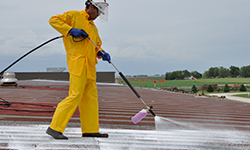
We exclusively use Conklin roof systems because of their lab-tested durability and customer-verified reputation. However, the reputation of these roofing solutions is supported by more than just first-party R&D and feedback from building owners. The roof systems we apply have undergone stringent review by highly respected rating organizations such as International Code Council, UL, Cool Roof Rating Council, Factory Mutual, Florida Building Commission, Energy Star, and others.
Underwriters Laboratories (UL)
Underwriters Laboratories was founded in 1894 as a nonprofit independent organization testing for public safety. Specifically, the test method for Conklin roof systems is called “Tests for Fire Resistance of Roof Covering Materials” and is referenced as UL-790. This test is also utilized by the American Society for Testing and Materials and identified as ASTM E108.
Three classifications that define the fire resistance performance of a roof covering are Class A, B and C. These designations are derived from tests that measure the effect an externally-caused fire has on the roofing system. Class distinctions cover different levels of effectiveness against fires in roof-top equipment, sparks and flying embers from nearby burning buildings.
Class A roof coverings are effective against severe fire exposure. Under such exposures, roof coverings of this class are not readily flammable, afford a fairly high degree of fire protection to the roof deck, do not slip from position and do not produce flying bands.
Class B roof coverings are effective against moderate fire exposures. Under such exposures, roof coverings of this class are not readily flammable, afford a moderate degree of fire protection to the roof deck, do not slip from position and are not expected to produce fling brands.
Class C roof coverings are effective against light fire exposure and afford a measurable degree of fire protection to the roof deck.
Three separate tests are conducted in the ratings:
The burning brand test measures the resistance of the roof coverings to penetration by flame. For each rating class, the brand size, the numbers of brands placed on the roof covering and the number of tests conducted differ.
The intermittent flame test subjects the samples to a cycling flame exposure. The test measures the roof covering’s ability to resist flame penetration and the reduction of this ability due to charring and cracking caused by the repeated application of flames. For each rating class, the flame temperature, duration and number of flame cycles varies.
The spread-of-flames test measures the surface burning characteristics of the roof covering. Samples are subjected to a flame and airflow test similar to the intermittent flame test, except that the flame is applied continuously.
Underwriters Laboratories published a book entitled “Roofing Materials and Systems Directory” containing descriptions of roof covering materials that comply with the various requirements of each class.
Another Underwriters Laboratories book is entitled “Fire Resistance Directory.” Internal fire resistance is the resistance or containment performance of roof-ceiling assemblies to the upward passage of heat and flame. Also measured is their resistance to collapse from the elevated temperatures of an internal fire. The test method used is ASTM E119, also known as UL 263. The Fire Resistance Directory contains the details of assemblies with their corresponding ratings.
Both the Building Materials Directory and the Fire Resistance Directory are recommended purchases for all contractors and should be consulted for exact method of application prior to applying any Conklin roof coating or roof system assembly. Copies can be obtained by directing your request to:
Underwriters Laboratories Inc.
333 Pfingsten Road
Northbrook, IL 60062-2096
Phone: (847) 272-8800
Fax: (847) 272-8129
Factory Mutual
One of the most profound influences on roofing was a disastrous event which occurred in 1953. A massive fire broke out at a General Motors plant in Michigan, causing six deaths and more than $50 million in property damage. The 34-acre GM plant had a steel roof deck covered with a layered built-up roof (BUR) topped with an aggregate material. An under-deck fire heated the steel deck and melted down the bituminous materials of the BUR. The release of combustible liquids and vapors from the bitumen was a strong contributing factor to the spread of the fire. The magnitude of the blaze prompted much fire research, leading to the formation of the Factory Mutual system.
Over the years, Factory Mutual has established four major tests for roof coverings. There include fire, wind, hail, and weather resistance. Of these four areas of research, Factory Mutual is best known for wind uplift tests, which examine the likelihood of a roof to blow off under certain conditions. Two common classifications pertain to these tests. One is the I-60 rating, and the second is the I-90 rating. Factory Manual Publication I-28, I-29 discusses specific information on heights of building, terrain and geography, and their effects on wind uplift.
For specific information on products carrying these ratings, Factory Mutual publishes the “Approval Guide.” Copies can be obtained by directing your request to:
FM Approvals
1151 Boston-Providence Turnpike
P.O. Box 9102
Norwood, MA 02062
Phone: (781) 762-4300
Fax: (781) 762-9375
International Code Council (ICC-ES)
ICC-ES came into being on February 1, 2003, when America’s four building product evaluation services officially combined their operations. The four “legacy” evaluation services that came together to form ICC-ES were the National Evaluation Service, Inc.; BOCAI Evaluation Services; ICBO Evaluation Service, Inc.; and SBCCI Public Service Testing and Evaluation Services, Inc. Through the legacy evaluation services, ICC-ES has a history that goes back more than seventy years.
ICC-ES is a nonprofit, public-benefit corporation that does technical evaluations of building products, components, methods, and materials. The evaluation process culminates with the issuance of technical reports that, because they directly address the issue of code compliance, are extremely useful to both regulatory agencies and building-product manufacturers. Agencies use evaluation reports to help determine code compliance and enforce building regulations; manufacturers use reports as evidence that their products (and this is especially important if the products are new and innovative) meet code requirements and warrant regulatory approval. ICC-ES evaluation reports are public documents, available free of charge on the Web, not only to building regulators and manufacturers, but also to contractors, specifiers, architects, engineers, and anyone else with an interest in the building industry. All of these people look to ICC-ES evaluation reports for evidence that products and systems are code-compliant.
ENERGY STAR
ENERGY STAR is a joint program of the U.S. Environmental Protection Agency (EPA) and the U.S. Department of Energy in helping us all save money and protect the environment thought energy efficient products and practices. In 1992, the US Environmental Protection Agency introduced ENERGY STAR as a voluntary labeling program designed to identify and promote energy-efficient products to reduce greenhouse gas emissions. Computers and monitors were the first labeled products. Through 1995, EPA expanded the label to additional office equipment products and residential heating and cooling equipment. In 1996, EPA partnered with the US Department of Energy for particular product categories. The ENERGY STAR label is now on major appliances, office equipment, lighting, home electronics and more. EPA has also extended the label to cover new homes and commercial and industrial buildings.
Through its partnerships with more than 9,000 private and public sector organizations, ENERGY STAR delivers the technical information and tools that organizations and consumers need to choose energy-efficient solutions and best management practices. ENERGY STAR has successfully delivered energy and cost savings across the country, saving businesses, organizations, and consumers about $14 billion in 2006 alone. Over the past decade, ENERGY STAR has been a driving force behind the more widespread use of such technological innovations as LED traffic lights, efficient fluorescent lighting, power management systems for office equipment, and low standby energy use.
Recently, energy prices have become a hot news topic and a major concern for consumers. ENERGY STAR provides solutions. ENERGY STAR provides a trustworthy label on over fifty product categories (and thousands of models) for the home and office. These products deliver the same or better performance as comparable models while using less energy and saving money. ENERGY STAR also provides easy-to-use home and building assessment tools so that homeowners and building managers can start down the path to greater efficiency and cost savings.
Cool Roof Rating Council
Add Decades of New Life
Cut A/C Costs up to 50%
Free On-Site Inspections
Leak-Proof Your Roof
Warrantied Up to 20 Years
The Cool Roof Rating Council (CRRC) was created in 1998 to develop accurate and credible methods for evaluating and labeling the solar reflectance and thermal emittance (radiative properties) of roofing products and to disseminate the information to all interested parties.
The CRRC is incorporated as a non-profit educational organization for the following purposes:
Implement and communicate fair, accurate, and credible radiative energy performance rating systems for roof surfaces.
Support research into energy related radiative properties of roofing surfaces, including durability of those properties.
Provide education and objective support to parties interested in understanding and comparing various roofing options
Product Rating Program
At the core of the CRRC is its Product Rating Program, in which roofing manufacturers can label various roof surface products with radiative property values rated under a strict program administered by the CRRC. Code bodies, architects, building owners, and specifiers can rely on the rating information provided in the CRRC Rated Products Directory. Which lists Conklin Company, Inc products Benchmark, Rapid Roof III, HyCrown, and Flexion. Contact Information:
Cool Roof Rating Council
1738 Excelsior Avenue
Oakland, CA 94602
Phone: (866) 465-2523 ( toll free in US ) | or (510) 485-7175
Fax: (510) 482-4421
Email: [email protected]
Florida Building Commission
Florida Building Codes and Standards staff the Florida Building Commission, which is responsible for the Florida Building Code.
The Florida Building Code became effective on October 1, 2005 and incorporates building, electric, plumbing, mechanical, and administrative codes – accessibility, energy, coastal, manufactured, and state agency codes.
When Hurricane Andrew tore apart South Florida, it exposed more than the interiors of thousands of homes and businesses. The storm also revealed a serious statewide problem: our antiquated system of locally-administered building codes and building code compliance and enforcement.
Thousands of homes and other structures simply did not stand up to the storm as well as they should have, and the effects quickly rippled out from South Florida to the rest of the state.
Andrew broke all records for insurance losses, and was the direct cause of Florida’s worst insurance crisis in history. Insurers suddenly realized that all of their worst case predictions were grossly understated – Florida was seriously underinsured and overexposed.
In the aftermath, many insurers simply pulled out of Florida and those that stayed felt it necessary to raise rates to staggering new levels in order to avoid the very real risk of sudden bankruptcy following another huge storm. Homeowners all over Florida were affected as they saw their rates rise drastically and found a lack of available new insurance threatening to pull the plug on development in every part of the state.
The secret was out. Building codes and their administration and enforcement was a statewide issue, with statewide implications. Poor compliance or enforcement in a single county could (and did) wreak havoc with homeowners, developers and commercial interests in every corner of the state.
Miami Dade County
Building components, including roofing systems and those which protect the envelop of the building from being breached, must be approved by the BCCO Product Control Division prior to their use in building construction or rehabilitation.
The Miami-Dade Country Product Control Approval System was established to allow new and innovated ideas to be developed into useful, practical, lasting and safe products.
The Product Control Division receives applications, processes, reviews, and recommends to the Board of Rules and Appeals approval or denial of building construction materials, products or systems used for the protection of the building envelope. Basically limited to windows, exterior glazing, wall cladding, roofing, exterior doors, skylights, glass block, siding and shutters require approval though the issuance a Notice of Acceptance (NOA) from the Product Control Division. The high standards set by the Product Control Division is the foundation upon which they have gained a national reputation as creating the benchmark for code related approval of building systems and components.
California Title 24 Compliance
Green Buildings Initiative. Governor Arnold Schwarzenegger signed Executive Order S-20-04 regarding Green Buildings on December 14, 2004. It established the State of California’s priority for energy and resource-efficient high performance buildings. The Executive Order sets a goal of reducing energy use in state-owned buildings by twenty percent by 2015 (from a 2003 baseline) and encourages the private commercial sector to set the same goal.
The order also directs compliance to the Green Building Action Plan, which details the measures the state will take to meet these goals. The Executive Order and Green Building Action Plan requires the CEC to:
Develop and propose by July 2005, a simple building efficiency benchmarking system for all commercial buildings in the state.
Develop commissioning and retro-commissioning guidelines for commercial buildings.
Further develop and refine (Title 24) building standards applicable to commercial building sector to result in twenty percent savings by 2015 using standards adopted in 2003 as the baseline.
Consult and collaborate with Department of General Services, Department of Finance and the PUC on a variety of other tasks.
Leadership in Energy and Environmental Design
The Leadership in Energy and Environmental Design (LEED) Green Building Rating SystemTM is the nationally accepted benchmark for the design, construction, and operation of high performance green buildings. LEED gives building owners and operators the tools they need to have an immediate and measurable impact on their buildings’ performance. LEED promotes a whole-building approach to sustainability by recognizing performance in five key areas of human and environmental health: sustainable site development, water savings, energy efficiency, materials selection, and indoor environmental quality.
LEED provides a roadmap for measuring and documenting success for every building type and phase of a building lifecycle. Specific LEED programs include:
New Commercial construction and major renovation projects
Existing building operations and maintenance
Commercial interiors projects
Core and shell development projects
Homes
Neighborhood development
Guidelines for multiple buildings and on-campus building projects
Keeping detailed records, files and photos on each roofing job you complete is a very important part of your responsibility as a roofing contractor. Your records should begin with information collected during the pre-bid inspection. This includes information on the history of the roof, its current condition, documentation of complaints, a copy of the specification requirements (products, performance, and warranty required) for the job and a blueprint of the building or architectural drawing.
Crucial Details to Record
Information about each completed roofing job should include batch numbers of all products used, quantity of materials and work hours required, any subcontractor fees paid, equipment rental, weather conditions during application and any special conditions that require monitoring. It is essential that all contractual agreements also be kept in the job file. This would include copies of your initial bid, contractor’s agreement, documentation of any verbal agreements concerning the job, maintenance provisions or warranties.
Update the job file regularly with notes from annual or biannual follow-up inspections. This gives you a history of the roof, including its longevity and performance, along with a record of any repairs or maintenance, and their cost, etc.
Why Keeping Records is Important
The reason for keeping such extensive records is their potential future value. If at some later point a roof problem develops, information collected in this file can offer valuable clues. Also, keeping records on the time and product used to complete a project helps form a job history, useful in preparing for future bids.
This information can be valuable in demonstrating your products’ performance to customers as well as serving as a reference for bidding new jobs. You may even want to use one of your job files as a portfolio to show potential customers. Your careful record keeping and attention to detail will demonstrate your ability to organize your people and equipment and perform the job in a professional matter.
Software for Data Management and Invoicing
Choice Roof Contractor Group has partnered with Accu-Rix Software to provide our nationwide alliance of commercial roof contractors with a powerful tool to manage their bids, contracts, job cost accounting, P&L statements, reminders, and more. Accu-Rix provides the only customer management software specifically tailored for contractors who use Conklin roofing systems, which we use exclusively. To learn more, visit A.R.S. Contractor Promo Video.
Liability insurance is a necessity for every professional construction contractor. This is especially true for the roofing contractor. Roof work involves a high risk to people as well as potential damage to equipment and property inside the building itself. Liability insurance is important to protect yourself and your business as well as your customer’s interests.
A Comprehensive General Liability or Manufacturer’s and Contractor’s policy is needed, including both premises and completed operations coverage.
Premises-Operations coverage applies to property damage and/or personal injury to others that might arise during a roofing application. An example would be the overspray of a cool roof coating onto a parked car, or equipment falling from the roof and injuring a pedestrian below.
Completed Operations coverage applies to property damage or personal injury to others, which could occur as a result of the roofing application after the job has been completed (the policy is kept effective through the term of the warranty).
Acquiring and Maintaining Your Insurance
When acquiring insurance, choose a reputable agent who has previously written policies for roofers, contractors and those in the construction industry and will better understand your needs.
Maintaining your insurance is important. You should keep your policy in effect through the time period of warranties you issue. For example: if you plan to retire from roofing tomorrow, but completed and issued a five-year warranty on a job today, you should keep your insurance policy in effect for the full time period of the warranty.
The amount of insurance coverage needed to protect your business should be assessed on an individual basis. The minimum limits of liability that we suggest are $500,000 Bodily injury, $500,000 Property Damage. Yet, these limits may be grossly inadequate if you take on a large job or a job in which the building’s contents are extremely valuable (example: roofing over computers or other sensitive equipment).
Points Worth Mentioning to Your Insurance Agent
The following points may help your agent better understand your needs as a Conklin coatings and single-ply applicator, resulting in better insurance protection.
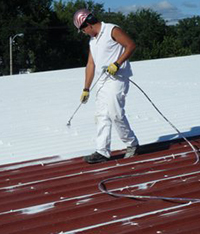
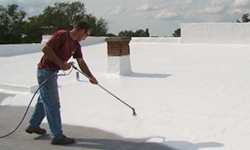
Conklin roofing systems go on cold and can be applied with a brush or roller. If sprayed, this is normally performed with an airless sprayer. No hot material or open flames.
Hy-Crown is a Hypalon single-ply roofing membrane and Flexion is a CPA single-ply roofing membrane which are, in most cases, mechanically fastened to the roof deck.
Some tools are so fundamental to the roofing industry that they should be included in every roof contractor’s inventory. Following is a roofing tools list of basic equipment, commercial roofing tools, and the special items required to perform certain tasks.
General Equipment
Free Guide: How to Switch to Commercial
Ladder (30’ to 40’) – used for access to the roof. Choose the most stable, heavy-duty model you can find. Do not skimp on safety for you or your employees.
Hard hats – head protection generally required when working on new construction. Many industries require that hard hats be worn by crew in all plant manufacturing areas. Ensure the hard hat is OSHA approved.
Soft-soled, steel-toed shoes – should be worn to provide maximum traction on the commercial roof, protect your feet, and prevent damage to the newly-installed roofing system.
Caulking guns – required to dispense caulk from tubes. A high-quality caulking gun such as one made by COX or Albion will speed your project and add more money to your pocket.
Paint brushes – used to apply bulk caulk and coating in detail areas.
Electric or cordless drill and assorted drill bits and drivers – used to drill holes in concrete, metal, etc., for securing blockings. May also be used to install screws and fasteners as needed. Mixing attachment is needed to agitate products before application. Helpful hint: Make sure the extra battery for your unit is also charged.
Pop-rivet gun – used in the attachment of sheet metal work.
Wheelbarrow – used in carting aggregate, debris, roofing materials, etc., across the roof.
Scissors – used to cut fabric. Long-bladed fabric shears work best.
General tool kit – should include hammers, mallets, hacksaw, screwdrivers, chisels, punches and an assortment of wrenches. A coring tool for taking cores and roof samples, a black sharpie pen, utility knife, gasoline or other cleaner and baggies to keep the samples separated. You should also have a box of baggies for samples that may need to be taken.
Roof hoist – extremely helpful in raising and lowering equipment and supplies from roof deck.
Bunghole mixer – mixing blade attachment for electric drill.
Core-cutter – Designed to cut a 2” hold in a built-up roof (BUR) for the purpose of determining the composition of the roof and deck.
Moisture Detection Tools
In determining the soundness and dryness of a roof surface and underlying insulation, a device such as a Delmhorst meter is indispensable. These meters measure the moisture content of roofing materials.
Post-inspection Equipment
Optical Comparator – The optical comparator is a magnifying eyepiece with a measuring scale on one end, used for determining the thickness of a coating sample. The reticle (measuring scale) is placed against the edge of the sample. The eyepiece is then focused to read the thickness to the nearest mil. It is essential that a very sharp cutting instrument such as a razor blade be used in trimming the sample edge for optimum accuracy. FineScale reticle number 121 is recommended for use with the optical comparator in this procedure.
Roof Cleaning Equipment
The commercial roofing tools and equipment listed below are needed for proper preparation:
Stiff bristled hand broom – used for sweeping gravel and loose debris from the roof surface.
Power broom – large motorized rotary brush used for thorough sweeping of large commercial roof areas. It weighs 400 to 500 pounds and requires use of a roof hoist.
Spud bar (hand) – a long-handled, flat-bladed device used in much the same manner as an ice scraper for chipping and loosening embedded gravel.
Power spudder – a motorized device which looks like a rotary lawn mower with steel blades. It removes embedded gravel quickly and completely. It weighs 300 to 400 pounds and requires use of a roof hoist.
Garden hose with nozzle – used in conjunction with a hand or power broom for washing and scrubbing the substrate to remove all adhered or embedded dirt and contaminants.
Shovel – used for removing aggregate and debris from the roof surface. Choose a sturdy industrial model.
High pressure washer – machine to disperse water at very high pressure; used for water-blasting embedded dirt and poorly-adhered material from the roof surface.
Vacuum/Hydrovac – Vacuum is a large truck or trailer mounted vacuum cleaner utilizing long, flexible hoses to vacuum loose aggregate from the roof surface. Note: Due to high equipment cost, this procedure is usually subcontracted. Hydrovac is an advanced vacuum which simultaneously vacuums loose material while washing and scrubbing the commercial roof with a rotating steel power broom and water spray attachment. The power broom and water serve to scrub the surface and flush out embedded dirt, which is then vacuumed away. This is a superior cleaning system, which does not introduce an excessive amount of water onto the roof, thereby avoiding delays due to a damp substrate.
Backpack blower – a lightweight, motorized air blower which is strapped to the worker’s back, freeing the hands to use the flexible hose to blow loose debris from the roof surface.
Air compressor – a large air compressor usually powered by a gasoline/diesel engine capable of producing a minimum air pressure of 100 psi with a minimum volume of 100 cfm. This high air pressure is used to blast loose material and debris from the roof surface.
Trash chute – can be purchased or constructed from plywood and 2”x4” lumber. It is used to safely lower trash and debris from the rooftop to the truck or dumpster.
Dumpster or truck – a dumpster, which can be rented, or a truck, which can be rented or purchased, is required when removing a significant amount of material from a roof.
Application Equipment
Paint type roller – 9” or 18” paint roller frame utilizing 1” or 1 ¼” nap rollers. These may be used to apply Conklin Roofing Systems.
Large paint pan – for use with rollers.
Airless sprayer – used for applying liquid coating to the roof surface. It can be used for application of all Conklin liquid-applied roof coatings. The specifications for this sprayer are:
Capacity – Interior paints – minimum of one gallon per minute (1 gpm)
Roof Coatings – minimum of two gallons per minute (2 gpm)
Nozzle or tip size – commonly .031 to .034
Set-up and use of this equipment should be accomplished in accordance with manufacturer’s directions.
Seam roller – a small hand-held roller, usually silicone free, used to press or roll the Hy-Crown seams together during the welding process.
Hot air gun – the electric hot air gun is used to heat weld single ply systems:
SPECIFICATIONS FOR THE STEINEL HG2300 Heating Gun:
Voltage: 120 V
Output: 1750 W
Max Temp: 1250 degrees F/700 degrees C
Max Air Flow: 15.4 cfm
Air Pressure: 3,000 Pa
Motor: Brushless/5,000 hours +
Roof Removal Equipment
Spud bar (hand) – a long-handled, flat-bladed device used in much the same manner as an ice scraper for chipping and loosening embedded aggregate and for cutting built-up roof into sections for removal
Power roof cutter – a gasoline engine-powered cutter, which is used for cutting existing roofing material into small sections for easier removal. Weighs 100 to 400 pounds and requires use of a roof hoist or an Enforcer that is a walk-behind power machine that will essentially remove the top part of the coating or system.
Pry-bar – a long-handled metal bar used for prying up sections of a built-up roof. A spud bar may also be used for this purpose.
Shovels – used for removing loose debris from the roof.
Roof hatchet – used for cutting existing roofing materials such as built-up roofs into small sections for easier removal.
Hand broom – used for sweeping gravel and loose debris from the roof surface.
Linoleum-type knife – a stiff, short-bladed knife for cutting asphalt material such as built-up roofs, rolled roofing, etc.
For many years, traditional built-up roofs, composed of layers of roofing felts and bitumen, were the mainstay of the roofing industry.
During the energy crisis of the early 1970s and recent energy concerns, the material used in built-up roofs declined in quality. During refining, more of the petroleum-based chemicals used in asphalts were extracted for use in gasoline and other more profitable items. The content of roofing felts also changed. Felts originally contained natural rag for strength and flexibility. But today, felts contain synthetic fabric and fibers, lowering the performance standard.
Changes in Performance Expectations
Today, it has become common practice to increase insulation thickness to reduce heat flow. With substantial insulation as part of most roofing systems, increased thermal stresses due to membrane heat gain, expansion rates and compatibility are placed on the built-up roof.
Emergence of Liquid-Applied and Single Ply Systems
As a result of changes and performance-related issues with built-up roofs, new options became prominent in the market. One option that drew considerable attention was the liquid-applied system. Seamless or monolithic application, lightweight materials and reflective surfaces helped liquid-applied systems gain momentum in commercial roofing. Architects, after years of specifying primarily traditional built-up roofs, also became more receptive to new systems and techniques. Single-ply membranes became another choice for many commercial projects due to their ease of application, various methods of attachment, durability and relatively low cost.
To the roofer, the basic design of a roof is the first factor that comes into play. The roof design is important because it either implies a system that successfully handles the demands placed on it, or one that chronically fails. Most architects and engineers rely on the advice of a select few local roofing professionals when designing buildings. This helps ensure that the design of the roof is executable.
Ideally, each roof design reflects a team approach with the roofer, architect and general contractor working to develop a viable system. Because of the technology and skills unique to each profession, all three parties have input in the final design.
The History of Drainage Problems
In the early 1920s, American architecture became strongly influenced by the Bauhaus School of Design in Germany. This concept called for sleek, severe lines topped with a flat or minimally-sloped roof. While this concept is still popular among designers today, it is considerably less popular with roofers and contractors.
Low-slope roofs require careful drainage design because accumulated snow or standing water can add significant load and contribute to roofing problems. If drainage problems are not corrected, the resulting conditions can damage the roof system and, in severe circumstances, may create structural concerns.
When the roofer’s desire for adequate drainage and the designer’s creative concepts are in conflict, it is important that the roof be designed so water can move efficiently toward the intended drainage system. Some of the ways this can be accomplished are described later in the Surface Preparation section.
Industry Standards
Over the years, the Army Corps of Engineers, Building Officials and Code Administrators, the Department of the Navy, the National Roofing Contractors Association and other roofing organizations have published recommendations and guidance relating to roof drainage. Examples discussed in roofing literature have included:
A minimum slope of ¼” per linear foot of roof in many low-slope roof applications.
The use of appropriately designed interior drains, scuppers, or other drainage components based on the building, climate, applicable codes, and roof design.
The use of expansion joints where required by the building and roof design.
Other drainage recommendations have addressed matters such as the number of drains, spacing between drains, and drain sizing. These requirements should be determined according to the applicable building and plumbing codes, roof area, drainage design, rainfall conditions, and project requirements rather than by one universal rule.
An adequate slope helps direct water toward the roof’s drainage system. If a crown or peak is designed into the center of the roof, scuppers or other drainage components may be spaced around the perimeter as required by the design. Interior drains, incorporating slope in the central areas of a roof, are another way to improve drainage.
One effective way to establish drainage is for the designer to slope the structural frame during construction. Other alternatives include spray-in-place polyurethane foam, lightweight insulating concrete and tapered boardstock insulation, which may be used to create slope and, depending on the material, provide insulation. The suitability and amount of these materials should be determined as part of the roof and structural design.
Professional Associations
There are a number of sources of information that provide the knowledge and training to start you on your way as a roofing contractor. Through seminars, magazines, newsletters and conventions, they promote the exchange of ideas and technology among members with the goal of nurturing a healthy economic climate for roofing and construction, and fair standards for labor, workmanship and pay.
NRCA
The oldest and best known of these organizations is the National Roofing Contractors Association (NRCA). With a membership of over 2,900 contracting groups, representing all fifty states plus twenty-eight foreign countries, the NRCA is dedicated to the advancement of the roofing industry and serves contractors engaged in the installation of roof decks, coatings, and waterproofing materials. A variety of programs are offered to members, including trade publications, educational seminars, management conferences, safety reports, insurance, technical information and a national convention/tradeshow each February.
O’Hare International Center
10255 W. Higgins Rd, Suite 600
Rosemont, IL 60018-5607
Phone: (847) 299-9070
Fax: (847) 299-1193
RIEI
The Roofing Industry Educational Institute (RIEI) provides objective and current technological information about quality roof design, materials and applications.
10255 W. Higgins Rd, Suite 600
Rosemont, IL 60018-5607
Phone: (847) 299-9070
Fax: (847) 299-1183
SPRI
The Single Ply Roofing Institute (SPRI) is another nonprofit organization founded in 1982, comprised of manufacturers and marketers of sheet-applied membrane roofing systems.
77 Rumford Ave, Suite 3B
Waltham, MA 02453-3872
Phone: (781) 647-7026
Fax: (781) 647-7222
Spray Polyurethane Foam Alliance
Spray Polyurethane Foam Alliance (SPFA) is a national trade organization which focuses on key issues and events in the spray-applied urethane foam industry. The SPFA holds an annual convention in February to keep foam contractors abreast of technology and other matters of interest. Membership is open to all interested parties.
4400 Fair Lakes Court, Suite 105
Arlington, VA 22033-3801
Phone: (800) 523-6154
Fax: (703) 222-5816
Western States Roofing Contractors Association
The Western States Roofing Contractors Association (WSRCA) has been shaping the western states’ roofing profession since 1974. Their 800 members are educated, professional roofing contractors and industry-related associate members including manufacturers, distributors, architects, consultants, engineers and various other segments of the roofing and waterproofing industry, who are committed to providing the highest quality service to customers.
1098 Foster City Boulevard, Suite 204
Foster City, CA 94404-2300
Phone: (650) 570-5441
Fax: (650) 570-5460
Midwest Roofing Contractors Association
The Midwest Roofing Contractors Association (MRCA) is an association of roofing contractors who have joined together to develop and administer programs and services that help member companies build their business and save them money, while continually working to improve the roofing industry.
4840 Bob Billings Pkwy, Suite 1000
Lawrence, KS 66049
Phone: (800) 497-6722
Fax: (785) 843-7555
Other organizations of importance to new contractors include the local Better Business Bureau and the Small Business Administration, whose purpose is to assist in financing and advertising start-up businesses and to oversee the successful operation of existing small businesses.
Here at Choice Roof Contractor Group, we are always looking for ways to help anyone who owns or manages a piece of commercial real estate. Commercial roofs will require some regular routine maintenance, and there are times when they will need repair work or replacement. This leaves commercial real estate owners looking for local roofing contractors who can successfully repair, replace or maintain their roofs. Commercial property is an investment, and a good leak-free roof helps to protect this investment.
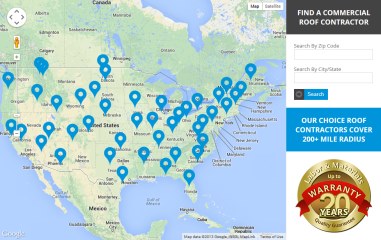
We have assembled a nationwide team of experienced roofing contractors, and we have made it super easy for any commercial real estate owner to find and locate these highly trained commercial roofing specialists in their area. We are proud to introduce our easy to use interactive roofing contractor map. It gives commercial building owners a bird’s eye view of the entire United States. From Florida to Washington and from California to Maine, there is an experienced local commercial roofing company within our network.
Commercial property owners can search by city, state or zip. It is as simple as clicking on the contractor closest to you. From there, you can contact the Choice Roof Contractor by either phone or a contact form. Now it is easier than ever to locate an experienced commercial roofing contractor in your area.
What Type of Commercial Roofs Do You Service?
Our nationwide group of contractors perform repairs and restore every single type of commercial roof that exists including:
● Metal roofs
● Flat roofs
● Slate roofs
● Low slope roofs
● Built-up or BUR
● Asphalt both rolled and shingle
● EPDM rubber roofs
● Hot tar and gravel
● Thermoplastic TPO
Every type of commercial roof is covered!
Why Choose a Choice Roof Contractor?
All of our members use Conklin roofing products not because they have to, but because Conklin roofing products are the best within the entire commercial roofing industry. Conklin has been leading the roofing industry for over 40+ years when they introduced their first commercial roofing products way back in 1977. Since then, Conklin roofing products have been applied to over 2 billion square feet of roof.
The Conklin Benefit
Conklin roofing products offer several great benefits that are very difficult to ignore. A Conklin roof coating can extend the life of an existing commercial roof system by as long as 20 years with just one application, and our members back this with up to a 20-year, non-prorated guarantee. There is no need for expensive roof replacement or costly tear-off expenses!
Conklin roofing products are also ENERGY STAR® compliant. This means that Conklin roofing products have met or exceeded the strict standards put in place by the Environmental Protection Agency for energy conservation.
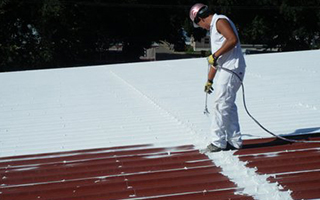
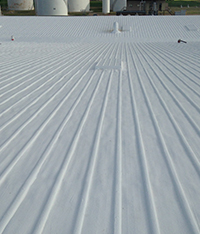
Conklin roofing products are leading the industry in energy efficiency. They have been labeled “cool roof” systems because they reflect as much as 85% of the sun’s heat from the roof. This can reduce the temperature of a roof by as much as 90 degrees. A cooler roof can equate to massive energy savings. In fact, the entire roof can pay for itself in as little as 7 years’ time!
Finding a trusted commercial roofing contractor in your area is no longer a problem. Our new interactive map will help you find the right local roofer for the job in a matter of seconds! To access our map, click “Find a Local Contractor” on the top-right corner of any page, or visit https://www.choiceroofcontractors.com/find-a-commercial-roof-contractor.
 We exclusively use Conklin roof systems because of their lab-tested durability and customer-verified reputation. However, the reputation of these roofing solutions is supported by more than just first-party R&D and feedback from building owners. The roof systems we apply have undergone stringent review by highly respected rating organizations such as International Code Council, UL, Cool Roof Rating Council, Factory Mutual, Florida Building Commission, Energy Star, and others.
 Class A roof coverings are effective against severe fire exposure. Under such exposures, roof coverings of this class are not readily flammable, afford a fairly high degree of fire protection to the roof deck, do not slip from position and do not produce flying bands.
 Underwriters Laboratories published a book entitled “Roofing Materials and Systems Directory” containing descriptions of roof covering materials that comply with the various requirements of each class.
 One of the most profound influences on roofing was a disastrous event which occurred in 1953. A massive fire broke out at a General Motors plant in Michigan, causing six deaths and more than $50 million in property damage. The 34-acre GM plant had a steel roof deck covered with a layered built-up roof (BUR) topped with an aggregate material. An under-deck fire heated the steel deck and melted down the bituminous materials of the BUR. The release of combustible liquids and vapors from the bitumen was a strong contributing factor to the spread of the fire. The magnitude of the blaze prompted much fire research, leading to the formation of the Factory Mutual system.
 ICC-ES came into being on February 1, 2003, when America’s four building product evaluation services officially combined their operations. The four “legacy” evaluation services that came together to form ICC-ES were the National Evaluation Service, Inc.; BOCAI Evaluation Services; ICBO Evaluation Service, Inc.; and SBCCI Public Service Testing and Evaluation Services, Inc. Through the legacy evaluation services, ICC-ES has a history that goes back more than seventy years.
 ENERGY STAR is a joint program of the U.S. Environmental Protection Agency (EPA) and the U.S. Department of Energy in helping us all save money and protect the environment thought energy efficient products and practices. In 1992, the US Environmental Protection Agency introduced ENERGY STAR as a voluntary labeling program designed to identify and promote energy-efficient products to reduce greenhouse gas emissions. Computers and monitors were the first labeled products. Through 1995, EPA expanded the label to additional office equipment products and residential heating and cooling equipment. In 1996, EPA partnered with the US Department of Energy for particular product categories. The ENERGY STAR label is now on major appliances, office equipment, lighting, home electronics and more. EPA has also extended the label to cover new homes and commercial and industrial buildings.
 Florida Building Codes and Standards staff the Florida Building Commission, which is responsible for the Florida Building Code.
 Building components, including roofing systems and those which protect the envelop of the building from being breached, must be approved by the BCCO Product Control Division prior to their use in building construction or rehabilitation.
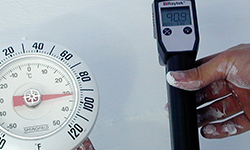 Green Buildings Initiative. Governor Arnold Schwarzenegger signed Executive Order S-20-04 regarding Green Buildings on December 14, 2004. It established the State of California’s priority for energy and resource-efficient high performance buildings. The Executive Order sets a goal of reducing energy use in state-owned buildings by twenty percent by 2015 (from a 2003 baseline) and encourages the private commercial sector to set the same goal.
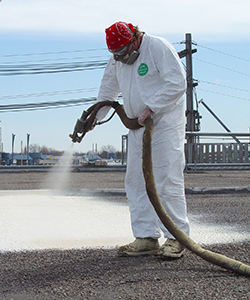 The Leadership in Energy and Environmental Design (LEED) Green Building Rating SystemTM is the nationally accepted benchmark for the design, construction, and operation of high performance green buildings. LEED gives building owners and operators the tools they need to have an immediate and measurable impact on their buildings’ performance. LEED promotes a whole-building approach to sustainability by recognizing performance in five key areas of human and environmental health: sustainable site development, water savings, energy efficiency, materials selection, and indoor environmental quality.
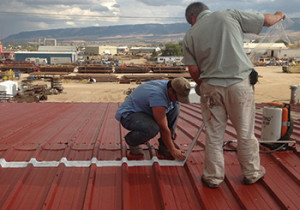
 During the energy crisis of the early 1970s and recent energy concerns, the material used in built-up roofs declined in quality. During refining, more of the petroleum-based chemicals used in asphalts were extracted for use in gasoline and other more profitable items. The content of roofing felts also changed. Felts originally contained natural rag for strength and flexibility. But today, felts contain synthetic fabric and fibers, lowering the performance standard.