Today’s blog post covers spray foam roofing equipment and its use in commercial roofing. We have previously looked at market opportunities for spray foam roofing, spray foam roofing myths and problems, and the benefits of spray foam roofing.
Spray Foam Equipment and Commercial Roofing Today
Spray polyurethane foam (SPF) roofing has been used for decades. Even with its track record, however, SPF is not one of the most common commercial roof systems. Many older buildings still have built-up roofing systems made with layers of asphalt and reinforcing materials, often finished with gravel or another protective surface. These systems can provide long service lives, but like all roofs, they eventually deteriorate from ultraviolet exposure, thermal movement, weather, moisture, and age.
Building owners seeking a restoration or reroofing solution may consider a commercial spray foam roof system. When properly designed, installed, and maintained, an SPF roof can provide long-term protection while adding insulation to the roof assembly. It is also relatively lightweight, which can be an advantage when compared with some replacement systems. The existing roof must first be inspected to determine whether it is a suitable candidate.
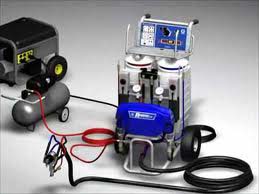
Commercial roof contractors need specialized equipment to apply spray polyurethane foam. A typical setup may include a proportioner or reactor, heated hoses, transfer pumps, a spray gun, a generator, an air compressor, safety equipment, and a properly configured spray rig.
Similar equipment may be used for interior spray foam insulation and commercial roofing, but the materials, application settings, protective coatings, safety procedures, and project requirements can differ. Contractors should receive appropriate training and follow the material and equipment manufacturers’ instructions for each application.
Some suppliers offer complete equipment packages designed to help contractors organize and transport the components needed at a jobsite. Depending on the system selected, useful equipment features may include:
- Consistent control of material temperature, pressure, and proportioning
- Monitoring and diagnostic tools that help with troubleshooting
- A jobsite-ready layout that makes equipment easier to transport and operate
- Controls that support a consistent spray pattern and application rate
- Automated setup or material-recipe recall, when available
- Efficient generator and equipment operation
- Accessible maintenance support and replacement parts
These features can help a properly trained contractor apply foam consistently and manage equipment operation more effectively.
Why Spray Foam Roofing?
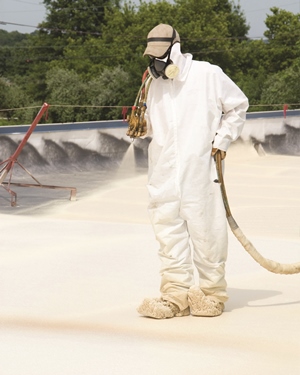 Despite some of the myths surrounding it, spray foam roofing remains a useful option for suitable commercial buildings. Both roofing contractors and building owners may benefit from it when the system is properly specified, installed, and maintained.
For roofing contractors, spray foam roofing offers several advantages:
- It can be applied over certain existing roof surfaces after proper inspection and preparation, potentially reducing tear-off
- Materials are pumped to the roof through hoses, which may reduce some of the material handling associated with other systems
- Its seamless application can simplify work around certain penetrations and roof details
- Foam thickness can be adjusted to help improve slope and drainage, although underlying drainage problems still need to be addressed
- Localized damage can often be repaired, and the protective coating can be renewed as part of a maintenance program
- It gives properly trained contractors another restoration or reroofing option to offer commercial customers
Building owners may benefit in several ways as well:
- The insulation can reduce heat transfer through the roof assembly and help lower heating and cooling demands
- The completed system may help reduce sound transmission through the roof
- A reflective protective coating can reduce the amount of solar heat absorbed by the roof surface
- The system can help limit air leakage when penetrations, transitions, and other details are properly installed
- Its monolithic application eliminates many of the field seams found in membrane systems, although no roof is completely immune to leaks
- The system is lightweight compared with many conventional roof assemblies
- Periodic inspections, repairs, and recoating can help extend its useful service life
When the system is appropriate for the building and the work is performed correctly, a commercial property can remain protected while benefiting from the roof’s insulating properties. Satisfied customers can also lead to referrals and future business opportunities for the contractor.
Where Can I Get Spray Foam Equipment?
Contractors join our group to receive:
- Lead Sharing
- Shared Strategies
- Inside Knowledge
- Complete Training
- Group Support
Choice Roof Contractor Group helps commercial roofing contractors make professional connections, exchange practical knowledge, and receive partner introductions as they evaluate equipment and new service opportunities. Contractors comparing spray foam equipment should consider the supplier’s training, technical support, replacement-parts availability, equipment service, material compatibility, and experience with commercial roofing applications.
Choice Roof Contractor Group is a nationwide alliance of independently owned commercial roofing contractors. Members meet the group’s current membership requirements, including third-party training or certification, proof of insurance, professional business conduct, and a commitment to the group’s values. Members also benefit from shared knowledge, sales and marketing resources, professional connections, and ongoing support.
Call 800-670-5583 or learn more about our nationwide commercial roofing contractor network.


