With demand for energy-efficient buildings on the rise, many building owners have been turning to energy-efficient roofing. But there are a number of options for energy-conserving roof systems available on today’s market, and two options stand out as an excellent alternative to a black roof—green roofs and white roofs.
As to which of these commercial roof systems offers greater benefits, advocates on both sides have brought up suitable points. Today, we cover a recently completed case study that took a look at the benefits of green roofs, white roofs, and black roofs.
Case Study: Lawrence Berkley National Laboratory Study on Roofing Energy Efficiency
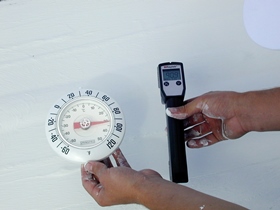
As noted in a February-published news article on SustainableBusiness.com, Lawrence Berkley National Laboratory conducted a study that analyzed the cost-effectiveness and energy-conserving power of green roofs, white roofs, and black roofs. Spanning 50 years, the study involved the close monitoring of 22 commercial flat roofs and assumed a 20-year lifespan for black and white roofs and a 40-year life span for green roofs.
The white roofs were found to reflect three times more sunlight than the green roofs, keeping the interiors of the buildings on which they were installed drastically lower. Thus, they were considered to the best ‘cool roofs’ in the study. Particularly, the white roofs were found to be up to 50° cooler during the summertime. Compared to the monitored black roofs, the white roofs saved $25 per square meter; in contrast to the white roofs, the green roofs had an additional cost of $71 per square meter.
Therefore, from the standpoint of being economical and saving energy, white roofs beat out green roofs. It should be noted that the sample size of 22 commercial roofs for the study is hardly conclusive, though. Add to that the fact that the geographic location of a commercial roof can be a factor, and one quickly comes to the conclusion that the study is not foolproof. Other dimensions could have factored in the study results as well.
Green roofs did hold some advantages over white roofs, namely being the better choice for storm water runoff and production of better air quality.
The Berkeley Labs’ study did reflect findings from a much smaller study, namely “The Battle of the Bulbs” competition conducted in Chicago in the spring of last year. In that competition, a green roof was pitted against a white roof for determination of which roof type produced lower electric bills. The white roof emerged as the winner, producing more than $40,000 in cost savings over the green roof.
Closing Thoughts
Roofing Services
Our professional commercial roof contractors provide:
While the study was not a “smoking gun” for white roofs, it did demonstrate some of the factors why a white roof can be highly beneficial for energy conservation and short-term and long-term cost savings. With Conklin roof coatings, a building owner can see up to 30% cost savings on his or her annual cooling costs. Plus, with Conklin roof systems’ ENERGY STAR® certification, building owners may be able to enjoy a slew of tax benefits and advantages.
Should you be interested in learning how a Conklin roof system can benefit your building, backed by a non-prorated warranty that covers labor and material costs for up to 20 years, give us a call at 800-670-5583 for a free room estimate.
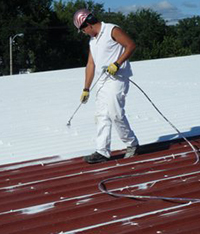
According to industry statistics, there is currently around 60 billion square feet of residential and commercial metal roofing in the United States. With roof contractors adding an additional 2 billion square feet of metal roofing per year, this roofing material has emerged as one of the most popular roofing options in America.
But like all roofs, metal roofing can experience small issues that can lead to expensive repair needs if left unaddressed. Five common problems that often come up include: metal roof leaks arising from pronounced roof tears; sitting pools of water; rusting arising from prolonged exposure; blow-offs arising from poor roofing installation; and punctures appearing as a result of frequent foot traffic, poor maintenance efforts, or poor or improper installation.
Below, we take a look at one solution that is cost-effective and long-lasting: a metal roof restoration.
Metal Roof Restoration: A Cost-effective Alternative to Roof Replacement
When a metal roof experiences issues, the natural choice may be to opt for a complete roof replacement. However, a roof replacement has several cost factors or other influential dimensions that bear consideration. These include:
Roof replacement is time-consuming. Consider what is involved with an entire roof replacement: tearing off of all old roofing materials and replacing them with new insulation and new metal paneling. Because this multi-step process takes time to complete, the timing of a building’s operations can be delayed for a long time.
Roof replacement exposes a building’s contents to outdoor conditions. Because roof replacement involves tearing off old materials and installing new ones in their place, a building’s contents are oftentimes exposed to the outdoor elements. If adequate sheltering is not put into place, the building’s contents may be compromised. That can be a huge business expense, especially if the ruined contents are technological or security equipment-based.
Roof replacement is more expensive than a roof restoration. With roof replacement, a building owner will incur many costs: tear-off costs, disposal costs, landfill costs, greater material costs by volume of materials used, and more. In many cases, a professionally installed metal roof restoration can help reduce costs when compared with a complete roof replacement.
Roof replacement is no guarantee that the same problems will not appear again. Because a new metal roof has the same characteristics as an old metal roof, there is always the likelihood that the roof will encounter the same problems again.
Metal Roof Restoration: Alternative to Roof Replacement or Fixes
Roofing Services
Our professional commercial roof contractors provide:
With a quality metal roof restoration, an existing metal roof has a protective roof coating applied right over it. This metal roof restoration system can add years to the existing roof’s life by helping protect the roof surface from continued deterioration. A restoration system can also help guard against rust, improve roof reflectivity for better energy performance, and form a seamless, watertight membrane across the existing metal roof’s surfacing layer. The end-result is a highly effective and reliable roofing system that provides added protection against harsh weather conditions. It is therefore highly energy-efficient roofing.
Metal Roof Restoration Solutions
With the right metal roof restoration solution, building owners may be able to reduce cooling costs, extend roof life, and avoid the expense and disruption of a full roof replacement. Should your metal roof need a cost-effective and lasting solution against rust or other problems, contact Choice Roof Contractor Group to connect with a contractor who services your area.
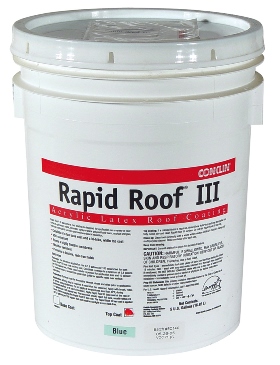
Today, we build upon our earlier blog posts about Conklin, taking a close look at Conklin roofing reviews.
With so many roofing product brands available on the market, building owners have a great many options as to which they can choose for their roofing protection. Many building owners have found Conklin, the originator of the roofing industry’s acrylic roof coatings, to be a great provider of lasting solutions to their needs. However, as often happens with any popular roofing product, as their user base has grown, Conklin roof coatings have earned some bad reviews.
This is not much of a surprise. A roofing product can fail or break down due to improper installation, a contractor being careless in application, an installation taking place in less-than-ideal weather conditions, and a host of other factors. On the whole, though, Conklin roof coating systems’ record speaks for itself: since 1977, these roofing materials have been installed on over 2 billion square feet of roofing throughout the United States. In fact, many of the roof restoration systems installed back in the mid-late 1970s are still on the job today, guarding against extreme outdoor conditions and providing great energy-saving benefits.
Below the reviews compiled from the internet and our very own contractors, we cover factors that demonstrate Conklin roof systems offer tremendous value.
Reviews from Contractors and Business Owners
“I just want to drop you a note on how pleased we are with the Roof System you put on for us at Premier Audio in Bismarck. The energy savings has been awesome. We have experienced roughly 30% savings in heating gas costs this winter compared to previous winters with almost the same temperatures. The difference in the summer was amazing in our shop area. In the hotter days this summer it was about 25 degrees cooler in our shop than it was outside with our overhead doors open. It is normally about 5 degrees cooler in the shop compared to outside summer temperatures.” – Don Braunagal, Premier Audio, Bismarck, North Dakota
“To Whom It May Concern: Five Star Roofing with Choice Roof Contractor Group installed foam roofing with acrylic coating, from Conklin, on two of my motels over three years ago. We have been averaging $600-$700 per month saving on our heating/cooling bills. There has been no leaks with this roofing system. We highly recommend their work and their service is exceptional!” – Dan Frank, Bismarck Motor Inn, Bismarck, North Dakota
“Conklin’s spray foam roofing system minimized the messy tear-off and the high cost of material disposal at the local landfill. I am happy with the successful roofing application and love the idea that I have the best and brightest roof in town.” – Tom Banks, developer of West Jefferson, NC-based 85,000 square-foot retail shopping center and residential housing project
“Last fall, we put on our thirteenth Conklin roof since 1983 and all are without a leak. This is a multimillion dollar development: some of the condominiums sell for over $300,000. We can’t afford leaks. I recommend this system to anyone with a flat roof that doesn’t want to be bothered with leaks.” – Ken H.
“The roof of our building was deteriorating with rust. Installing the Conklin MR System extended the life of the roof. After installation we now enjoy a dry building. We also like the annual inspection as part of the Conklin warranty. It has been a good investment.” – Bill R.
“We live in an area where the temperature ranges from 25 F below to 100 F above zero, so the roof has a lot of movement and weather related stress. This process sealed our leaks, stopped the rust and allows our students and staff to stay dry. We didn’t know we were going to get increased energy efficiency when we started, but we are spending less to cool the building. We are going to have more of our buildings done with the MR System.” – Keith M.
“Thank you for solving a multitude of problems we were having with the steel roof. The installation of the Conklin MR seamless roofing system corrected the problems and made its appearance look great. One of my partners, who is a former commercial roofing contractor, and I agree that the Conklin roofing system was a great alternative.” – Robert K., Tuscarawas Valley Development, Inc.
“Anybody that has doubts whether a white roof coating makes a difference needed to be in our building this summer on those 100 degree days. Usually, the air conditioners struggle and it gets very hot in the shop. With our new white roof, the air conditioners were cycling and customers and employees were commenting on how nice it was inside the building.” – Roger Lange, manager of Twin Valley Industry
“I’m in charge of roof maintenance for dozens of buildings, and we’re always looking for better ways to protect and seal our galvanized roofing. Five years ago we ran a test. We coated half of a 200,000 sq ft roof with the Conklin MR system. The other half got new corrugated sheet metal, sealed with a silicone coating. A year later, the silicone roof had six leaks and the Conklin roof had none.” – Charles F.
“When my warehouse burned, I was worried about my structure. I was sure the heat from the fire would destroy my roof. I walked around on my roof after the fire and was very impressed how it held up. I couldn’t tell you what the temperature was, but it was hot – very hot. The decision to use Rapid Roof III on my surface proved to be a great financial decision for my business.” – Anonymous satisfied warehouse building owner
There are very few bad reviews of Conklin posted online. If you take a quick scour across the World Wide Web, you will find very few negative Conklin roof coatings reviews. Normally that would indicate that a brand is not well-recognized or in much use. However, because Conklin roofing has been around for over 40+ years, it is an established brand. In fact, Conklin paved the way for many roofing products being engineered after its creations, giving building owners even more choices for lasting, reliable protection value.
Conklin roofing system contractors receive direct factory training for proper roofing application. Whether a roof contractor is a seasoned professional or a budding entrepreneur new to the roofing industry, if he wishes to be a recognized Conklin contractor he must go to Conklin roof systems training. There, contractors of all experience levels are given hands-on training and classroom instruction in proper product application for all commercial roof types. At the end of the two-day training, the contractors are given certification as well as a 3 percent discount on Conklin products. For a contractor looking to break into commercial roofing, this training represents one of the best training options available today.
If a Conklin roof has a warrantied problem, the non-prorated guarantee covers it. Most“Conklin-treated” roofs are backed by renewable, non-prorated warranties that cover both labor and materials. Because they do not lose value over their duration, that means if the roof has any issues during the coverage period, a building owner will pay for no out-of-pocket expenses. These non-prorated warranties covering labor and material inputs stretch for up to 20 years depending on the product used.
Conklin materials have a very low warranty claims rate. In addition to comprehensive warranty coverage, Conklin products feature a very low warranty claims rate: less than one-half of one percent.
Conklin’s non-prorated warranties are transferable. Yet another advantage, but one that is more customer-value-driven than performance-related: should a building be sold from one party to another, the Conklin warranty covering that building’s roof can be transferred to the new owner.
These materials have numerous certifications. Because reputation and certification are perhaps the most important indicators of quality in the building industry, Conklin has carefully engineered its products according to quality standards. Highly respected rating organizations including the International Code Council, UL, the Cool Roof Rating Council, Factory Mutual, and the Florida Building Commission have found Conklin products to meet high standards for tremendous energy efficiency and high-performance.
These are just a few indicators of why Conklin has a 40-year reputation for excellence.
Should you need a trustworthy roofing professional to service your roof, contact us today at 800-670-5583 for a free local roof estimate.
A roofing contractor association or Choice Roof Contractor Group… how should a roofer decide which is better for giving him support? In a nutshell: by looking at the benefits offered by membership in each. We take a look at the benefits offered by each organization.
Before we take that step, though, let’s briefly review what makes up a roofing contractor association and cover some of the associations that exist in the United States.
What is a Roofing Contractor Association?
A roofing contractor association is a professional trade association that serves roof contractors with common interests or in a certain geographic area. Many of these associations are not-for-profit organizations and also function as representation for roofing companies in a number of areas, including public policymaking, sectors within the construction industry, and more. It is not unusual for this type of organization to represent other parties than roof contractors, either. For example: the National Roofing Contractors Association (NRCA) is one of the oldest and most well-known trade associations in the construction industry. It represents residential and commercial roofing contractors across the United States, along with roofing industry-related businesses and other service providers or stakeholders. International parties are also welcome to join.
Other such associations cover a “tighter” geographic area, often representing only roof contractors in a more localized area. For instance, the Midwest Roofing Contractors Association is one of the largest multi-state roofing contractor associations in the United States. As its name shows, it serves and represents roof contractors located in the Midwestern United States. Other associations for roof contractors are available at state, regional, or even local levels, such as the Arizona Roofing Contractors Association, North Texas Roofing Contractors Association, and San Diego Roofing Contractors Association.
Roofing Contractor Association vs. Nationwide Contractor Network
Free Guide: How to Switch to Commercial
In contrast, Choice Roof Contractor Group is a nationwide contractor network that specializes in commercial roofing. Rather than serving primarily as a trade association, the group is designed to connect independently owned commercial roofing contractors with shared knowledge, sales and marketing resources, professional connections, and the experience of a larger contractor network.
Both a roofing contractor association and Choice Roof Contractor Group have their unique benefits and advantages. But what exactly are these? To answer this question, we can look at several of the ways a trade association and a contractor network may differ.
Membership structure. Trade associations and contractor networks may use different membership models, dues structures, eligibility requirements, and benefits. Contractors should review the current terms of each organization and compare them based on their own business needs.
Advocacy and industry representation. Organizations such as the NRCA may provide advocacy, education, industry information, networking opportunities, conventions, directories, and other professional resources. Choice Roof Contractor Group focuses more directly on contractor-to-contractor connections, shared practical knowledge, sales and marketing resources, partner introductions, and ongoing support within a nationwide commercial roofing network.
Professional connections and shared experience. A national association can give contractors access to broad educational and networking opportunities. Choice Roof Contractor Group also provides opportunities for members to connect with other commercial roofing contractors, exchange practical experience, discuss business strategies, and learn from one another.
Resources and business support. Different organizations offer different combinations of educational materials, events, publications, networking, discounts, sales resources, marketing guidance, and other services. Choice Roof Contractor Group provides members with resources such as shared knowledge, sales and marketing materials, professional connections, partner introductions, and ongoing support.
Membership requirements and fit. Contractors should also compare the qualifications and expectations associated with each organization. Choice Roof Contractor Group members are required to have third-party training or certification, provide proof of insurance, demonstrate professional business conduct, and commit to the group’s values.
Concluding Thoughts
In conclusion, both roofing contractor associations and contractor networks can offer meaningful value to commercial roof contractors. The best fit depends on what a contractor is looking for, whether that is industry advocacy, education, broad professional networking, contractor-to-contractor collaboration, sales and marketing resources, or other forms of business support.
In many cases, participation in a trade association and a contractor network can complement each other. Contractors should take a close look at each organization’s current requirements, benefits, and resources and decide which combination best supports their business goals.
For more information about Choice Roof Contractor Group, visit our Contractor Network page.
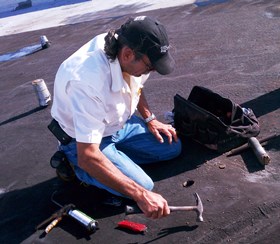
With economic conditions remaining tight, building owners are more selective than ever about whom they let on their commercial roofs. That is with good reason, of course. Roofing is a big expense, and if a roof service is done poorly or improperly, the expense can easily become bigger.
In lieu of this reality, many roof contractors may find it difficult to get roof maintenance contracts with building owners. But that does not mean that roof contractors should refrain from pursuing them. Maintenance contractors, after all, are an ongoing source of revenue. Because a roof has maintenance demands throughout a year’s time, the contractor who obtains the contract will have ongoing work. In turn, ongoing work means more gross revenue coming in.
Below, we examine some ways in which commercial roof contractors can better position themselves for getting maintenance contracts from building owners.
How to Get Maintenance Contracts
Free Guide: How to Switch to Commercial
1. Do research on the building owner you are targeting before the approach. The Internet is a powerful tool nowadays, and it is a prime resource for learning more about a customer prospect. Carefully research the prospect online via his or her business website (if applicable), on social networks such as LinkedIn and Facebook, and any other places where information can be found. Ask friends who are in the building owner’s social circles or local marketplace more about him or her. Knowledge is power, and leveraging any information you can find out can be the deciding factor of whether you land the contract.
2. Be aware of the importance of the image you are projecting. In all facets of life, first impressions are critical. That applies just as strongly to the roofing industry and business world in general. Showing up for interaction with a building owner, whether the interaction is planned or on-the-spot, with the appearance of a professional will strengthen your chances of landing the contract. Make sure you have professional-looking sales materials to represent you and your company in the best light.
3. If the building owner is a current or previous customer, build upon the goodwill you established in the first stages of the relationship. Even though it may be obvious, it is worth mentioning: seeking out maintenance contracts with customers who have engaged your services in the past, or are in the process of doing so, skyrockets your chances of signing a contract. To that end, make sure you keep in touch with your previous customers so you can explore contract opportunities in the future. A satisfied customer from yesterday is worth his or her weight in gold tomorrow, both as a testimonial source and for an ongoing business relationship.
4. Demonstrate to the building owner the value that you offer. Because maintenance contracts are more long-term than other roofing projects, what you bring to the table becomes even more critical. Take efforts to show the building owner that both of you will benefit from an ongoing business arrangement. Take time to answer all of the prospect’s questions and elaborate upon any points that will showcase your value in greater detail. Be mindful of how much you use the word “I” and “you”, and do not refrain from using language that is service-minded but professional. Be genuine but demonstrative in how both you and your prospect can benefit from your servicing his or her roof.
5. Come prepared with materials and testimonials that show your quality. Because any contractor can claim to be able to perform a roof maintenance program well, you need to have in place resources that help you stand out. The best way to do so is to come prepared with materials that demonstrate your value: namely, documentation of your workmanship from previous projects, such as pictures, and customer testimonials. If you are able to give a building owner a testimonial from a satisfied customer that is proximate to his or her business focus, building specifications, and day-to-day concerns, your chances of signing the contract become even greater. If you want to strengthen your long-term chances for landing maintenance contracts and jobs in general, join roof contractor support groups or professional trade associations for greater credibility.
6. Be prepared to negotiate. Contractual terms such as frequency of maintenance, the times at which you come back to make sure the roof is performing up to par, and other areas will be open to negotiation. Should you get to this stage with the building owner, remain decisive about fundamentals such as service pricing range, but also remain flexible. If you are too inflexible or intangible in your objective of getting the contract, you will likely walk away empty-handed. Being aware that you are a provider in a service industry, and remaining aware of the dynamics of that reality, will strengthen your chances for success.
These are just a few of the many ways to land maintenance contracts with building owners, helping you be a step above other contractors in your area.
Call us today at 800-670-5583 to learn more about how we can help you obtain short-term and long-term gains. We’re happy to help every way that we can.
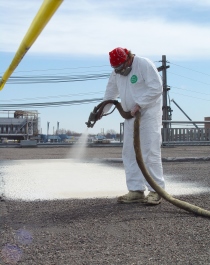
Today, we discuss some common questions and misconceptions about spray polyurethane foam roofing.
For building owners looking for a commercial roofing system that can provide both roofing and insulation value, spray polyurethane foam roofing can be a useful option when the building, roof condition, and project requirements are suitable.
SPF roofing has been used for decades, but its performance depends heavily on proper roof evaluation, surface preparation, application conditions, foam proportioning, protective coating, drainage, and ongoing maintenance.
Spray polyurethane foam technology does not have a track record in commercial roofing.
SPF roofing has been used on commercial buildings for many years. Its long-term performance depends on proper design, installation, protective surfacing, inspection, and maintenance.
Older studies and case histories have reported favorable performance for properly installed SPF roof systems. For example, Texas A&M University has been cited in industry case-study material for extensive use of SPF roofing across its campus.
Individual project results should not be treated as guarantees for every SPF roof.
Spray polyurethane foam may be suitable for insulation, but not for roofing.
Spray polyurethane foam is used in both insulation and roofing applications. In a roofing system, the foam is applied over a suitable substrate and protected by a compatible coating or other surfacing material.
The complete roof assembly, rather than the foam alone, provides the required roofing performance. The system needs to be properly designed and installed for the particular building and climate.
Spray foam roofs are always too expensive.
The cost of SPF roofing varies by project. Factors include roof size, existing roof condition, required repairs, foam thickness, protective coating, access, labor, and regional conditions.
SPF can provide insulation value that may reduce heating or cooling demand in some buildings. It may also reduce tear-off when an existing roof is suitable for restoration. However, energy savings and total project economics vary considerably by building.
Case studies such as the Texas A&M project have reported favorable energy-performance results, but those results should be viewed as project-specific rather than expected outcomes for every SPF installation.
Spray polyurethane foam roofing does not last.
The service life of an SPF roof depends on the quality of the original installation, the protective coating, climate, roof traffic, physical damage, drainage, and ongoing inspection and maintenance.
SPF systems can be repaired and recoated when the foam and underlying roof remain in suitable condition. Recoating can help protect the foam and extend the useful life of the system, but there is no single lifespan that applies to every SPF roof.
Spray foam roofs cannot be walked on.
SPF roofs can accommodate normal maintenance access when they are properly installed and protected, but they can still be damaged by sharp tools, dropped equipment, excessive traffic, or concentrated loads.
Walk pads or other protective measures may be appropriate in frequently traveled service areas. Any puncture or surface damage should be repaired so the foam remains protected.
What Can Cause Spray Foam Roofing Problems?
Many SPF roofing problems are related to design, installation, weather conditions, physical damage, or maintenance rather than to the foam material alone.
Potential problems can include:
Improper surface preparation
Applying foam to wet, dirty, or unsuitable substrates
Incorrect foam proportioning or application
Application under unsuitable temperature, wind, humidity, or moisture conditions
Insufficient or inconsistent protective coating thickness
Leaving foam exposed to ultraviolet radiation
Punctures or other physical damage
Poor drainage or unresolved ponding-water conditions
Failure to inspect and maintain the protective coating
For these reasons, SPF roofing should be installed according to the current requirements of the specific roofing system and by contractors with appropriate training and experience.
SPF roofing is not suitable for every project. Before installation or restoration, the roof should be evaluated for wet insulation, structural deterioration, drainage problems, damaged roofing materials, failed seams or penetrations, and other conditions that may need to be corrected first.
A commercial roofing contractor can inspect the existing roof and discuss whether SPF roofing, another restoration system, repair, recover, or replacement is appropriate.
Many roofing companies offer free commercial roof inspections. These inspections are oftentimes no-obligation and give commercial roof contractors the opportunity to show building owners their expertise and value.
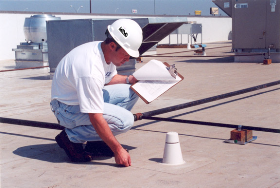
However, where many – if not most – contractors differ from each other is the quality of the free inspection they offer. Fly-by-night or less-than-stellar roofing companies may perform roof inspections that are quick or hardly comprehensive in order to increase their number of bids within an area or seemingly maximize their time. But any roof inspection that is done too quickly or anything less than the utmost awareness and precision can spell disaster for a building owner’s needs. After all, if a roof’s issues or developing problems are not identified, then what will prevent those issues from arising in the short-run or long-run?
Below, we cover 9 steps for how Choice Roof Contractors complete in-depth roof inspections with building owners’ needs in mind.
Steps for How to Inspect a Commercial Roof
Free Guide: How to Switch to Commercial
1. Determining if the roof has any guarantees that are active. Before performing any work, a reputable contractor will determine whether or not a roof has an active guarantee. After all, the guarantee’s terms may spell out key details that can influence any work the contractor would perform, such as the types of roofing products that can be or cannot be used on an existing roof. Should a roof contractor not abide by these terms, the guarantee would very likely be invalidated.
2. Closely examining building records and interviewing the building’s occupants. As is common sense, any existing plans of a building’s layout will be tremendously helpful in assessing a roof’s condition. A savvy roofing company would therefore seek out any original plans and specifications. Additionally, another key component of interacting with the building’s occupants and asking if they know of any current or prospective issues. Do they know of any leaks? If so, how often does the roof leak? In what weather conditions does the leaking appear? How long has the leak been taking place? Asking as many questions as possible to gauge the situation is crucial.
3. Carefully inspecting the roof’s interior system. Having completed the second step, a reliable commercial roof contractor would then closely examine and evaluate the roof’s interior system. Among other things, he will be looking for signs of rust or water stains, structural defects, noticeable corrosion or weaknesses, and the type and condition of mechanical fasteners that come from the roof deck. Known roofing leaks should also be examined inside of the building for determination of the leak source or presence of any issues such as roof splits. Aside from this inspection component’s value in the possible early identification of any issues, this step will also let the contractor know of which areas he should be careful traversing.
4. Inspecting the building envelope. Before proceeding to the roof’s top deck, a commercial roof contractor should make a general inspection of the building envelope. The presence of out-of-the-ordinary defects, such as pre-cast panels tilting or cracks in building features around corners, window openings, or doors may be evidence of structural movement or structural problems. These features will vary from building to building, of course. Any indicators of water entry along the building features such as the building’s masonry should also be taken note of for determining if anything may be wrong with the building’s gutters, down spots, or other relevant building features.
5. Inspecting the rooftop. Now is the time for the contractor to switch his efforts to the top of the building. The information he gained from the original plans and specifications will be invaluable here. A close inspection of the rooftop will begin with a general lookover of the rooftop for any debris, standing pools of water, signs of abuse or wear-and-tear, or even vegetation, as these can be indicators of long-term problems.
6. Inspecting the roof perimeter and then the roof field. Once the general overview is finished, a contractor should examine the roof perimeter as that is where most leaks and other roof problems occur. In this stage, things such as counter flashings, base flashings, coping, and coping joints will be closely examined. A roof contractor will also examine the gutters. Once the perimeter check is complete, the roof’s main body is next. Pools of water can be indicators of poor roof design or construction. Should the roof be a membranous roof like an EPDM roof, the contractor will examine the membrane’s surface for its condition. Are there any signs of debris or dirt build-up? Any signs of excessive or lacking amounts of surfacing layers such as gravel? A careful contractor will take note of all small details, as they can be clues to any issues at play.
7. Inspecting roof-based accessories and equipment. Sometimes leaks can come from equipment or accessories that have been poorly installed or are in poor condition. A careful roof contractor will examine areas including drains, seals, flashing, and other key areas as is relevant to that particular roof’s type.
8. Determining multiple options for action. Once a contractor has completed all of these steps, he then comes up with solutions that are tailored toward the roof’s specific needs. A customer needs-focused contractor will present the building owner with multiple options that can fit his needs, make suggestions as to which are the best, and offer that advisement with the building owner’s budgetary concerns in mind. This is where the roof contractor can show the building owner what he can bring to the table.
9. Submitting a proposal for the agreed-upon roofing solutions. Should the building owner be impressed with the roof contractor’s assessment and expertise, the contractor can then move forward with a proposal for action. The solutions agreed upon will include quotes for work to be done, estimated times of project initiation and completion, and other key details.
Choice Roof Contractors abide by these strict quality standards in their roof inspections as well as all other facets of their commercial roof services. Call us today at 800-670-5583 to learn why one of our standout network members can be the perfect fit for your needs and wallet.
Having been used in the United States for decades, spray polyurethane foam roofing has become an option for commercial building owners looking for roofing and insulation performance in a single system. SPF has been used over a variety of existing roof types, including built-up roofing systems and single-ply roof systems.
Like other commercial roofing systems, SPF roofing depends heavily on proper preparation and installation. The roof surface needs to be properly prepared, and the foam must be applied under suitable conditions using correctly calibrated equipment.
The protective elastomeric roof coating installed over the foam is also important. Inconsistent application or insufficient coating thickness can affect the long-term performance of the system.
With those considerations in mind, we turn to a notable case study (link) involving spray foam roofing at Texas A&M University.
Spray Foam Roofing in Action: Texas A&M University Case Study
According to the case study, Texas A&M University began using spray polyurethane foam roofing after experiencing problems with some of its existing built-up roofing systems.
The case study reports that the university eventually had more than 7 million square feet of spray foam roofing on campus. It also describes earlier built-up roofs that experienced recurring leaks and notes that locating the sources of those leaks could be difficult during roof servicing.
The university’s physical plant team began evaluating spray foam roofing as an alternative and installed SPF systems on a number of buildings.
Almost 10 years later, the university evaluated the energy performance of spray foam systems installed on 27 campus buildings. According to the case study, the roofing applications recovered their installation costs through energy savings in an average of 4.5 years.
The university later applied SPF systems to some metal roofs as well. The case study reports favorable long-term performance from both the restored built-up roofs and treated metal roofs.
The results from this project are an example of what SPF roofing may achieve under particular building, climate, installation, insulation, and maintenance conditions. They should not be treated as guaranteed energy savings or service-life results for every building.
Potential Benefits of Spray Polyurethane Foam Roofing
When properly designed, installed, and maintained, an SPF roofing system may provide several benefits:
Roofing and insulation value in a single system
A continuous foam layer that can conform around penetrations, curbs, and other roof details
Potential reductions in heating and cooling demand depending on the building and climate
The ability to create or improve slope in properly designed applications
Reduced tear-off in some restoration projects when the existing roof is suitable
A reflective protective surface when compatible reflective coatings are used
Repair and recoating options for some systems when conditions allow
SPF roofing is not appropriate for every roof. Before installation or restoration, the existing roof should be evaluated for wet insulation, structural deterioration, drainage problems, damaged materials, failed seams or penetrations, and other conditions that may need to be corrected first.
SPF installation also requires specialized equipment, suitable weather conditions, experienced applicators, proper foam proportioning, and consistent protective coating thickness.
The protective coating should be inspected and maintained because damage or deterioration can expose the foam beneath to ultraviolet radiation, moisture, traffic, or other conditions.
A commercial roofing contractor can inspect the building and discuss whether SPF, another restoration system, repair, recover, or replacement is appropriate.
Today, we cover the different generic types of commercial roofing materials that are available for flat roofs and low-slope commercial roofs.
According to the National Roofing Contractors Association, common commercial roofing categories include built-up roof membranes, metal roofing, modified bitumen membranes, single-ply membranes, and spray polyurethane foam roof systems.
Different Commercial Roofing Materials
Built-up roof membranes
Built-up roofing, commonly known as BUR, has been used in the United States for many decades and is often referred to as “tar and gravel” roofing. A typical built-up roof consists of alternating layers of bitumen and reinforcing fabrics, which are also known as roofing felts or ply sheets. Depending on the system, BUR may be installed over insulation or directly over an appropriate roof deck or substrate.
Metal roofing
There are many metal materials and systems used in commercial roofing, which we have looked at before in our commercial roof systems overview. Examples include galvanized steel, coated steel, aluminum, stainless steel, copper, and other metal roofing products.
Metal roofing can be affected by corrosion, movement, failed fasteners, seams, coatings, and other weather-related conditions over time. Depending on the roof and its condition, a compatible acrylic roof coating or other restoration system may be used to help protect and extend the useful life of an existing metal roof.
Modified bitumen sheet membranes
Modified bitumen roofing is related to built-up roofing but incorporates polymer-modified asphalt materials designed to improve flexibility and performance.
Two common categories are SBS-modified and APP-modified bitumen. Their specific properties, reinforcement, surfacing, and installation methods vary by product and roofing system.
Single-ply roof membranes
Single-ply membranes are factory-manufactured roofing sheets commonly classified into thermoplastic and thermoset materials.
Each system has different characteristics relating to seams, attachment, flexibility, chemical resistance, reflectivity, weathering, repair, and maintenance.
Spray polyurethane foam roofing Spray polyurethane foam roofing is created by applying liquid components that react and expand to form a rigid foam layer. A protective coating or other compatible surface is then applied over the foam.
The foam layer can provide insulation value, while the protective surface helps shield the SPF from ultraviolet exposure, weather, foot traffic, and other conditions. SPF installation and maintenance require proper equipment, experienced application, and compatible protective coatings.
Roof Restoration and Its Value
Roofing Services
Our professional commercial roof contractors provide:
Each commercial roofing material has its own advantages and disadvantages. Some systems may be better suited than others for particular climates, building uses, chemical exposures, roof designs, budgets, or maintenance requirements.
Over time, commercial roofs can experience weathering, leaks, membrane damage, failed seams, corrosion, drainage problems, or other deterioration.
When the existing roof is structurally sound and otherwise suitable for restoration, a roof restoration may provide a cost-effective alternative to replacement and may help extend the useful life of the existing roof.
Reflective coating systems may also reduce solar heat absorption and potentially lower cooling demand in some buildings, depending on the climate, insulation, HVAC system, building use, and roofing assembly.
Restoration is not appropriate for every roof. Before proceeding, the roof should be evaluated for wet insulation, structural deterioration, serious drainage problems, damaged roofing materials, failed seams or penetrations, trapped moisture, and other conditions that may need to be corrected first.
A commercial roofing contractor can inspect the existing roof and discuss whether repair, restoration, recover, or replacement is appropriate.
Whether a building owner requires simple roof repairs or a complete roof restoration, it is obvious that roofing is an expensive investment. With the economic pressures placed upon businesses by today’s economic climate, it might be tempting to go with a roof contractor who offers a below-cost bid, but the long-term consequences of doing so can be brutal. Many contractors who offer below-cost bids are actually “fly-by-night” contractors who are uninsured or use less-than-ideal materials. Choosing a roof contractor solely on the basis of his bid is hardly a good idea.
Of course, the other concern that guides business owners’ decisions on whether to hire a particular contractor is guided by their intent to receive the best service possible, but not at the highest cost. Determining which roof contractor to hire then becomes a balancing act of settling between a contractor’s pricing and service quality.
To help building owners and business owners navigate this often-difficult field, we offer a few tips below for consideration.
Advice for Hiring the Right Roof Contractor
1. Complete in-depth research.
There is no more important thing to do than engaging in discerning research. Carefully consider each of the contractors who are in the running for your needs. Is there evidence of their having a permanent business address? Do they freely offer their licensing numbers? Is the contractor registered to do work in your area? Do the contractors offer testimonials from past satisfied customers, and are they willing to share past customers’ phone numbers for references? How do the contractors portray themselves? Are they part of any professional associations or trade membership organizations? Ask tough questions and learn as much about the contractors bidding on your job as possible. Knowledge is power, after all, and it will be of tremendous assistance in your decision-making.
2. Narrow down the bidding contractors to a few candidates.
While research is the most important step, there is nothing quite like getting in front of someone to get a handle on him or her. Most roof contractors, regardless of their business’ size, offer free roof estimates or quotes before commencing work. Many of these contractors’ estimates or quotes will be free, no-obligation offers. Take advantage of this offering, and use the opportunity to gauge the contractor’s knowledge and ethics. Does he appear to be trustworthy? How does he or she handle product defects or poor cases of installation? What sort of warranties does the contractor offer? Again, question-asking is key to discerning more critical information for your needs.
3. Get a few estimates based on the same specifications and materials.
This is largely an extension of the first step. It is also one of the greatest methods for determining a contractor’s quality and ethics. Do not hesitate to receive 3-5 bids from different contractors who use the same roofing materials, and who would take care of the job according to the same specifications. Ask for estimates of how much time you think the job will take to complete. Doing so will allow you to get an idea of cost range, service efficacy, project efficiency, and other critical information.
4. Steer clear of contractors who use high-pressure sales tactics.
Should your roof have undergone major damage or need major repairs, it may be a temptation to turn to the first contractor who appears on your doorstep. Contractors who offer the greatest “cost efficiency” may be more attractive than established, proven roofing contractors as well. Contractors who use these sort of tactics are often not trustworthy, straightforward, or, at the least, respectful of your needs. Do yourself—and your wallet—a favor, and steer clear of them.
5. Make sure to have everything in writing.
When engaging someone for roofing work, make sure to have everything clearly spelled out and in writing. The person’s name, address, license number, and phone number should be included in the proposal. Do not sign anything before you have read it in its entirety and made sure you understand all of the agreement’s terms. Ensuring that everything in the proposal is clearly labeled and broken down is a good sign that the contractor is organized and efficient; good signs for the service you will receive. Turn to the advice of trusted friends for assistance should you find any part of this stage challenging.
Choice Roof Contractor Group’s Advantage
Roofing Services
Our professional commercial roof contractors provide:
With our nationwide contractor network, our members have been carefully vetted and confirmed to be quality service providers by a board of veteran roofers. Each member, regardless of how experienced he is in roofing, also goes to Conklin roof systems training for expert, in-depth instruction in proper application of commercial roof systems. All members of Choice Roof Contractor Group also agree to abide by strict quality standards upon becoming members as well.
Because our members hold themselves to high standards of excellence, building owners and business owners can be sure that they are getting quality service from topnotch roofing professionals. Our members also use Conklin roofing products for all commercial jobs. Conklin roof systems have been shown to enhance an existing commercial roof’s life for decades, and they provide seamless, leak-proof protection, tremendous energy savings, and great resistance against inclement weather and extreme conditions. They have been a leading choice for commercial roofing for 40+ years, as they have been installed on over 2 billion square feet of roofing across the United States.
Call us today at 800-670-5583 to learn why a Choice Roof Contractor can be the best fit for your needs.
 As noted in a February-published news article on SustainableBusiness.com, Lawrence Berkley National Laboratory conducted a study that analyzed the cost-effectiveness and energy-conserving power of green roofs, white roofs, and black roofs. Spanning 50 years, the study involved the close monitoring of 22 commercial flat roofs and assumed a 20-year lifespan for black and white roofs and a 40-year life span for green roofs.
 According to industry statistics, there is currently around 60 billion square feet of residential and commercial metal roofing in the United States. With roof contractors adding an additional 2 billion square feet of
  Today, we build upon our earlier blog posts about Conklin, taking a close look at Conklin roofing reviews.
 A roofing contractor association is a professional trade association that serves roof contractors with common interests or in a certain geographic area. Many of these associations are not-for-profit organizations and also function as representation for roofing companies in a number of areas, including public policymaking, sectors within the construction industry, and more. It is not unusual for this type of organization to represent other parties than
 With economic conditions remaining tight, building owners are more selective than ever about whom they let on their commercial roofs. That is with good reason, of course. Roofing is a big expense, and if a roof service is done poorly or improperly, the expense can easily become bigger.
 Today, we discuss some common questions and misconceptions about spray polyurethane foam roofing.
 However, where many – if not most – contractors differ from each other is the quality of the free inspection they offer. Fly-by-night or less-than-stellar roofing companies may perform roof inspections that are quick or hardly comprehensive in order to increase their number of bids within an area or seemingly maximize their time. But any roof inspection that is done too quickly or anything less than the utmost awareness and precision can spell disaster for a building owner’s needs. After all, if a roof’s issues or developing problems are not identified, then what will prevent those issues from arising in the short-run or long-run?
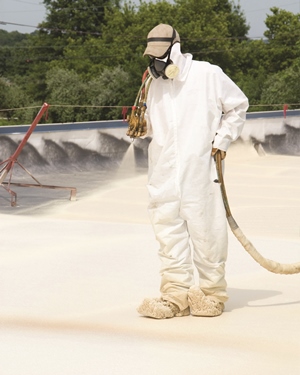 Having been used in the United States for decades,
 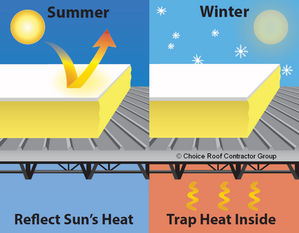 According to the case study, Texas A&M University began using spray polyurethane foam roofing after experiencing problems with some of its existing built-up roofing systems.