Contractors in our group are asked frequently by clients if it is possible to “waive the insurance deductible” on an insurance claim for roof expenses. This is not an easy question and can put contractors in a sticky situation because there are no good answers to give a property owner.
Many residential owners are led to believe, by convincingly professional contractors, that it is “completely legal” to cover a deductible on insurance repairs. Surprisingly, this is becoming the norm for roofers; they openly advertise “Free Roof” on marketing material such as yard signs and door hangers. No one wants to be called out for being in the wrong and especially on such a common question. So, what we’re going to do is explain the insurance claim process and provide some helpful tips.
Quality work is better than bad morals
 Unfortunately, the longer we’re in this industry, the more we see a startling trend of legitimate contractors exchanging deductibles for repair work and it conflicts with our business model. We can either throw away the quality service we provide and minimize costs with cheap workers and poor quality materials; or, we could educate and provide our useful knowledge to our clients on topics like the insurance claim process, our roofing systems, and the success factor of selecting a reliable contractor.
One thing that amazes us is that most people are more ready to take a blind shot with a cheap and amateur roofing contractor than a low quality car body shop. This is absolutely ridiculous considering that a house is much more expensive than a car, and our skilled applicators are executing some extremely dangerous work. The icing on the cake is that there will be stories about property owners getting scammed by “professionals” offering some ludicrous deal who will eventually close their business after raking in $1,000s in insurance collections.
Sadly, this is what much of the roof industry has formed into: local contractors with low budgets providing amateur workmanship, low-grade materials and kicking back money to customers because they fail at providing a service that is worth the insurance proceeds they are receiving. Top it all off with the fact that many of these contractors illegally funnel money from an insurance claim to the property owner and it puts more clarity into why 80% of roofing contractors go out of business within 2 1/2 years (Source: 2008 BBB).
It used to be a normal practice
Need a Trusted Expert?
Our group works together to provide:
- Larger Base of Knowledge
- Group-Wide Accountability
- Set Standards for Service
- More Peace of Mind
This insurance claims process does not work the same as today’s process. Many property owners today have Replacement Cost Value (RCV) provisions in their insurance policies. This allows insurers to limit their probability of an RCV insurance claim by cutting down payments into multiple parts. This means that now instead of receiving one main check, it can come in up to as many as 4 checks and will usually bear the name of the owner of the property as a cosigner. If a property owner wants to receive the entirety of the insurance claim, they would have to go through a licensed contractor to bill the insurance company and the mortgage company for the completed work.
Let’s look at an example. A property owner’s roof is damaged by a storm. The property owner files an insurance claim and insurance estimator is sent to your location. The insurance estimator says that the damage will cost $10,000 in repairs. The property owner has a $1,000 deductible, which is removed from the estimate. The roof is not in brand new condition, so the deterioration of the roof (we’ll give it $5,000 to make it easy) is removed from the estimate. The main check is written for $4,000 instead of $9,000. When an invoice of $10,000 or greater is received from a roofing contractor, the remaining $5,000 becomes recoverable. This ensures that the check is written to the mortgage company listed.
How do roofing contractors “waive” deductibles?
To be straight forward, they’re lying to the insurance and mortgage companies. The insurance policy of the property owner is strictly a contract between said property owner and the insurance company. With this contract, property owners can trade annual premium for protection against unexpected and disastrous damages to their properties minus a deductible. As usual, you have legal protection if your insurance carrier was to break your contract and refused to reward a claim. However, your insurer also has legal protection from YOU if you fail to meet your stated obligations (or you provide false information to save money on your deductible). A number of roofing contractors will market their services using a yard sign, which they claim can be used as an “advertising credit” for the deductible amount. If you’re going to invoice for the entirety of your insurance claim, you must make clear the amount being used on the project to the insurer. A contractor cannot charge the insurance provider $10,000 for roofing work they actually provide for $9,000. This basically means the contractor is purposely increasing the price to replace the amount missing.
If the insurers knew the work is being done for less, they would lower the amount of money set for the project. Here’s an example: If the insurance provider finds out that the property owner had the roofing work done for $9,000 instead of the allotted $10,000, only $8,000 would be released instead of $9,000. The insured would still have to fork over the $1,000 deductible to the contractor. In summary, this disclosure between the price invoiced to the insurer and the price invoiced to the property owner is a breach of contract between the insured and the insurer.
A number of roofing contractors will debate that is completely up to the contractor to decide how they get their work. They believe that if they want to pay a client $1,000 to get the project, they should be able to do so regardless of whether an insurer is involved. To make matters even worse, if the contractor is just writing a check to the property owner for “advertising”, this would require the filing of a Form-1099 to the property owner as the Federal Government requires transactions larger than $600 to be declared and that the property owner should pay income on the transaction.
This technique is borderline criminal and it’s best not to try it because someone will get caught in the end. It leaves us with an uneasy feeling, since false information is provided to the insurance company. How many major companies have you seen with a business model built around providing illegitimate information to cut checks?
At the end of the day, if your insurance provider were to catch the contractor or yourself, don’t count on the contractor to take all the legal blame. Be wary with contractors like these! They may be cheating the system on your behalf, providing low quality work on your roof, or stamping your name on a false invoice they give to your insurer. With anything you do, always be sure to research it well and choose a contractor with a reliable record of customer satisfaction. Don’t get caught on a “great deal” and never hand your money to the contractor before the job is done.
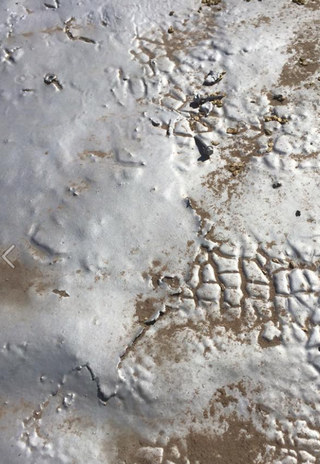 The main selling point of most aluminum coatings is low initial cost. But is cheaper better in this case? Let’s examine the evidence:
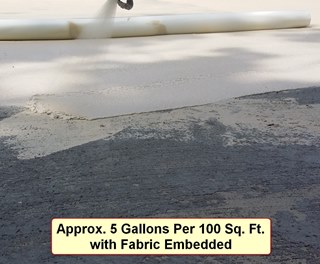 With an exceptional 35+ year track record, Conklin continues to be a trusted name in the commercial roofing industry. Their revolutionary elastomeric roof coatings are formulated to cover any type of roofing substrate. Once the fluid-applied product dries, it creates a seamless, water-tight membrane on top of the pre-existing roof, making it look and perform like new.
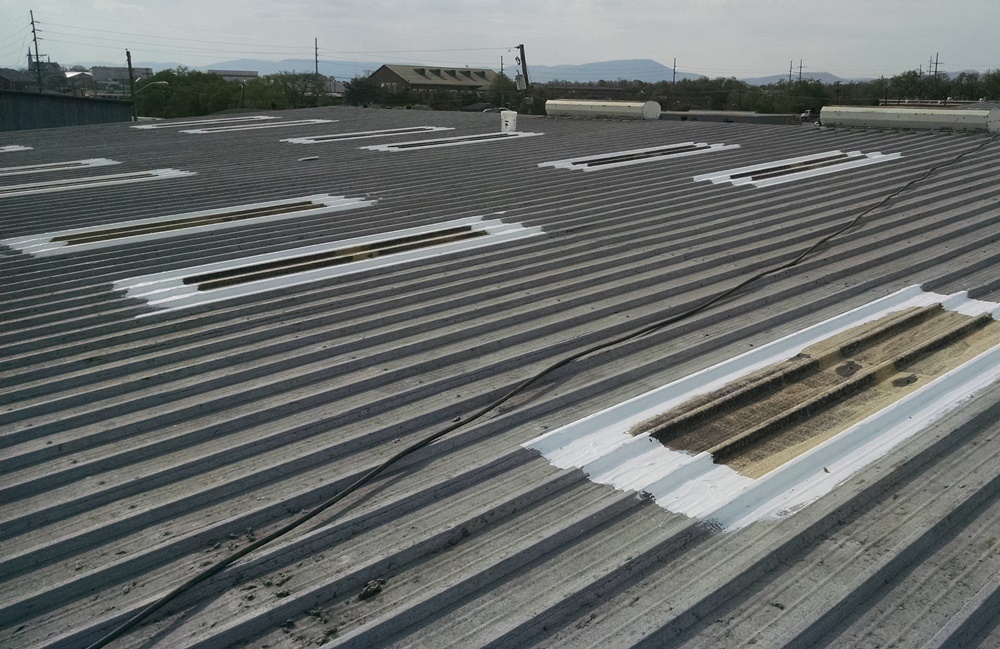
 Firstly, we will address the matter you are visiting the blog post for. Metal roof repair estimates vary depending on the roofing project, such as whether panels or other components need to be replaced, and how much area needs to be addressed. This explains why it is hard to provide a reliable number for the cost of a metal roof repair project without a professional roof inspection.
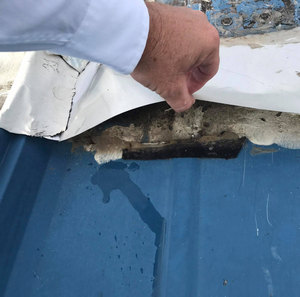
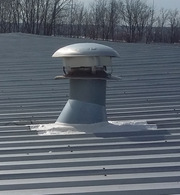 Depending on the condition of the roof, elastomeric sealants, coatings, reinforcing fabrics, or other compatible materials may be used to address localized problem areas. These types of repairs can be particularly useful around seams, fasteners, penetrations, flashing, and other details where leaks commonly develop.
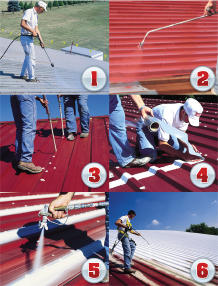 The process normally begins with a thorough inspection and preparation of the existing roof. Dirt, debris, loose coatings, corrosion, and other conditions that could interfere with adhesion should be addressed before coating begins.
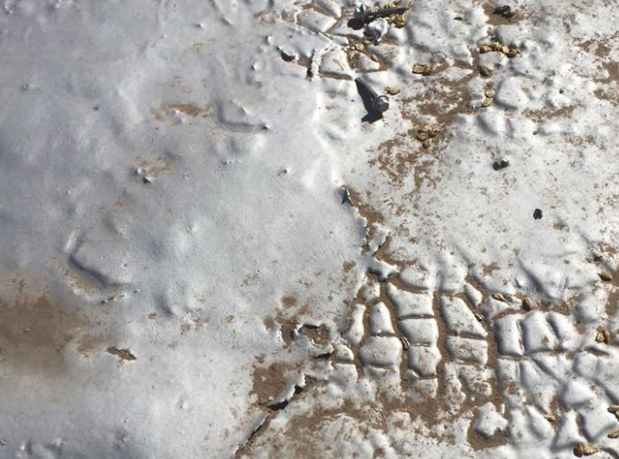
 For decades roof coatings have been an effective repair and restoration option for a variety of roofing substrates. They are durable, economical, and if applied properly, they can transform a troubled roof into an energy-efficient, leak-resistant asset. However, before executing a roof coating project, it is important to conduct a comprehensive inspection of the pre-existing roof to determine its overall condition. If any surface areas are compromised, the coating may not fully adhere and could merely cover up a serious underlying problem.
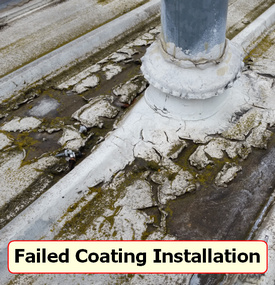 When coatings are applied over areas containing trapped moisture, the following issues can ensue:
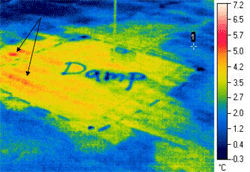 One method roofing professionals can use to help identify trapped moisture is an infrared roof scan. Utilizing infrared technology, roofing specialists can identify temperature differences that may indicate areas of moisture that are invisible to the naked eye.

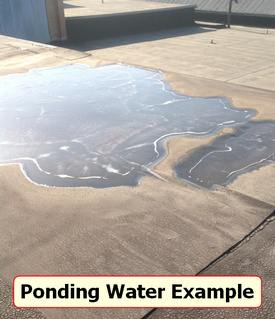
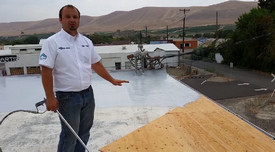 Regardless of the formula, roof coatings should never be an excuse to ignore ponding water issues. Commercial roofs should be designed and maintained so that water drains properly. Water that remains on a roof for an extended period after rainfall can indicate a problem that deserves further investigation.
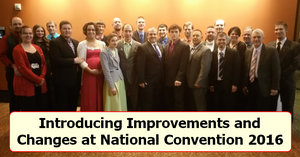 Approximately 6 months ago, we began rolling out a new organizational structure with higher requirements and greater benefits for our members while also clearing up expectations and setting standards for contractors who want to be supported by our nationwide group of commercial roofers.
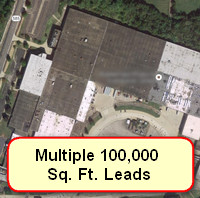 In 2014, Choice Roof Contractor Group had received a little over 100 requests for roofing projects via our lead generation service. This year saw an ample increase – more than 200 roofing leads were generated, including several leads of 100,000+ square feet. In other words, our lead gen program more than doubled!
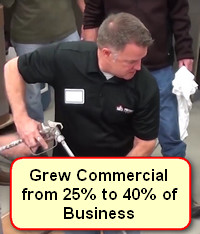 There were numerous stories of growth from members this year. With insights offered by fellow members, the group support, and assistance from partners, our members hit new levels of business success. One powerful testimony is found in the growth of Kansas City-based Midwest Roofing.
 As owner of Hometown Commercial Roofing, Carl Humes is committed to quality work and service. While serving customers, at times Carl had interacted with insurance claims adjusters. The experience the adjusters had with Hometown was extremely positive – not only did they praise Carl for his professionalism and courtesy, they also noted the high-caliber quality of Hometown’s workmanship.
 This year, Choice Roof Contractor Group rolled out a new addition to our nationwide platform: hosting Commercial Roofing Workshop & Forums across the United States. We held our first event at the facility of Schrock Commercial Roofing in Montana with great results. The event was hosted by group members with over 120 years of combined experience in roofing, construction, and marketing.
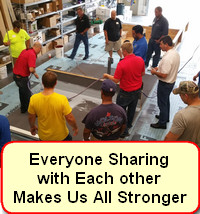 With the group’s fast growth, members have been taking efforts to further better themselves and each other. From sharing their insights or knowledge to providing motivation or encouragement, group members propelled everyone to reach new heights. One example is found in the contractor-sharing business development calls hosted by Max Cruz of Massachusetts-based Cudeso Commercial Roofing.
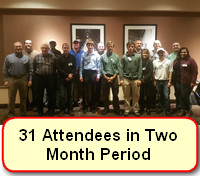 On December 16, Choice Roof Contractor Group hosted its biggest group of contractors at year-end Conklin events. It was by far the biggest group of our members to attend Conklin’s roof applicator training program and the Conklin Business Seminar.
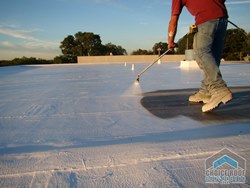 Roof coatings offer a variety of potential benefits, including extending the useful life of a suitable existing roof, improving weather protection, and reducing solar heat absorption when reflective coatings are used. But how does a contractor communicate the value of this roofing service to customers?

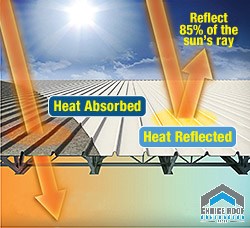 Address questions about colder climates – Building owners may ask about the “winter penalty” associated with reflective roofs. A reflective roof can reduce some solar heat gain during the heating season, but the overall energy effect depends on climate, insulation, snow cover, building use, heating efficiency, roof construction, and other factors.
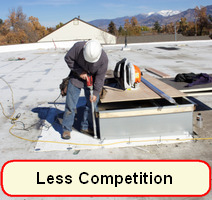 Commercial roofing involves a greater selection of materials than residential roofing. More expertise is required for handling these materials. Commercial buildings also differ heavily from residential properties in terms of their architectural features.
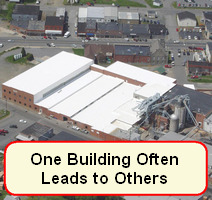 The residential market is populated with homeowners. Broadly speaking, there are many segments in the commercial marketplace. Industrial, retail, institutional, and public works are just a few.
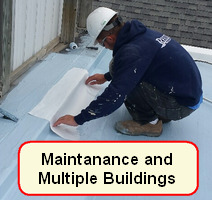 Unlike residential, once you’ve established a reputation as a quality contractor, you may get repeat work from the same customer. It’s not unusual for someone to manage or own more than one building. If you’re working with a property manager, they may have millions of square feet of roofing under their watch. Regional companies with multiple offices, franchise locations, or corporations with many buildings can also pose additional project opportunities.
 It does take time to develop relationships. But in the commercial market, that networking pays off. Whether doing work for an existing connection or via a referral, there is potential for greater returns on time spent. New projects can come in the not-so-distant future or even some time down the road.
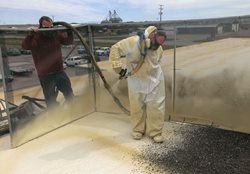 Are you thinking about expanding into commercial roofing? Or maybe you already have a foothold in the commercial roofing industry and want more business. Being part of an interconnected organization of capable, qualified commercial roofers can be highly beneficial. It’s a great foundation for increasing knowledge, networking with valuable connections, and opening new doors for project bids.
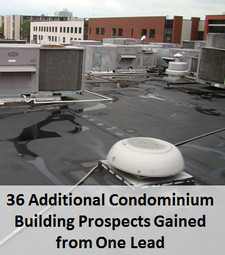 • 16-year roofing veteran has achieved 200% growth since he joined group (400,000 sq. ft. vs. 200,000 sq. ft. last year)
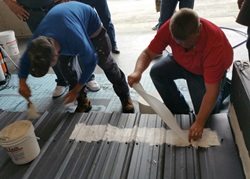 If you want to learn how to take your business to the next level and gain practical experience with coatings, the Workshop & Forum offers an opportunity to learn alongside other commercial roofing contractors. Call us at (800) 670-5583 with any questions or visit our