Hiring a Commercial Roofing Contractor Checklist

commercial roof contractor hiringIn this blog post, we discuss how to hire a commercial roofing contractor. Our previous blog post featuring five tips for hiring a roofing contractor could also be helpful.

In the face of tight economic conditions, effective cost management is a top priority for any real estate owner. Roofing is already an expensive investment, but even when it requires only simple repairs, due diligence is still advisable. Letting the wrong contractor onto your roof may not take care of your problems, but actually compound them. Poor workmanship or improper product application could leave a roof at risk for greater damage—and by extension more expensive roofing work.

Hiring the right roof contractor then becomes a balancing act between affordability and contractor quality. What are the things that a building owner should look for? Below, we offer a checklist of things to consider when you are hiring a roofing contractor for your needs.

Checklist for Choosing a Commercial Roofing Contractor

  • Does the roofing contractor have any business listings? Reputable roofing contractors will have some form of legitimate business listings, whether online or in print, such as in the local phone directory. Even though it is not always the case, more dedicated or established roofing contractors tend to have a website where you can see their work and testimonies from satisfied customers. A reputable roofing contractor will also have a permanent address. It is wise to never accept the bid of a roofing company that does not have a business or permanent address listing as proof of their business legitimacy.
  • Is the roofing contractor approved and have a good rating with the Better Business Bureau? Not all roofing companies are listed with the Better Business Bureau, but it does provide another layer of documentation by which you can assess a roofing contractor’s reputation. It is important to note one thing, though. The Better Business Bureau does not provide ratings of a roofing contractor’s services or reputation, but how well a roofing contractor has resolved customer complaints. Factors such as the roofing contractor’s product quality or service competency are not gauged. Nonetheless, the Better Business Bureau does provide another solid means of checking out a contractor’s reputation.
  • Does the contractor meet requirements for roofing contractors in your state? The requirements for becoming a roofing contractor vary from state to state. Be sure to check with your state’s licensing board or relevant licensing agency for information on state requirements. Things to watch out for include:
    • Contractor licensing that has not expired
    • Workers’ compensation insurance coverage
    • General liability insurance coverage
    • Relevant bond certification or holding
    • Local building permits, if required

Roofing Services

Our professional commercial roof contractors provide:

  • Roof maintenance & repair
  • Inspections & leak detection
  • Energy efficient roof systems
  • Complete roof replacement
  • Roof life-extending solutions
Request Free Estimate
  • Does the roofing contractor have references? Reputation is the backbone of the roofing industry. Reputable contractors will be happy to share references from satisfied customers with you. It is important to be aware, though, that any references you receive will only be from satisfied customers. They will not be representative of any customers who had neutral or negative business dealings with the contractor, or are not people who are likely to negate your decision to accept the contractor’s bid. Be sure to get at least three references and contact them to confirm they are legitimate. More references are better, if possible.
  • Is the roofing contractor certified by the manufacturer of the product he installs? There can be tremendous consequences if a roofing contractor installs a product that he is not certified to apply, and then the product has problems. For instance, you can encounter difficulties in getting manufacturer warranty coverage. It is essential to check that a roofing contractor has certification from the manufacturer to install his particular roofing product brand.
  • What type of training does the roofing contractor provide to his employees? Making sure that a roofing contractor’s employees are fully-trained and certified to work on your roof is another critical step. Doing so will be an indicator of a worker’s skill level and professionalism. Another thing to look for is if the contractor’s workers are versed in job safety measures. That helps cut down on potential for accidents occurring at the job site.
  • What does the roofing contractor offer in writing? Make sure the roofing contractor will be offering you a written contract. Proper documentation will convey the terms of your business agreement, detail work to be done, and lay out the terms of payment. More specific details will be the roofing job’s scope, roofing materials to be used and their specifications, project beginning and completion dates, and itemized listings for material and labor costs. Asking for a written copy of the contractor’s warranty is not a bad idea, either.

Choice Roof Contractor Group’s Strong Reputation

These are a number of things to keep in mind. Members of our nationwide network have been carefully vetted for strong commitment to excellence in workmanship and servicing.  Should you want to work with carefully-vetted, professionally-trained roofing contractors, give us a call at 800-670-5583.
How Long Do Roof Coatings Last?

Today’s blog post covers the life expectancy of commercial roof coatings.

metal roof restorationWhen the first acrylic roof coating was introduced in the 1970s, the commercial roofing industry had some dramatic changes. Public interest in energy-efficient roofing began strengthening. Roof coatings brought about the launch of the cool roof system and helped paved the way for organizations such as ENERGY STAR®, the Cool Roofs Rating Council®, and others to gain traction as recognized accreditation parties of energy-efficient roofing.

Despite roof coatings’ established track record and mainstream acceptance, though, some negative perceptions of coatings still linger. One of these perceptions is that roof coatings are not built to last over time. That perception is reinforced by the incorrect belief that commercial roofs can go on for decades without any trouble at all.

Roof Coatings and Their Life Expectancy

Pros & Cons of Various Roofing Systems

Learn More
Like other roofing systems, coatings have a defined life expectancy. As has been demonstrated to be the case on commercial roofs made of other roofing materials, they will require attention over time.

Life expectancy for roof coatings will vary from coating to coating due to each coating’s specified thickness and product quality. However, it is not a stretch to say that the average roof coating can go for an entire decade without major trouble when manufacturer specifications are followed

However, roof coatings have some features that make them stand out from other roofing materials. These features are the following:

  • Roof coatings are fully adhered to a roof substrate instead of fastened down to the substrate in specific areas
  • Roof coatings are monolithic or without seams, unlike other roofing products (e.g., metal roof paneling, roofing sheet product)
  • Roof coatings often have superior waterproofing capabilities than other roofing materials and do not require roof tear-off and disposal

old lester roofBecause they are fully adhered and seamless, roof coatings are an ideal solution for “upgrading” an old commercial roof to withstand ponding water, powerful winds or heavy hailstorms, and other weathering effects. Best of all, generally speaking coatings have strong elastomeric properties, which mean they expand and contract with the sun’s heat over the course of a day.

Even though they generally do not last for extensive time periods, roof coatings are easily maintenanced and reapplied when needed. In fact, a properly maintained coating system can keep on going for decades with just one or two quick, simple coating reapplications.

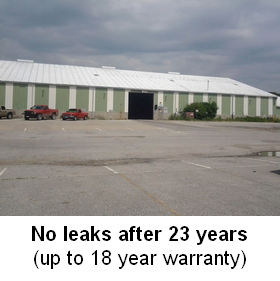
Among roof coating products, Conklin roof coatings stand out. Conklin was the creative force behind the first acrylic roof coating for commercial roofing back in the 1970s. Since then, Conklin roofing products have been installed on over 2 billion square of commercial roofing. Some Conklin roof coatings are reportedly still going strong on buildings, even though they were installed over 40+ years ago. These coatings are the only ones to be backed by non-prorated warranties on all labor and material costs for up to 18 years.

The Takeaway

Need an Expert?

Our group works together to provide:

  • Larger Base of Knowledge
  • Group-Wide Accountability
  • One Source for All Projects
  • Set Standards for Service
  • More Peace of Mind
Free Local Quote Enter Zip CodeGo
Therefore, roof coatings should not be evaluated only in terms of their life expectancy. Roof coatings are valuable because they extend an old roof’s life for a couple decades, or even more in some cases, at relatively little cost while also providing other benefits. They are easy to maintenance and can easily be reapplied. Their functionality is tremendous.

Another reason that Conklin roof coatings also stand out is their warranty renewal capability. Every time you have a Conklin-treated roof recovered with another Conklin roof coating, you can renew your non-prorated warranty coverage and enjoy the great benefits that Conklin roofing products have to offer. These benefits include:

  • Up to 30% reduction in annual cooling costs
  • Greatly strengthened building structure support
  • Certified roofing protection against hurricane-force winds
  • Thicker and stronger coating product than other roof coatings on market
  • More tensile strength than other roof coating products
  • Well-established reputation for long-term effectiveness

Should you want more reasons as to why Conklin roof coatings are an ideal solution for your commercial roofing needs, call us today at 800-670-5583. 

The Importance of Sustainability in Commercial Roofing

Today, we will take a brief look at the definition of sustainability and how it has grown in popularity in mainstream American society. Then we examine its influence in the construction industry as well as in the commercial roofing marketplace.

The Concept of Sustainability in the American Marketplace

green buildingAccording to the U.S. Environmental Protection Agency, “sustainability” refers to public and private sector efforts to bring social and business conditions in line with quality standards for environmental well-being. Parties that involve themselves in these efforts include the general public, small businesses, large corporations, not-for-profit organizations, and agencies at all levels of government. They strive to improve how they conduct themselves or do business in a way that “sustains” the environment and promotes human health.
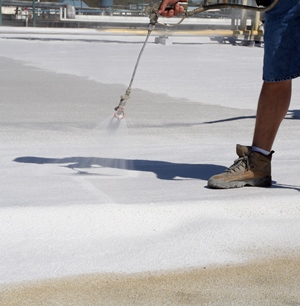
From a consumer point-of-view, sustainability has become a key buzzword for how businesses of all sizes portray themselves to their customers. As consumer interest in environmental well-being has increased, other buzzwords including “going green”, “sustainable business”, and “environmental advocacy” have become all the rage.

These words’ growing popularity has been an indicator of another factor and how it has grown: consumer interest in companies that offer “green” products or services. In recent years, consumer surveys have shown this to be the case. Check out a couple of studies, at national and global scales, below that show this.

  • In a consumer survey from Ipsos, 51 percent of American consumers report they care about companies that are doing their part to help the environment.
  • On a global scale, consumers are interested in “green” company brands as well. The Fifth Annual Tork Sustainability Study found that 78 percent of global consumers purchase green products or services
  • In the Tork Study, that was a nine-percent increase from 2012.

In other words— the efforts a company takes to promote environmental protection have become a dealbreaker for many consumers in which products and services they purchase. This influence has grown in the construction industry, too.

Sustainability in American Construction

Consumer interest in environmental sustainability has driven many innovations in the American construction industry as well. “Green” building materials, construction products that are environmentally-friendly, and other “eco-oriented” building products have come to the fray. The foundation of environmentally-minded construction was first put down in the early 1900s during the Industrial Revolution. But it really became mainstream in the 1970s, when the United States struggled with its energy supply due to tense global economic and socio-political conditions. Demand for alternative energy sources to fossil fuels surged. The tangible beginning of what has become known as “green construction” emerged as a result.

Since then, green construction, or green building, has established a firm foothold in the construction industry. Just consider the following statistics from the U.S. Green Building Council:

  • According to McGraw Hill Construction, by 2015 around 40-48 percent of new nonresidential construction will be green.
  • By 2015, that means that new, green nonresidential construction will be a $120-145 billion market.
  • In a 2012 survey by McGraw Hill Construction, 58 percent of American responders said they expect 58 percent of their construction to be green in 2015.

This shift extended to the roofing industry as well.

Sustainability in American Commercial Roofing

In the 1970s, the American roofing industry was strongly impacted by the appearance of high-performance, earth-friendly acrylic roof coatings. These elastomeric roof coatings made it possible for building owners to have strong energy savings and make their buildings more environmentally-friendly. In other words, the arrival of acrylic roof coatings was groundbreaking for American roofing.

Conklin was the company responsible for bringing the first highly energy-efficient, white acrylic roof coating to market. With the appearance of roof coatings on the scene, the roofing industry shifted toward a greater focus on more energy-efficient applications for roofing. As a result, today some popular, environmentally-friendly applications for roofing are white roofs and green roofs.

Sustainability’s Impact on Today’s Commercial Roofing Companies

For existing and new commercial roofing companies of all sizes, the concept of sustainability has tremendous implications. Consumers are now likely to use products or services from a company that promotes green initiatives or offers green product or service offerings. In the roofing industry, this has a twofold impact—the products that a roofing company uses have a direct impact on how a roofing company is perceived. Plus, roofing products have a heavy, day-to-day impact on the lives of consumers, as they provide protection from outdoor elements or other hazards. The drive for commercial roofing companies to use environmentally-friendly roofing products, whether they help save energy or reduce energy usage, truly has never been greater.

Because reputation is so important in the construction industry, our nationwide network of commercial roof contractors exclusively use products from Conklin. Should you be interested in learning more about why Conklin roofing products stand out aside from their reputation of 40+ years of proven performance, give us a call at 800-670-5583.

White Roof Coatings versus White Paint

Today we build upon previous blog posts about white roofs versus green roofs, the market for white roof coatings, and the benefits of roofs with white elastomeric roof coatings on them. Today’s blog post provides answers to what seems to be a growing question in the commercial roofing industry: “is white paint the same thing as a white roof coating?”

In short, the answer is a confident “no”. We examine different reasons for why this is the case and why white roof coatings are actually preferable to white roof paint below.

White Roof Paint Compared to White Roof Elastomeric Coatings

According to the consulting firm The ChemQuest Group, in 2007 white elastomeric roof coatings accounted for almost two-thirds (or sixty-seven percent) of the entire cool roof coatings market. At the time of the firm’s report, white roof coatings were growing at an annual rate of 11-12 percent.

As people have become more aware of white roofs and their benefits, their misperceptions of what white roof paint actually is have become stronger. Initiatives that aim at curbing energy consumption, such as the ENERGY STAR® program, have raised consumer awareness of the impact that a white roof can have on energy savings and environmental protection.

Aside from technical details in their composition, white roof paint and white roof coatings most strongly differ in the length of their lifespan and their energy-saving properties. To keep things simple, here is a list of how these two products differ from each other.

 
White Roof Paint:
  • Lasts for only a couple of seasons before chipping away
  • Does not get rid of heat
  • No noteworthy energy-saving properties
  • Cannot stand up to ponding water or extreme weather
  • No waterproofing capability
  • Limited reflectivity, especially over a period of time
  • Thin body when applied
Vs.
White Roof Coating:
  • Strong coating formulations can last for 20 years or more
  • Mitigates heat transfer
  • Tremendous reflective and emittance properties
  • Resists ponding water and extreme weather
  • Complete waterproofing solution
  • Well-engineered coatings reflect the majority of sun’s heat
  • Thick body when applied
 

In summary, a white roof coating has far more to offer than white roof paint. For customers who are especially cost-conscious, a white roof coating is more economical than white roof paint in the long run. How? White roof paint will require multiple reapplications in just a short amount of time. The lack of energy savings will prove to be costly, too. With just those costs alone stacking up, a white roof coating is far more likely to not require reapplication and to generate strong energy savings.

White Roof Coating and Its Performance Value

white roof coatingWhen someone is looking at a white roof coating’s efficacy, it is helpful to keep these things in mind:
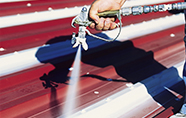
  • What is the extent of the white roof coating’s elastomeric properties (measured as “elongation” in spec sheets)?
  • What is the white roof coating’s thickness when applied (measured typically as dry mils)?
  • What are the white roof coating’s reflectance and emittance values (measures of how much of the sun’s heat a roof coating reflects and how much absorbed heat the roof coating releases)?
  • What is the extent of the white roof coating’s warranty coverage?

In particular, Conklin white roof coatings stand out from the rest of the many white roof coatings available today for many reasons:

  • Only commercial roof coatings to be backed by non-prorated warranties covering all labor and material costs for up to 18 years
  • Have a high degree of thickness at 13.5 dry mils per coat, which is much higher than most white roof coatings on the marketplace
  • Together with a base coat, it is able to stretch from 2.5 to 3.38 their original size under the influence of the sun’s energy
  • Together with a base coat, have a remarkable tensile strength ranging from 232 psi to 625 psi
  • High thermal reflectance and emittance values that meet the third-party, objective standards for energy efficiency set by the Cool Roof Ratings Council)

Roofing Services

Our professional commercial roof contractors provide:

  • Roof maintenance & repair
  • Inspections & leak detection
  • Energy efficient roof systems
  • Complete roof replacement
  • Roof life-extending solutions
Request Free Estimate
Along with Conklin’s other industry-leading product selections, these white roof coatings have been installed on over 2 billion square feet of roofing in the United States. On the whole, Conklin roofing products sport a warranty claims rate of less than 0.5%, a very strong performance record.

With all these great benefits, it’s clear to see why a white roof coating is the best way to go!

Should you be interested in learning more about why a Conklin white roof coating adds great value to the commercial roofing industry, please call us at 800-670-5583.

We’d be happy to work with you to show you the many benefits of Conklin and working with a top-notch commercial roofing contractor.


Commercial Roof Coatings Opportunities

Today, we take a look at the market opportunities for commercial roof coatings in the United States.

According to the research firm BCC Research, in 2011 the North American commercial roof coatings market was valued at $750 million. BCC Research reports that it expects this market to increase by a compound annual growth rate of 4.5% between 2011 and 2016—in 2016, the market is projected to achieve a total value of $984 million.

BCC Research pins the expected growth on a number of factors, including:

  • Governmental regulations and compliance standards
  • Increased demand for stronger business profitability
  • Tax law dynamics or changes
  • Increased heating and cooling costs
  • State-based building energy efficiency programs
  • Old roofs reaching their life expectancy or failing

At the time of its report, there were over 350,000 contractors serving customers in the residential and commercial roofing markets in North America.

Commercial Roof Coatings and Increased Demand for Green Building Materials

conklin roof coatingThe increasing market for commercial roof coatings lines up with projected increasing demand for green building materials in the United States. The Freedonia Group, a market research firm, said in one of its Green Building Reports that strong demand for green building materials in the United States will lead to a green building products market worth $86.6 billion in 2017. The Freedonia Group also projects that demand for U.S. green building materials will increase 11 percent per year.
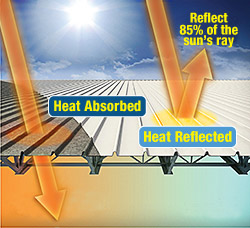
Through the ENERGY STAR® program, the United States Environmental Protection Agency reports that green building construction has reached a new high. According to content on EnergyStar.gov, “in the United States, the green share of the U.S. nonresidential construction market grew from two percent in 2005 to 44 percent in 2012.”

Commercial Roof Coatings Industry Growth Driven by Energy Demands

energy efficient commercial roofThere are a few general economic indicators that can also illustrate the market growth opportunities for commercial roof coatings. One area in which these economic indicators can be found is in energy usage and increased governmental efforts to reduce American energy consumption. According to the U.S. Environmental Protection Agency, building owners and roof contractors have utilized cool roof products on residential, industrial, and commercial buildings for over 20 years. Cool roof systems stand out for their ability to reflect sunlight and heat away from a building as well as emit absorbed heat.
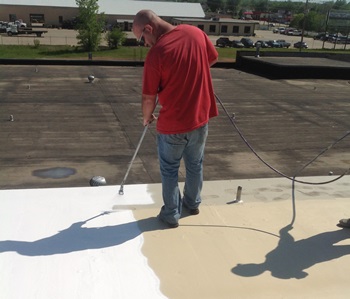
The U.S. Environmental Protection Agency also reports that roofing material suppliers have been steadily bringing-to-market roofing products that meet minimal, tailored standards for solar reflectivity and overall reliability. Through its ENERGY STAR® program, the agency has been pushing for private-sector suppliers and vendors to voluntarily produce and market cool roof systems that meet these criteria. This influence has become quite pronounced. In a 2006 survey of over 150 ENERGY STAR® partners, the Environmental Protection Agency found that cool roof products accounted for over 25 percent of the manufacturers’ commercial roofing products and almost 10 percent of the manufacturers’ residential roofing ones.

Why Contractors Join Our Network

  • Lead Generation
  • Mentorship Program
  • Complete Training
  • Discounted Pricing
  • Marketing Support
Learn More
At present, over 1.4 million new homes and 20,000 buildings and plants have attained the ENERGY STAR® logo. There are over 300,000 commercial buildings that are having their energy usage tracked and measured, which comes out to 30 billion square feet of commercial building space. Other notable statistics include the following:

  • There are over 5 million commercial buildings in the U.S.
  • Combined annual energy costs for these buildings is $202.3 billion
  • American energy usage is expected to climb by 40 percent by 2025
  • Inefficient or unnecessary energy usage in American buildings is 30 percent
  • Americans spend around $40 billion per year to cool their buildings

It is clear that American energy usage and demand can bring about greater market opportunities for commercial roof coatings.

Other Thoughts on Roof Coatings

metal roof coatingBecause the commercial roofing marketplace is already extremely competitive, commercial roof contractors must strongly position themselves to take advantage of these opportunities. For landing big jobs on sizable commercial roofs, they must present themselves as true professionals and show that they can provide exceptional value to prospective customers.
While staying competitive in often-hyper-competitive local roofing markets can often be a challenge, Choice Roof Contractor Group offers roof contractors the support they need. Members of Choice Roof Contractor Group benefit from an exclusive slew of advantages and benefits including:

  • High-quality leads that are likely to convert
  • Discounted top-quality roofing product pricing
  • Personalized, full-service support from a marketing firm focused only on commercial roofing
  • Lifetime access to highly successful and experienced commercial roofing contractors
  • Support and backing from a committed national support team
  • Strong reputation given by Choice Roof Contractor Group’s established nationwide credibility
  • Compelling marketing and sales materials that position you as a true, reliable roofing professional

Once you join Choice Roof Contractor Group, our team is 100% behind you! Call us today at 800-670-5583 to learn how our nationwide network of commercial roof contractors is changing the commercial roofing industry and building up their roofing businesses.

Why Roof Maintenance and Service Agreements Are Good for Roof Contractors

Today we examine roof maintenance and service agreements and their importance for commercial roofing contractors. We also cover the details of what makes up a roof maintenance and service agreement, and how it adds value for contractors.

Frequent roof maintenance is necessary for making sure a roof has a long lifespan and its warranty stays intact. Breaking it down, that involves regular roof inspections and roof maintenance when it is required. Both are necessary for ensuring that the roof lasts for its entire life expectancy—many studies have shown that roofs that are not regularly inspected and maintenanced last only one-third or one-half of their life expectancy. That is where roof maintenance and service agreements come into play.

More about Roof Maintenance and Service Agreements

commercial roof foamingRoof maintenance and service agreements are a key part of making sure that roofs get the long-term expert care they need. Commonly known as roof maintenance contracts, these agreements spell out details of the frequency and extent to which a roof contract should inspect and maintenance a roof. There are other important details contained within the maintenance and service agreements as well: the extent to which a roof contractor inspects a roof, the extent to which the contractor takes care of any identified problems, any timelines for getting things done, terms for the services that the contractor performs at each inspection and maintenance date, and more. In many ways, the agreement is a legal framework for a building owner’s roof maintenance program.
Perhaps surprisingly, roof maintenance contracts offer more than just legal benefits, though. They can also give roof contractors a way of getting their foot into the door with new customers. Many building owners do not think of their roof as an ongoing business expense. In many cases, a building owner may be thinking about his or her roof when it is having problems or seems to be on the brink of failure. Because it is not as involved or costly as commercial roof repairs or replacement, a commercial roof maintenance program can be of greater interest to building owners.

There are many upsides to a commercial roof maintenance program:

  • Identifies major problems before major damage occurs
  • Can increase a roof’s service life by as much as 50%
  • Can enhance a property’s value
  • Can be customized to a specific roof
  • Can provide a building owner with quotes for roofing work needed
  • Can reduce roofing expenses in the short and long terms

It is said that the average building owner will spend over $125,000 on his or her roof in a lifetime. Many building owners will pay even more than that. If the benefits of an ongoing roof maintenance program are clearly outlined, they will be likely to see the impact a roof maintenance program can have on their building’s protection and their wallet.

The Value of Roof Maintenance and Service Agreements to Roof Contractors

Why Contractors Join Our Network

  • Lead Generation
  • Mentorship Program
  • Complete Training
  • Discounted Pricing
  • Marketing Support
Learn More

From the roofing contractor’s standpoint, this represents a great opportunity for bringing on new customers. Contractors who are newer to the roofing industry can strengthen their presentation skills. They will sharpen their credibility and enhance how they are perceived professionally. Roof maintenance contracts also give newer contractors a chance to earn a building owner’s trust over time. As the contractor shows how he offers value, the building owner becomes more likely to engage him for bigger roofing needs or to recommend him to friends and business acquaintances.

Experienced roof contractors can benefit from roof maintenance and service agreements from a scaling standpoint. Companies with bigger buildings may require more time for demonstrating credibility. Some building owners may have been given unprofessional treatment in the past and may be skeptical toward roofing contractors. It may take awhile to earn their trust. Roof maintenance and service agreements represent an ongoing, noncommittal way to establish credibility and trust over time.

For experienced contractors, there is another upside for business scaling. In the construction industry, many professionals maintain tight, close-knit professional circles for doing business. These professional circles can consist of friends and partners in extensive referral networks. Many professionals are very careful about whom they recommend for these circles because of the impact such a recommendation can have on their reputation.

When a roofing contractor earns a building owner’s trust by giving authentic value, he could eventually be given the privilege of being included in the building owner’s circle. In the building industry, reputation is paramount, from local roofing markets to building markets that go beyond state borders or even across the entire United States. If you have a poor reputation, you will be hurting yourself for the long term.

Choice Roof Contractor Group and Nationwide Credibility

commercial roof foamingWith Choice Roof Contractor Group, roofing contractors with various amounts of experience can benefit from our network’s strong, nationwide reputation. Roofing contractors are carefully vetted before being accepted, and once in the network they agree to abide by high standards. 

Roofing contractors also benefit from our member-exclusive nationwide platform including:

  • Attentive, full-service support from the only nationwide marketing firm focused on commercial roofing contractors
  • Discounted pricing on leading roofing products
  • Lifetime mentorship and sales coaching should they be needed from highly experienced and successful roofing professionals
  • Complete dedication to their success from our network’s support team
  • So much more

Should you be interested in learning more about Choice Roof Contractor Group and how we can benefit you, please call us at 800-670-5583.

Understanding the Importance of Energy-Efficient Roofing Systems

energy efficient commercial roofToday we cover the importance of energy-efficient roofing systems and the impact they are having upon total energy consumption in the United States.

According to United States Department of the Interior, American energy consumption will jump up 40 percent by 2025. At present, according to the ENERGY STAR® program Americans spend approximately $40 billion in cooling costs for their buildings on an annual basis.

For buildings in the United States, the ENERGY STAR® program reports a total of 4.8 million commercial buildings and 350,000 industrial facilities. Combined annual energy costs for these buildings come out to around $202.3 billion. Approximately 30 percent of energy used in buildings is used inefficiently or unnecessarily.

It is instructive to consider the cost savings that could come about if these buildings reduced their energy consumption. ENERGY STAR® reports that if these buildings became more energy-efficient by a mere 10 percent, there could be savings of up to $20 billion. In other words, with more energy-efficient buildings American building owners could save almost 10 percent of what they pay in combined energy costs per year.

Aside from energy costs, there are other factors to consider as well. Industrial facilities and commercial buildings in the United States are responsible for 45 percent of all emitted greenhouse gases. If American buildings became more energy-efficient by just 10 percent, the equivalent of greenhouse gas emissions from 30 million vehicles would be prevented. Therefore, energy-efficient buildings could have a big impact on the wallet and environmental well-being.

Energy-Efficient Roofing Systems are a Solution to America’s Energy Dilemma

green buildingWith the growing craze over energy-efficient buildings, many real estate owners have turned to energy-efficient roofing for solutions. One of the primary energy-efficient roofing systems used today is the “cool roof”, or a roof system with a highly reflective roof surface. Other commonly referenced energy-efficient roof systems are the “white roof” and “green roof”, which are a roof system with a white, reflective surface and a roof system covered with plants or vegetation.

Energy-efficient roofing can give building owners many benefits:

  • Annual cooling cost savings ranging from 10-30%
  • Cooler, more comfortable space inside the building
  • Substantial energy savings at peak energy demand
  • Reduced environmental impact given by a building
  • Dramatically lowered rooftop temperatures by up to 100°
  • Reflective roof surface that bounces up to 85 percent of the sun’s energy off a building
  • Stronger building structural integrity
  • Protection from the harmful effects of the sun
  • Reducing maximum cooling demand by up to 15 percent

It is important to note that energy-efficient roofing, especially roof coating-based systems, will need fairly regular maintenance and cleansing. Elsewise factors such as dirt build-up or discoloration will reduce the energy-efficient roof’s performance.

Conklin Energy-Efficient Roofing

cool roof systemBecause energy-efficient roofing is becoming more popular with building owners, Choice Roof Contractor Group uses one of the commercial roofing industry’s leading brands for energy-efficient roofing. Conklin was the force behind the roofing industry’s first acrylic roof coating, and it has been a trusted brand for commercial roofing for over 40+ years since then. At present, Conklin roofing products cover over 2 billion square feet of roofing across the United States, and they are the only roofing materials to be backed by non-prorated warranties of up to 20 years.

These non-prorated warranties cover all material and labor costs for their coverage period. Conklin’s line of commercial roof systems has a warranty claims rate of less than 0.5%– a great sign of their long-term performance value.

Here are a few other benefits a Conklin roof can offer building owners:

  • Seamless, impenetrable roofing protection against leaks and water infiltration
  • Old roof life extended for decades; maybe another 40+ years
  • Commercial roofing designed to resist dirt build-up or discoloration
  • Greater building structural support
  • Virtually no maintenance or upkeep demands
  • Class-A fire resistance and strong chemical resistance
  • Third-party-confirmed protection against hurricane-force winds and hail storms
  • Annual energy savings of up to 50 percent depending on the roof system
  • Straightforward, non-prorated warranty coverage
  • Extremely durable roofing protection that lasts for years

Should you be interested in learning more about how Conklin energy-efficient roofing can be good for your building, call us at 800-670-5583. We will be happy to arrange a free local roof estimate by one of our qualified, expert commercial roof contractors.

Contractor License Requirements

commercial roof foamingBuilding upon our “How to Become a Licensed Contractor“ blog post, today we examine more of the details behind prerequisites for obtaining a contractor license.

Contractor License Requirements and Their Influence in the Construction Industry

Contractor license requirements differ from state to state. However, there are a few prequalification requirements that, generally speaking, are consistent across state boundaries. Consistent standards include age requirements, the level of education required, certification of U.S. citizenship or foreign residency, company registration, documentation of other occupational licensing an applicant holds, and documentation that proves one’s identity.

Generally speaking, contractor licenses have to be renewed every two years, but this also varies from state to state. Regardless of someone’s experience in the construction industry, these contractor license requirements typically apply to four groups of applicants:

  • Applicants who are new to the construction industry and looking to become more active in it
  • Applicants who have experience in some sectors of the construction industry (e.g., roofing) and are looking for certification for taking on work in other sectors
  • Highly experienced construction professionals who are renewing their licensing or certification because their expiration date has passed
  • Construction professionals or companies that will be performing work in a state that is outside their state of business registration

For companies that are looking to do work outside their state of registration, it is important to register ahead of time so that deadlines for bids or work initiation do not creep up and cause timing issues. Having deadlines such as these overlap with the time in which a building company is getting its license can create logistical, business-related, and ethical issues.

Qualifications for Becoming a Contractor

Free Guide: How to Switch to Commercial

Commercial Roofing Book

    Now, how do the basic requirements, or pre-qualifications, for becoming a contractor play out? Consider each of these factors below.

    • Age requirements- Many states require that an applicant be at least 18 years of age upon application. At the federal level, according to the Department of Labor the Fair Labor Standards Act, 14 is the minimum age for most non-farm work. However, some state laws are “tighter” in their restrictions and set the bar at 16 years of age or higher. The reason why age requirements for getting a contractor license are higher than minimum age labor standards is because of the degree of responsibility involved with contractor certification. Many applicants for contractor licensing are people who have grown up in the construction industry and are looking now to branch out on their own. Licensing therefore becomes not just a matter of allowing contractors to be employed, but also to start and run their own businesses.
    • High school-level education or equivalent- When applying for a license, an applicant typically takes a written exam or two at some point. Many states have over 40 classifications of different contractor licenses available. The examinations for each of these licenses can be quite broad, and measure an applicant’s competency in finances, licensing and bonding, and other knowledge-intensive areas. A dedicated contractor can learn the ins-and-outs of these areas with hard work and focus. But education is a key resource in making sure that an applicant is able to understand and handle these details with competence. That is why many state laws spell out having a high school education or GED certification as one of their minimal qualifying standards.
    • Evidence of legal residency or citizenship in the United States- This is a requirement that is in line with state and federal laws for employment. It is also a measure that helps cut down on legal complications when cases of liability or other workplace issues arise. A valid ID or proof of residency will therefore be required for meeting this standard.
    • Documentation of other occupational licensing- This standard helps state agencies keep track of the construction sectors a building company is involved in. Documentation of other occupational licensing also helps to further solidify an applicant’s credibility. For some states, having an occupational license in another state can help speed up an applicant’s approval process. For instance, the state of California gives contractors who are licensed in Arizona, Nevada, and Utah the option of “reciprocity”, or being able to obtain a California contractor’s license without taking an exam. Reciprocity or similar options, though, may apply to only specific contractor classifications.
    • Company registration with the Secretary of State office or equivalent- Business registration is another key factor of obtaining approval. Aside from the marketing benefits of having a name for one’s construction business, having the company registered with the state ensures legal compliance. It also strengthens a construction business’ credibility. There are multiple options for how a company can be structured, with different financial and legal benefits and drawbacks attached to each company structure. Check with your Secretary of State office, or the agency that handles company registration, for more information and the pros and cons of each company structuring.
    • State-specific basic requirements- On top of these requirements, many states require proof of prior construction experience, a threshold for prior experience in the trade an applicant is applying for or a similar trade, bonding and criminal background checks, and reference letters from previous employers, among other things. With these requirements in place, you may have to prove that you have the financial means necessary for running a construction business, document that you do have on-the-job experience in a given trade, and show that you have personal credibility for offering services in that trade to begin with. Liability insurance, worker compensation, and other risk management plans and measures may also be required depending on the state’s laws. In some states, property insurance and other specialized insurance coverage may also be required.

    After the Basic Requirements for Contractor Licensing

    Why Contractors Join Our Network

    • Lead Generation
    • Mentorship Program
    • Complete Training
    • Discounted Pricing
    • Marketing Support
    Learn More
    Should you meet these basic requirements, you will have to undergo an exam or even a few to prove competency. Training courses and other related classes or proof of competency may be required as well.

    Because the contractor licensing application process can be so detailed, it may help to get assistance. If you are interested in commercial roofing, give us a call at 800-670-5583. Be sure to ask how we assist our members and how they benefit from our exclusive platform of benefits and support.

    Be sure to check out our e-book about making it big in commercial roofing, too.

    Commercial Roof Replacement or Roof Coating?

    roof coatingToday we briefly examine a couple of common pros and cons of commercial roof replacement and roof coatings.
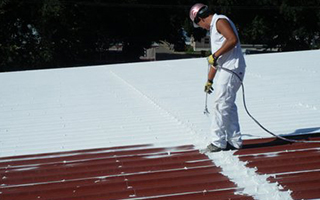
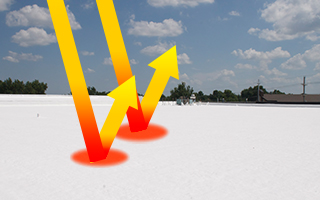
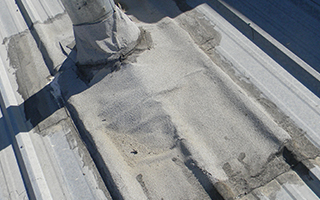
    All types of commercial roofs have their strengths and weaknesses. Commercial metal roofing is affordable, generally easy-to-install, and built to last. EPDM rubber roofs remain flexible in extreme temperatures and more resistant to thermal shock than other commercial roof systems. But metal roofing can experience rusting or end up with exposed seams where water can seep in. And EPDM rubber roofs can crack or break down due to the sun’s harmful UV rays, despite their sun energy-resisting properties. Inevitably, all commercial roof systems have problems and eventually require attention.

    When a commercial roof system does have problems, building owners may think it best to replace their entire roof. In some cases that may prove to be necessary— a commercial roof may have undergone so much damage that it is better to start over. However, in many cases roof replacement can not only be unnecessary, but unwise. After all, re-roofing projects on roofs of any size are time-consuming, and they are expensive.

    So, when should a building owner opt for one option for the other? We take a look at some of the factors to consider below.

    Should I Go with Commercial Roof Replacement or Roof Coating?

    To begin, it is important to consider the cost intensity of roof replacement. When you have a commercial roof of any size replaced, you will be shelling a lot of money out in job costs. For instance, a commercial replacement job includes:

    • Old roof tear-off costs
    • Old roofing material disposal costs
    • Landfill usage cost
    • Heavier labor input costs
    • Costs of large volume of new roofing materials
    • Sunk costs arising from disrupted building or business operations

    There is another factor to consider as well. The new roof is not guaranteed to have the same problems that the old roof experienced. Over time, it may require heavy repairs due to aging and weathering, or even require another roof replacement before the product warranty runs out.

    Roofing Services

    Our professional commercial roof contractors provide:

    • Roof maintenance & repair
    • Inspections & leak detection
    • Energy efficient roof systems
    • Complete roof replacement
    • Roof life-extending solutions
    Request Free Estimate
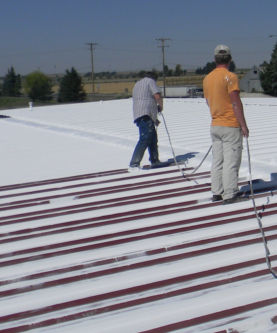
    With a commercial roof restoration, however, you save on all of the costs above and do not have the same disruption to your hours of operations. Many roof restoration products are coating-based systems and can be applied with ease during business hours, meaning that your roofing needs will be handled in a more time-sensitive fashion than they would in a roof replacement job.

    Where roof coatings do not become valuable, however, is when a commercial roof has been extremely badly damaged. Say a 20,000-square-foot EPDM rubber roof has experienced deterioration due to prolonged thermal shock, and that a large portion of the roof in one corner has been peeled up from a strong windstorm. If the roof is extremely old, a simple patch-up job or a simple restoration job will not be in the customer’s best interest. With a roof coating or simple repair job done, over time the roof could fail or become more prone to roof leaks, roof cracking, or more roof peeling. In the end, the customer would likely not get the lasting protection that he or she needs and deserves.

    Roof Replacement – The Bottom Line

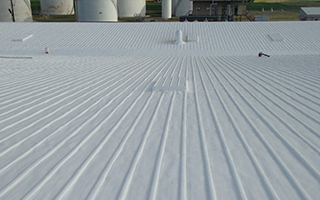
    In short, because it is so cost-intensive, a roof replacement should be treated as a last resort. But there are times where damage becomes so extensive or a roof is so old that re-roofing is the better option. It is important to keep in mind that when replacing an old roof with a new roof of the same type, one could see the new roof have the same problems as its counterpart. Therefore, roof enhancements such as the application of high-performance, highly reflective elastomeric roof coatings may be ideal. Roof coatings will cover newly installed roof’s vulnerable areas and exposed seams, leave a seamless surface over the new roof, and strengthen the new roof’s life expectancy for decades.

    Conklin Systems for Roof Replacement or Restoration

    Add Decades of New Life
    Cut A/C Costs up to 50%
    Free On-Site Inspections
    Leak-Proof Your Roof
    Warrantied Up to 20 Years

    Regardless of what your needs may be, Conklin’s line of commercial roof products offer solutions for roof restoration and replacement. Conklin roof coatings are backed by contractor-provided, non-prorated warranties that cover labor and material costs. These roof coatings reflect up to 85% of the sun’s energy and can generate up to 30% cost savings on annual energy expenses. They have been a leading choice for commercial roofing for over 40+ years and are ideal for application on existing or new roofs.

    For new roof or re-roofing projects, Conklin also offers a highly durable, rolled-out modified PVC sheet product, Flexion. With this material, old roofing materials are torn off and disposed of, ISO board is installed over the underlying exposed layer, and the Flexion is applied across the ISO board components. Flexion is manufactured with DuPont Elvaloy for extensive chemical and fire resistance and extremely pronounced tensile strength. Flexion has been shown to perform well in all climates and can be installed at any time of year. It is also backed by a non-prorated warranty of 20 years.

    Choice Roof Contractor Group’s Unique Value Proposition

    roof restoredOur nationwide contractor network exclusively uses Conklin roof products for commercial jobs. Conklin roof systems have been applied on billions of square feet of roofing and feature non-prorated warranties of their coverage period. Each contractor has been vetted before being admitted, and they go through Conklin’s warranty certification program so they can apply Conklin systems with precision.

    Every Choice Roof Contractor also abides by the highest quality standards. Because of our members’ ongoing commitment to excellence, building owners can be sure their needs are getting the best service with the best products available on today’s roofing market.

    Should you be interested in a Choice Roof Contractor for your needs, call us today at 800-670-5583 for a free local roof estimate.

    Commercial Roofing Spray Foam Equipment

    Today’s blog post covers spray foam roofing equipment and its use in commercial roofing. We have previously looked at market opportunities for spray foam roofing, spray foam roofing myths and problems, and evidence that spray foam roofing actually works.

    Spray Foam Equipment and Commercial Roofing Today

    spray foam equipment

    Spray polyurethane foam (SPF) roofing has been around for 50 years. But even with its track record, an SPF roof is not exactly one of the most common commercial roof systems out there. Many buildings that have been around for that long have old, beaten-up built-up roofing systems on them—often made of tar and gravel. These roof systems last for long periods of time, but they are unable to escape the effects of the sun. Over time, they break down and fail.

    Because they want a lasting roof, building owners have been turning to commercial spray foam roof systems as alternatives. A well-applied, thick spray foam roof offers the same long lifespan as the BUR systems, plus huge savings on heating and cooling costs. Just the energy savings alone are a big draw, but there are other benefits too such as much less weight on the roof.

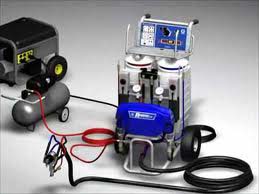
    To apply spray foam roofing, commercial roof contractors need spray foam equipment. A “typical” line of spray foam equipment includes spray foam rigs, reactors and generators, hoses, spray foam guns, and other spray foam application equipment. Spray foam equipment is to be used for interior applications of spray foam insulation systems as well for insulation and top-layer applications on top of a building.

    Some spray foam equipment providers offer complete spray foam equipment packages. For instance, our partner, Intech Equipment & Supply with 6 full-service locations across the U.S. offers complete, turnkey packages so that work can be done as soon as a contractor arrives at the jobsite. Quality spray foam equipment will give the contractor tremendous benefits including:

    • Features for easy, fast troubleshooting such as QR codes
    • High-performance spray foam applications with lesser fuel consumption
    • Equipment that is easy-to-move and transfer from jobsites
    • Better control over spray foam application and overall process
    • Better spraying performance
    • Easy and convenient applications with automated, instant foam system recipe recall
    • Greater hold on cost management and forecasting

    These benefits and more allow contractors to apply foam systems with precision and ease.

    Why Spray Foam Roofing?

    foam roofingDespite all of the myths out there, spray foam roofing remains a top choice for reliable, lasting roof protection. Roof contractors and building owners each benefit from it.

    For roofing contractors, spray foam roofing offers many advantages:

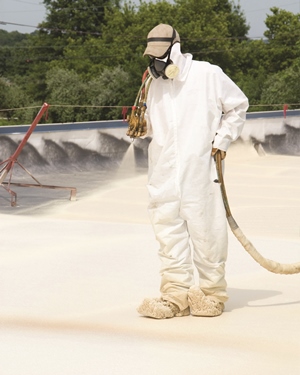
    • Spray foam roofing is installed with ease
    • Spray foam product is pumped up to the roof, which cuts back on chances for personal injuries arising from hoisting heavy roofing materials
    • Liability costs are more contained than with other commercial roof systems
    • Spray foam roofing can give much bigger profit margins per square foot
    • Spray foam roofing has few repair and upkeep needs
    • Spray foam roofs are easily repairable and maintenanced
    • A spray foam roof lasts for a long time, and strengthens a contractor’s reputation when applied correctly

    Building owners benefit in multiple ways as well:

    • Commercial spray foam roofing can save tens of thousands of dollars in energy costs
    • A spray foam roof system reduces sound transmission in a building
    • Spray foam roofing keeps heat inside a building and makes a building use less cooling
    • It prevents air infiltration, the number-one culprit for skyrocketing energy costs
    • It is completely seamless and therefore strongly resistant to leaks, big or small
    • A spray foam roof greatly strengthens a building’s structural support
    • Spray foam roofing is designed to last for decades without trouble

    With all these benefits, a commercial property remains in good condition and well-protected, and the building owner stays satisfied. As is common knowledge in the commercial roofing industry, happy customers mean good referrals and ongoing, highly profitable business opportunities.

    Where can I get Spray Foam Equipment?

    Contractors join our group to receive:

    • Lead Sharing
    • Shared Strategies
    • Inside Knowledge
    • Complete Training
    • Group Support
    Learn More
    Choice Roof Contractor Group offers commercial roof contractors a great opportunity for building up spray foam roofing installation as a key cornerstone of their business. We are partnered with Intech Equipment & Supply, a leading provider of spray foam equipment and parts in the entire United States. Intech offers a wide range of spray foam equipment, inclusive of top-grade spray foam rigs, carefully engineered spray foam application systems, spray guns, spray foam hoses, and an extensive inventory of parts should replacements be quickly needed. Should spray foam contractors be interested in breaking into the $5.3 billion commercial roofing industry, we offer a perfect platform for that as well.

    Our group members exclusively benefit from lead sharing, lifetime mentorship and sales coaching from top roofing experts, discounted product pricing, proven marketing strategies from others, and more. They also benefit from the active involvement of our trusted partners and suppliers. Choice Roof Contractors are able to apply Conklin spray polyurethane foam systems, spray foam systems backed by a non-prorated warranty of up to 18 years. On the whole, Conklin roof systems have been used for over 40+ years and can pay for themselves in just 4-7 years with their energy savings.

    Call us today at 800-670-5583 to learn how you can get high-quality spray foam equipment from Intech Equipment & Supply at reduced rates. We will be happy to show how we can help you build your growing success story, as we will be behind you 100%.