There are many factors that can lead to problems on your commercial roof. One of the most common is one you may not have thought about. Did you know that ponded water on your commercial roof can lead to significant roof damage? Even if there are no leaks?
Water: One of the Greatest Enemies of Flat Roofs
Flat roofs are one of most common types for commercial buildings. Strictly speaking, flat roofs aren’t actually “flat” but have only a very slight pitch. Because they aren’t as pitched as other roof types, they don’t drain as efficiently, and this can lead to the problem of ponding water.
Ponding water is what we call water that accumulates on a roof and remains there for 48 hours or longer.
When ponding water develops, many problems can ensue, including:
Accelerated erosion and deterioration of the membrane surface
Premature roof system failure
Decrease in insulation’s thermal resistance as it’s compacted
Damage to roof deck
Potential further damage to building interior
Unwanted vegetation and algae growth
Accumulation of contaminants
Preventing ponding water is a matter of proper roof design and installation in the first place as well as proactive maintenance over the life of the roof. Fundamentally, it all boils down to having the services of a knowledgeable, dependable roofing contractor.
No matter what kind of roof you have, finding a good roofer to maintain it is crucial. Finding a good roofer, however, isn’t always easy. That’s where the Choice Roof Contractor Group comes in.
Choice Roof Contractor Group is a trusted association of professional roofing contractors located throughout the United States. Our members have proven themselves to the group, must maintain excellent track records, received professional training, have verified insurance coverage, and more.
When you work with an endorsed member, you have other advantages, too. For instance, there is virtually no roofing problem one of our associates can’t tackle with expertise, because our members openly consult with one another and share information. If a Choice Roof Contractor comes across a particularly perplexing roofing problem he or she hasn’t seen before, the member simply reaches out to the group to see who has encountered a similar problem in the past and can give advice regarding the best course of action. No more guessing!
Work with the Best
To find an endorsed Choice Roof Contractor offering services in your area, call (800) 670-5583 or visit the contact page.
Your commercial roof is not only a vital component of your building, it represents a huge financial investment; not just anyone should be hired to work on it. You may feel at a loss regarding where to start and what to look for when it comes to choosing the best commercial roofing contractor. We’re here to help you through the process.
Separating the Wheat from the Chaff
There are a lot of roofing contractors out there, no doubt about it. When you own or manage a commercial building, part of your job is finding one that is reliable and properly qualified.
Choosing an inexperienced contractor to work on your commercial roof can have huge repercussions. If you hire a roofer who mainly works on residential roofs, for instance, you could be in trouble straight out of the gate, because servicing a commercial roof is an entirely different ballgame and requires specialized knowledge and experience that a full-time residential roofer on his own simply doesn’t have.
Hiring a roofer who doesn’t have a very long history of working in your area is also a risky proposition, as their staying power is unproven. If your $50,000+ roof fails two years down the road, that contractor may be long gone—and you may be left in the lurch.
Letting an inexperienced person do work on your roof almost always leads to problems down the road. What’s more, hiring an inexperienced contractor can cause your roof warranty to be invalidated. No matter how you look at it, it’s a bad idea to hire anyone but a licensed, experienced, tried-and-true professional.
Important Questions to Ask
When shopping among roofing companies, the following are some questions you should always find the answers to before shaking hands and saying, “You’re hired”:
Are they fully licensed and insured?
Do they have adequate experience working on commercial roofs specifically?
How long have they been in business?
What is their reputation with local customers?
Are they certified by their product manufacturers?
Do they guarantee their work in writing with the ability to back it up?
Do they offer non-prorated warranties you can trust?
Do they belong to and have endorsements from reputable industry associations?
If any one of the answers to these important questions turn out to be unfavorable, it’s probably best to say “pass” and continue your search until you find a roofing company that does meet this criteria.
A Directory of Experts
Wouldn’t it be nice if you could just snap your fingers and a listing of pre-verified roofing contractors in your area would suddenly appear? As it happens, there is such a resource that will point you to verified roofing experts near you—and all you have to do is call or click to meet one of them in person.
Through the Choice Roof Contractor Group, a trusted nationwide roofing association, you can search among commercial roofing experts that operate in your specific area. Our membership represents some of the very best roofers in the business.
Our dedicated contractor members provide full-service roofing solutions for clients throughout the nation. If you’re interested in working with a contractor in your local area, reach out to us at your earliest convenience and we will pair you with a local contractor that you can trust.
There’s a lot more to this group than just verification and group-wide accountability. Once a contractor joins, they have access to invaluable resources including professional training and a huge pool of experts to get advice from when they encounter particularly problematic roofing issues. No single contractor or commercial roofing company on their own knows everything, which is why bringing centuries of experience together in this group is so powerful.
When you partner with an endorsed member, you’re partnering with a nationwide team!
You may be the best, most honest roofing contractor that ever picked up a hammer, but if you aren’t effectively getting your message out to potential customers your business will not thrive.
Like most roofing company owners, you may be puzzling over how to get more calls and appointments for commercial roofs. Marketing and advertising are, of course, key tools—but how you market and advertise your business is the make-or-break factor in whether or not you will be successful.
Making Your Marketing Count
When it comes to marketing and advertising, perspective is reality.
When starting a lead generation campaign, initial objections must be overcome before someone will pick up the phone and call you. No matter where a lead comes from—be it social media, a Web search, direct mail marketing, etc.—the person you’re targeting must believe certain things about your company before they will act on the advertisement:
They must believe your business is creditable.
They must believe your message is true.
They must believe you are capable of solving their problem.
Three things must be included in your advertisements in order to thwart these objections:
Make a Clear Claim: Claim that you are able to solve their problem.
Offer Proof: Supply proof to support your claim through testimonials, case studies, etc.
Show Clear Benefits: Explain the benefits of what you do and how it can solve the challenges your prospect is facing.
Keys to Effective Roofing Advertisements
The average Joe or Jane doesn’t understand the technicalities of roofing—all they want is someone who can solve their problems. Effective advertising can help convince prospective customers that you are that person.
Support Your Claim: Deceptive individuals like here-today-gone-tomorrow contractors have given roofers a bad name. Making a clear claim in your advertising and then supporting that claim will help establish that you are not such an individual and that your business is, indeed, reputable. The following are some ways to support the claim that you are the right choice:
Testimonials: Testimonials are an important part of supporting your message—positive affirmation from customers you have successfully served in the past. While written testimonials have value and should be included, video testimonials are more effective, as written testimonials are more easily faked. For a video testimonial, the formula of “StaràStoryàSolution” should be followed. The star is your satisfied customer; the story is the problem they faced before you came into the picture; the solution is what you did to resolve their problem.
Case Studies: A case study is kind of like a testimonial on steroids, demonstrating the services you have rendered as a roofing company. An effective case study will include a brief history of a company or client you worked with, the challenge that entity faced before meeting you, details about the solutions you provided and how they were carried out, and the successful results of your efforts documented with video and/or images.
Internet Reviews: When a potential customer initially hears about your business or interacts with you, the first thing they will likely do is jump on the Internet to research your company. Studies show that more than 90 percent of consumers are influenced by online reviews—a statistic not to be lightly dismissed. Encourage your satisfied customers to review your business on reputable websites by offering a gift card, and make it as easy as possible for them to do that by emailing them a link to the online review form, for example. Something else you can do is post social media-based reviews on the landing pages of your website, as they are more difficult to fake and, therefore, a credible review source.
Videotaped Commercials: Studies show that video tends to influence and convert more effectively than the written word. The strategic use of videoed commercials for your company can be hugely effective in demonstrating your company’s credibility and in boosting a marketing campaign’s conversion rates.
Real Images: Including real photographs of your company and employees—showing them working with a local charity, smiling inside your office, working on a roof with recognizable local landmarks visible, etc.—firmly establishes that you are a real business working in the target customer’s area. It also gives prospective clients a good impression about your company and a feeling of connectedness with your business.
Associations and Certifications: In roofing, as with most things, clients want to know the company they’re working with is legitimate and has expertise. A good way of showing this is through displaying proof of certifications and memberships in creditable industry organizations. HAAG certification or a high rating with the Better Business Bureau, for instance, prominently displayed on your website and advertising materials, can go a long way in reassuring your customers that you have the knowhow to take care of their roofing needs. Evidence of membership in trusted industry associations like NRCA and the Choice Roof Contractor Group are also solid testaments to your reliability as a roofing company.
Built-in Credibility, Tools and Resources
Belonging to a nationwide organization like the Choice Roof Contractor Group gives roofing contractors access to many of the elements they need to wage an effective lead-generation campaign.
Choice Roof Contractor Group is a reputable roofing organization composed of members located throughout the United States. Our endorsed members meet strict criteria in order to be named among our ranks, ensuring that everyone associated with the group will represent some of the very best and most reliable roofing professionals our nation has to offer.
For members of the group, the benefits are many, including:
For details about Choice Roof Contractor Group and how this highly trusted association can help you grow your business, call (800) 670-5583 to speak to one of our members or visit the contact page.
The Occupational Safety and Health Administration (OSHA) oversees and regulates safety-related matters for employees within the United States workforce. In terms of OSHA commercial roofing regulations, there are both mandates and guidelines offered by OSHA relative to safe practices within the roofing industry.
Just as with other legal matters in the U.S., OSHA should be taken seriously because ignoring applicable requirements can have serious consequences. Roofing employers are responsible for familiarizing themselves with applicable OSHA standards and ensuring their workers and worksites are in compliance with them. Failure to do this can result in hefty penalties for companies—and serious injury or death for workers.
A Breakdown of OSHA Roofing Guidelines
Free Guide: How to Switch to Commercial
As previously stated, OSHA requires certain practices for roofing companies and merely advocates others. Primary OSHA guidelines relating to the roofing industry include:
Fall Protection: It is an OSHA requirement that workers who are exposed to the risk of falling 6 feet or more—if protections are not in place along the edges of the surface they are on—must have fall protection. Such fall protection equipment must be in good working order and properly set up.
Fall Protection Training: Employers must also provide training relative to fall protection for all workers who might be exposed to a fall hazard. Workers must additionally be retrained if prior training has become obsolete, whether due to alterations in work conditions or changes to the fall protection equipment itself. Employers must further certify and properly document that this training has been completed.
Roof Holes: Another facet of fall protection relates to roof holes, including skylights, that are 6 feet or more from the ground or the next level of a building. The coverings over such holes are not typically sturdy enough to hold the weight of a person. Such holes and their attendant coverings should be appropriately covered and guarded to prevent falls.
Surface Safety: An employer is accountable for making sure a roof has enough structural integrity to support workers before the workers are permitted to walk on the roof. Roof surfaces should also be inspected for slip hazards that may be present due to water, snow, ice or other causes.
Weather: Weather conditions should be monitored by an employer, and the employer should consider suspending roofing work in the event of unsafe weather conditions. Examples of hazardous weather conditions include high winds; rain and snow, which can make surfaces slippery; and extreme cold that can cause workers to become clumsy due to numbed hands and feet.
Impalement: Any impalement hazard located on the ground beneath roof edges or other places workers could fall from should be removed or secured.
Location of Materials: For workers performing carpentry work on a roof, OSHA stipulates their work-related materials should be kept “conveniently close” to them. In the cases of other kinds of roofing work, materials cannot be kept less than 6 feet from the roof’s edge.
Regarding work-related matters for which OSHA has not put specific standards in place, an employer is responsible to adhere to the mandates of the Occupational Safety and Health Act’s general duty clause. This clause states that employers must provide “a place of employment which is free from recognized hazards that are causing or are likely to cause death or serious physical harm to his employees” (www.osha.gov/pls/oshaweb/owadisp.show_document?p_id=3359&p_table=OSHACT).
Safety-Related Support
Within the Choice Roof Contractor Group, we care deeply about the safety of our member companies and their employees. We strongly encourage members and their workers to obtain appropriate safety training and stay current on applicable OSHA requirements and guidance. We also encourage open dialogue within the group regarding how members are keeping their crews safe in day-to-day operations.
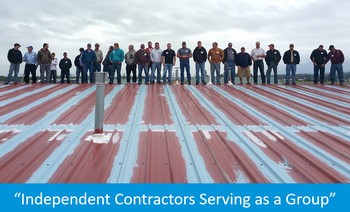
Choice Roof Contractor Group is a nationwide alliance of independently owned commercial roofing contractors. Members benefit from shared knowledge, professional connections, sales and marketing resources, and the experience of a larger contractor network.
Searching for the perfect commercial roofing company is a bit like looking for the fountain of youth—success is impossible because what you’re looking for doesn’t actually exist.
The truth is, there really isn’t one commercial roofing company out there that is flawlessly proficient in servicing every roof type; finding a reliable roofing company that has true expertise relative to the particular type of roof your building has can be very difficult. Fortunately, commercial and industrial building owners have another resource available to them: independent contractors that participate in a larger professional roofing network.
The Choice Roof Contractor Group
We’ve already established that there is no such thing as the perfect roofing contractor. One contractor may have proficiency in servicing metal roofs, while another has particular expertise in attending to the various types of flat roofs, and still another is adept at working on other specialty types. One of the advantages of a contractor network is the opportunity for members to learn from one another’s experience.
We are the Choice Roof Contractor Group—a nationwide alliance of independently owned commercial roofing contractors.
Members meet the group’s current membership requirements:
3rd Party Training or Certification
Proof of Insurance
Professional Business Conduct
Commitment to the Group’s Values
Our members freely share knowledge and expertise with one another. If a Choice Roof Contractor encounters a roofing problem or situation outside of his usual experience, other members may be able to share useful knowledge or practical experience.
This community relationship gives participating contractors access to knowledge and professional connections beyond what they may have working entirely on their own. While no one roofing contractor has expertise in every aspect of commercial roofing, members can benefit from the combined knowledge and hands-on experience found throughout the network.
Selecting a contractor who participates in a larger professional network can offer useful advantages, particularly access to shared knowledge, experience, and professional relationships.
An independent contractor that does not participate in such a network may still be highly experienced and qualified. The important point is that network participation can provide additional opportunities for contractors to exchange information, learn from one another, and draw on a broader range of commercial roofing experience.
Choice Roof Contractor Group members remain independent roofing businesses. Each member performs its own inspections, provides its own recommendations and estimates, and performs its own roofing work.
Find a Commercial Roofing Contractor Near You
No matter what your commercial roofing needs may be, it is important to evaluate the individual contractor’s experience, qualifications, insurance, applicable licensing, proposed scope of work, and suitability for your particular roof.
To learn more or contact a Choice Roof Contractor Group member, visit the contact page of the website.
If you have a flat roof, even if it has been properly maintained over the course of its life, the time may eventually come when significant repairs, restoration or replacement are needed. When that time arrives, there are various commercial flat roof replacement options you can consider.
Built-Up Roofing (BUR)
Built-up roofing, or BUR, has been used on commercial buildings for many years. These systems are made up of multiple layers of bitumen and reinforcing materials, often finished with gravel or another protective surfacing.
The multiple layers can provide durable waterproofing and protection, but BUR systems also have drawbacks. They can be comparatively heavy, and the installation process may be more labor-intensive and disruptive than some other roofing options. Depending on the building and system design, structural considerations may also need to be evaluated before installation.
Single-Ply EPDM
Ethylene propylene diene monomer roofing, commonly known as EPDM or rubber roofing, is a single-ply rubber membrane commonly used on low-slope commercial roofs. EPDM systems are known for their flexibility and durability and have been widely used for decades.
Like other membrane systems, however, EPDM roofs contain seams, penetrations and other details that need to be properly installed and maintained. Depending on the installation method, seams may be joined using adhesives, tapes or other approved materials, and these areas can become vulnerable if the roof is damaged or maintenance is neglected.
Modified Bitumen
Modified bitumen roofing is an asphalt-based roofing system reinforced with polymers and other materials to improve flexibility and performance. It is commonly installed in rolls and may be applied using several different methods, including heat welding, hot asphalt, cold adhesives or self-adhered products.
Modified bitumen can provide a durable commercial roofing surface, but it is not immune to damage. Heavy foot traffic, dropped tools and other rooftop activity can scuff, puncture or otherwise damage the membrane, particularly if proper walk pads or protection are not used.
PVC
PVC roofing is another common single-ply option for commercial flat and low-slope roofs. It is known for its reflectivity, durability and resistance to many chemicals, oils and grease. PVC membranes can also perform well in wet conditions when the roof is properly designed, installed and maintained.
Because PVC roofing is installed in sheets, the system includes seams. These seams are typically joined using heat welding, which fuses adjoining membrane sheets together to create a strong connection. As with any roofing system, long-term performance still depends on proper installation, detailing and maintenance.
Roof Coatings and Restoration
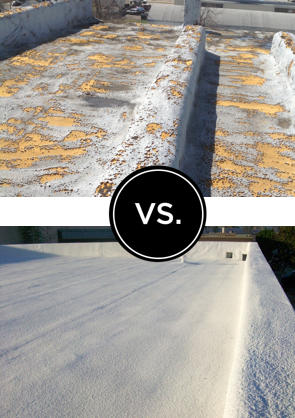
In some cases, complete roof replacement may not be necessary at all. If the existing commercial roof is still structurally sound and is a good candidate for restoration, a properly installed roof coating system can help extend its useful service life.
Roof coatings are liquid-applied over a prepared existing roof surface and cure to form a protective membrane. Depending on the coating type and existing roof system, restoration can help seal seams, penetrations and other vulnerable areas while providing additional protection from sunlight and weather.
Reflective roof coatings can also reduce the amount of solar heat absorbed by the roof, which may help reduce rooftop temperatures and cooling demands in some buildings.
The application of a roof coating system is often less disruptive and less labor-intensive than a complete roof tear-off and replacement. Because much of the existing roof can remain in place, restoration may also reduce tear-off, disposal and landfill costs.
A properly maintained coated roof may also be eligible for future recoating, allowing the protective surface to be renewed without immediately replacing the entire roof assembly.
Roof restoration is not suitable for every roof. Wet insulation, structural deterioration, extensive damage or other underlying problems may need to be repaired before a coating system can be considered.
No matter which roofing system is ultimately selected, the quality of the installation is an important part of its long-term performance. Choice Roof Contractor Group is made up of independent commercial roofing contractors serving businesses throughout the United States.
Participating members perform their own inspections, recommendations and roofing work. A member can evaluate the existing roof, discuss appropriate repair, restoration or replacement options and provide information about the roofing systems they install.
To contact a participating Choice Roof Contractor Group member providing services in your area, call (800) 670-5583 or visit the contact page of the CRCG website.
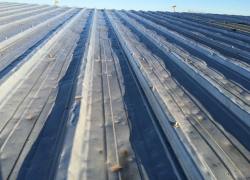
The roof that presides atop your commercial building acts as its first line of protection from Mother Nature’s elements and represents a significant financial investment. Your roof is also the most vulnerable part of your building and is daily exposed to elements that foster deterioration and decay, increasing the likelihood that your roof—and everything below it—may become damaged.
When commercial roof damage occurs, do you know where to turn for quality repairs that are performed correctly and to code?
The Scammer’s Creed
From roofing contractors who aren’t as experienced as they claim to be to outright scammers looking to cheat you, there are plenty of individuals out there looking to make quick money at your expense.
One common scam in the roofing industry relates to “storm chasers.” We’re not talking about scientists who track tornadoes in order to study them. Roofing storm chasers follow storms across the country to profit in places where a big storm has hit and local roofing companies are overrun with more repair requests than they can accommodate. Of course, since they aren’t interested in sticking around long-term, there is no incentive for them to make sure the roofs serviced last any longer than when they collect their checks.
Of course it’s just as common for a residential contractor to misrepresent themselves as a commercial expert when given the opportunity. There are countless types of commercial roofs out there and it takes many years of experience to correctly service them all. Because of the difficulty of commercial roofing and what is at stake, it’s crucial you choose a company with direct factory training and the knowledge needed to service your roof correctly the first time while insurance is paying for it.
Problem Solved
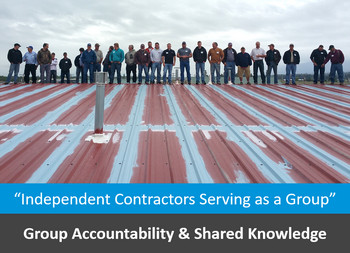
So, what do you do if a disastrous storm or other catastrophic event has ravaged your area? When there is a huge spike in roofing claims that local firms can’t accommodate, are you just out of luck? Not at all!
In the case of such an event, additional help from professionals in other states may be needed to address all of the damage—but that doesn’t mean you have to close your eyes and just hope the roofer at your door isn’t a scammer.
Through Choice Roof Contractor Group, a nationwide association of verified roofing companies who keep each other accontable, you can always find a contractor who is honest and reliable.
No matter what type of roofing services you’re in need of—whether routine or to address damage from a natural disaster or extreme weather event—you can find a verified group member to help you. If a local group member is overloaded with jobs in the wake of the storm, guess what? They can call on other verified professionals from across the nation to come and help pick up the extra work. The result is you can rest easy knowing your roof is being serviced by a reliable professional and, once the work is done, you will have continued access to expert follow-up work.
Continuing with the storm damage example, your endorsed Choice Roof Contractor will act as your lifeline in dealing with insurance companies. The contractor will thoroughly inspect the damage to your roof and make sure the insurance adjuster didn’t miss anything. If additional damage is found, your contractor will document the damage and fight on your behalf to make sure the additional repair needs are covered by your insurance company.
Because insurance adjusters work on behalf of the insurance company, they will do their best to save the insurance company money. To combat this, your contractor will work on your behalf to make sure everything gets fixed and that the work is performed correctly and lastingly.
As previously mentioned, you can also count on this group for emergency service when you need it. We will promptly send someone to your location so that, at the very least, temporary repair measures can be made to stop further damage until more in-depth work can be performed.
Because of how our members work together, they are able to handle any type of roof work anywhere in the country! You also have the benefit of group-wide accountability, so you know that no one sent out will be a “storm chaser” looking to make a quick buck and then leave you in the lurch.
To learn more about Choice Roof Contractor Group or to find an endorsed CRCG member in your area, call (800) 670-5583 or visit the contact page of the Choice Roof Contractor Group website.
If your commercial building has a flat roof, the day will come when you need the services of a flat roof repair contractor. In selecting a contractor, it’s important to choose one that has expertise in the type of roof you have. Hiring a shingle roofer who mainly services homes can be disastrous, as roofing a commercial building is a completely different ballgame.
Types of Flat Roofs
Flat commercial roofs are a popular choice for commercial and residential buildings, and there are various types of flat roof systems to choose from.
One of the most common types of flat roofs is built-up roofing, or BUR. For a BUR system, the finished membrane generally consists of alternating layers of bitumen (usually asphalt, coal tar or cold-applied adhesive) and reinforcing fabrics. Surfacings used include aggregate like gravel, slag or mineral granules; mineral-surfaced or glass-fiber cap sheets; hot asphalt mopped over the roof surface; elastomeric coatings; or aluminum coatings. Asphalt BUR is a common type and is made up of multiple layers of asphalt and reinforcing plies, forming a redundancy of waterproofing layers.
Single-ply membranes are another common flat roof type. They are factory manufactured and usually classified as either thermoset (EPDM) or thermoplastic (TPO or PVC). Thermoset materials retain their cured form, while thermoplastic materials can be softened when heated and hardened again as they cool.
Modified bitumen is also a common choice for flat roofing. It features polymer-modified membranes composed of reinforcing fabrics that serve as carriers for polymer-modified bitumen while it is manufactured into roll material. Similar to BUR membranes, modified bitumen roof systems may incorporate multiple layers. Installation methods and system configurations vary depending on the product and roof assembly. The surfacings of modified bitumen membranes include aggregate surfacing, metal foil-laminate surfacing, mineral surfacing and smooth liquid-applied surfacing.
As previously stated, a commercial roof is a vastly different animal from a shingled home, and it takes special training to install and repair commercial flat roofing.
No matter what type of flat roof your building has, a Choice Roof Contractor Group member can evaluate the roof and discuss appropriate repair, restoration, or replacement options.
Choice Roof Contractor Group is a nationwide alliance of independently owned commercial roofing contractors. Members meet the group’s current membership requirements, including 3rd Party Training or Certification, Proof of Insurance, Professional Business Conduct, and Commitment to the Group’s Values.
Members bring their own roofing experience and training to their businesses while also benefiting from knowledge sharing, professional connections, resources, and group support.
These contractors offer various repair, restoration, and replacement options depending on the condition of the roof. When an existing roof is structurally sound and otherwise suitable for restoration, a roof coating system may provide a cost-effective alternative to replacement and help extend the roof’s useful service life.
Finding a Trusted Roofer Can Be Easy!
Choice Roof Contractor Group members are independent commercial roofing contractors that perform their own inspections, provide their own recommendations to customers, and perform their own roofing work. Collectively, members bring experience across many aspects of commercial roofing.
To contact a Choice Roof Contractor Group member in your area, call (800) 670-5583 or visit the CRCG website’s contact page.
For commercial and industrial buildings, metal roofing has become a popular choice for a variety of reasons. Commercial metal roofing is known for its longevity and durability; its low-maintenance qualities; its resistance to discoloration and decay; and its robustness in standing up to physical impacts, fire, high winds and more.
If you’re considering a metal roof for your commercial or industrial building, keep reading as we break down some of the most common types of metal roofs and details about them.
Commercial Metal Roof Types
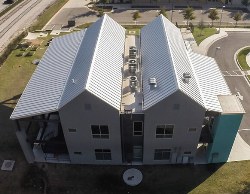
Among the metal roofing materials used for commercial application, some of the most common include:
Corrugated galvanized steel
Standing seam metal
Steel that is coated with a blend of zinc, aluminum and silicon
Stainless steel
Copper
Aluminum
Painted or stone-coated metal sheets
Metal roofs can be further broken down into five basic profile types:
Standing seam
CF panel
AP panel
U-panel
R-panel
Standing seam roofs are considered the most attractive metal roofing option—and they are also the most costly.
The name “standing seam” refers to a seam that has been mechanically hemmed at 12- to 24-inch intervals. One of the biggest advantages of a standing seam roof is it has no exposed fasteners; the panels are attached to the roof deck by means of screws and metal clips, which are hidden by the neighboring panel.
CF panel, or concealed fastener, metal roofs employ a lock-joint system that gives a clean and smooth appearance, and the fasteners are hidden. This type of metal roofing is known to be almost maintenance-free as well as fire and hail resistant.
AP panel metal roofing resembles standing-seam roofing but costs a lot less. AP panels use a pass-through system, which allows the screws to show. This type of roof is known to be very durable, low-maintenance, and fire and hail resistant.
U-panel roofing is typically composed of 26-gauge commercial-grade steel, which is heavier than the material typically used on metal roofs. U-panel roofing can often be installed over top of a shingle roof without the need for removal. This type of roofing can resist up to 140 mph winds; has a long life expectancy; and is known to be energy-efficient, low-maintenance, and hail and fire resistant.
R-panel metal roofing is low-maintenance and durable and presents an alternative to conventional roofing, as it can be retrofitted over top of existing roof material. It is also resistant to winds up to 140 mph, is fire and hail resistant, and is often made from 26-gauge steel.
Find the Right Professional to Install Your Metal Roof
There are many benefits to choosing a metal roof for your commercial or industrial building. If you think a metal roof is the way you want to go, you can find a trusted directory of reliable commercial roofers working in your area through the Choice Roof Contractor Group.
We’re a nationwide association of endorsed, verified roofing contractors that have satisfied certain qualifications in order to gain membership, including having a good track record with customers, being insured, and abiding by sound ethics in all work performed.
To locate a trusted endorsed member in your area, call (800) 670-5583 or visit the contact page of the Choice Roof Contractor Group website.
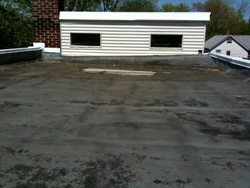
If the roof on your home doesn’t fit the cookie cutter mold of being a peaked roof with shingles, you may have a difficult time locating a willing contractor when you find yourself in need of roofing services. The reason is that many residential roofing contractors don’t know how to install or perform repairs on unique roof types, such as flat roofs. So when you’re in need of residential flat roof replacement, for instance, you may find yourself up the proverbial creek without a paddle.
The solution is hiring a roofer that has expertise in both commercial and residential roofing. Since flat roofs are a common choice for commercial buildings, the technicians at a dual-service roofing company—one that services both commercial and residential roofs—can bring their commercial roofing expertise to your residential job and provide you with the residential flat roof services you need without it costing a fortune.
Benefits of Flat Roofs
Flat roofs are a common choice for commercial and industrial buildings, but they are a lot less common on North American homes. For homeowners who opt for a flat roof on their house, there are various benefits, including:
Style – Flat roofs give homes an attractive, modern look with clean lines and unique style.
Usable Space – One of the reasons flat roofs are an alluring choice for commercial buildings is they turn the top of a building into an extra floor of usable space—and the same principle holds true on a home. When your house has a flat roof, you can utilize that space for a rooftop deck, a rooftop garden and more.
Cost – Flat roofs are a comparatively low-cost option when initially installed.
Easy Access – Because they are flat and not pitched, flat roofs are easy to access and walk on. This makes tasks like cleaning gutters, hanging Christmas lights and more much easier to accomplish.
Replacement Isn’t Always Necessary
Did you know that, statistically, roofs are replaced prematurely as much as 70-80 percent of the time? An expert roofing contractor with a good reputation will never advise roof replacement unless there is absolutely no other viable option.
Oftentimes, an outside-the-box roofing solution like applying a high-quality roof coating can delay the need for roof replacement by years. Roof coatings are a popular solution for commercial roofs, and they are an excellent option for a flat residential roof, as well.
A roof coating can fix all of your existing roof’s problems with one application and extend the life of your current roof by many years. A roof coating adds an extra, protective membrane layer over top of an old roof, restoring it to like-new condition at a fraction of the cost that a labor-intensive roof replacement would require. The various benefits of our group’s preferred roof coating include:
ENERGY STAR® certified
Fully waterproof solution
Backed by 40-year reputation
Guaranteed to extend roof life up to 18 years
Completely seals your existing roof and protects it from Mother Nature’s elements
Roof can be re-coated later on for even greater life extension
No expensive, labor-intensive roof tear-off needed
Less maintenance and upkeep required
Can lower roof temperature by up to 80 degrees
When Roof Replacement Is Unavoidable
Need a Flat Roof Contractor?
Our group works together to provide:
Larger Base of Knowledge
Group-Wide Accountability
Set Standards for Service
More Peace of Mind
Free On-site Estimate
Sometimes a roof must be replaced and there is no other choice; the time will eventually come when even a well-maintained roof needs replacing. When that time arrives, only a licensed, knowledgeable roofing contractor should ever be engaged to perform the work.
Time and time again, reputable roofers get called in to fix problems that have resulted from an inexperienced roofer performing work on a building. Oftentimes, that shoddy work that wasn’t performed to code leads to bigger, much more expensive problems. As with so many things in life, it’s better to do it right the first time.
A Trusted Source for Reliable Roofers
Finding a reputable roofing professional is easier than you think. If you’d like to choose from among an association of trusted roofing contractors located throughout the United States that are accountable to each other, look no further than the Choice Roof Contractor Group.
We represent a nationwide group of roofing professionals that are located throughout the U.S. Roofing companies who wish to join must meet certain requirements. To locate a CRCG member in your area, call (800) 670-5583 or visit the contact page of the Choice Roof Contractor Group website. One of our friendly roofing professionals will be glad to assist you and connect you with a member in your area.
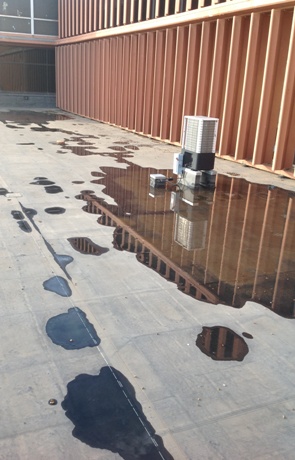 Flat roofs are one of most common types for commercial buildings. Strictly speaking, flat roofs aren’t actually “flat” but have only a very slight pitch. Because they aren’t as pitched as other roof types, they don’t drain as efficiently, and this can lead to the problem of ponding water.
 There are a lot of roofing contractors out there, no doubt about it. When you own or manage a commercial building, part of your job is finding one that is reliable and properly qualified.
 Wouldn’t it be nice if you could just snap your fingers and a listing of pre-verified roofing contractors in your area would suddenly appear? As it happens, there is such a resource that will point you to verified roofing experts near you—and all you have to do is call or click to meet one of them in person.
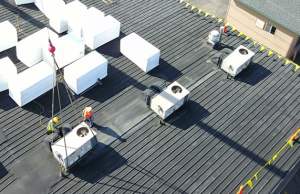 You may be the best, most honest roofing contractor that ever picked up a hammer, but if you aren’t effectively getting your message out to potential customers your business will not thrive.
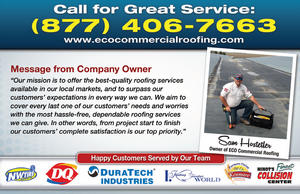 The average Joe or Jane doesn’t understand the technicalities of roofing—all they want is someone who can solve their problems. Effective advertising can help convince prospective customers that you are that person.
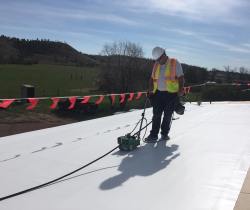 The Occupational Safety and Health Administration (OSHA) oversees and regulates safety-related matters for employees within the United States workforce. In terms of OSHA commercial roofing regulations, there are both mandates and guidelines offered by OSHA relative to safe practices within the roofing industry.
 Searching for the perfect commercial roofing company is a bit like looking for the fountain of youth—success is impossible because what you’re looking for doesn’t actually exist.
 Our members freely share knowledge and expertise with one another. If a Choice Roof Contractor encounters a roofing problem or situation outside of his usual experience, other members may be able to share useful knowledge or practical experience.
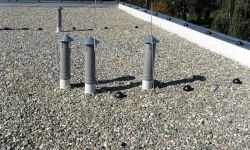 Built-up roofing, or BUR, has been used on commercial buildings for many years. These systems are made up of multiple layers of bitumen and reinforcing materials, often finished with gravel or another protective surfacing.
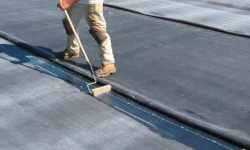 Ethylene propylene diene monomer roofing, commonly known as EPDM or rubber roofing, is a single-ply rubber membrane commonly used on low-slope commercial roofs. EPDM systems are known for their flexibility and durability and have been widely used for decades.
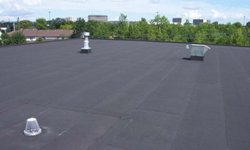 Modified bitumen roofing is an asphalt-based roofing system reinforced with polymers and other materials to improve flexibility and performance. It is commonly installed in rolls and may be applied using several different methods, including heat welding, hot asphalt, cold adhesives or self-adhered products.
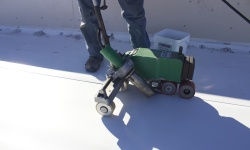 PVC roofing is another common single-ply option for commercial flat and low-slope roofs. It is known for its reflectivity, durability and resistance to many chemicals, oils and grease. PVC membranes can also perform well in wet conditions when the roof is properly designed, installed and maintained.
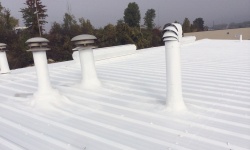 In some cases, complete roof replacement may not be necessary at all. If the existing commercial roof is still structurally sound and is a good candidate for restoration, a properly installed roof coating system can help extend its useful service life.
 The roof that presides atop your commercial building acts as its first line of protection from Mother Nature’s elements and represents a significant financial investment. Your roof is also the most vulnerable part of your building and is daily exposed to elements that foster deterioration and decay, increasing the likelihood that your roof—and everything below it—may become damaged.
 So, what do you do if a disastrous storm or other catastrophic event has ravaged your area? When there is a huge spike in roofing claims that local firms can’t accommodate, are you just out of luck? Not at all!
 Flat commercial roofs are a popular choice for commercial and residential buildings, and there are
  Among the metal roofing materials used for commercial application, some of the most common include:
 If the roof on your home doesn’t fit the cookie cutter mold of being a peaked roof with shingles, you may have a difficult time locating a willing contractor when you find yourself in need of roofing services. The reason is that many residential roofing contractors don’t know how to install or perform repairs on unique roof types, such as flat roofs. So when you’re in need of residential flat roof replacement, for instance, you may find yourself up the proverbial creek without a paddle.
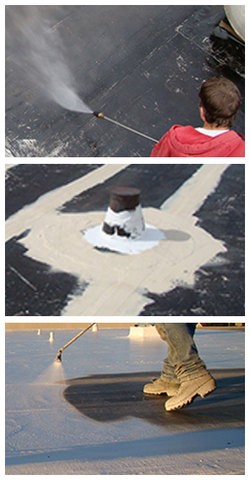 Did you know that, statistically, roofs are replaced prematurely as much as 70-80 percent of the time? An expert roofing contractor with a good reputation will never advise roof replacement unless there is absolutely no other viable option.
