Commercial Roofing Spray Foam Opportunities

commercial roof foamingToday, we take a look at the growing demand for “green” construction and how spray foam roofing can greatly help curb American energy costs. We then examine the market opportunities that this opens up for commercial roof contractors, and how commercial roofers can benefit from our network’s partnership with the premier spray foam equipment provider Intech Equipment & Supply.

The Need for Spray Foam Roof Insulation Today

According to the U.S. Department of the Interior, American energy usage is expected to increase 40 percent by 2025. That increase in consumption corresponds with a rise in demand for “green” nonresidential construction, as commercial and industrial buildings take up a good portion of the United States’ total energy usage.

The Freedonia Group, a market research firm, projects that demand for U.S. green building materials will increase 11 percent annually and will reach $86.6 billion in 2017. Moreover, the ENERGY STAR® program reports that construction of green buildings has also reached a new high. As EnergyStar.gov relates, “in the United States, the green share of the U.S. nonresidential construction market grew from two percent in 2005 to 44 percent in 2012.”

Spray foam roofing offers one of the most immediate ways to help building owners cut down on energy costs. It can applied on virtually any type of commercial roof system, and with its high insulation value, a spray foam roof system is among the greatest energy-saving and cost-cutting commercial roof systems out there.

Why Spray Foam Roofing?
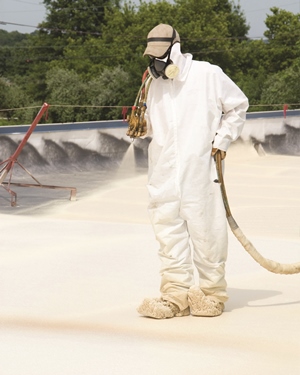
foam roofingWe covered the extensive benefits of spray foam roofing and took a look at roof spray foam problems in previous blog posts. In reality, spray foam roofing has been a highly trusted commercial roofing solution for around 50 years. Its energy-saving benefits, long life expectancy, and high-performance ability are a handful of many attractive features. A person only needs to take a quick look at the slew of advantages associated with spray foam roofing, particularly a spray polyurethane foam roof, to realize its appeal for commercial roofing applications:

We Need More Contractors!

Join our network to receive:

  • Group Support
  • Shared Strategies
  • Lead Generation
  • Discounted Pricing
  • Complete Training

Learn More

  • Keeps heat “trapped” inside a building, cutting down on heating costs
  • Eliminates air infiltration, the leading cause of lost energy and spiked energy costs
  • Usually costs 15-50 percent less to install and maintain over 40+ years than other roof membrane systems
  • Works well in all types of weather and climates
  • Capable of being applied to virtually all existing roof surfaces
  • Muffles transmitted sound
  • Complete resistance against hurricane-force winds
  • Cuts off drainage problems
  • Strengthens a building’s structural support
  • Hardly any maintenance demands
  • With a white roof coating on top of the spray polyurethane foam application, you can see energy savings of up to 30-50 percent
  • Spray foam roofing cost is minimal over the long run

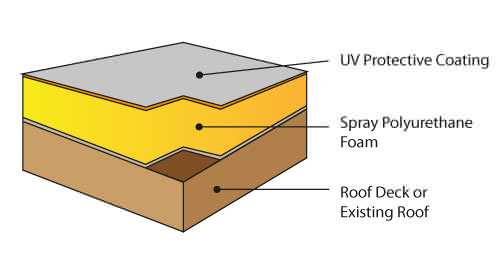
In fact, our Conklin spray polyurethane foam roofing system, made up of spray polyurethane foam and a top layer of a white elastomeric roof coating, can pay for itself in 4-7 years with the energy savings it gives. Because of this system’s performance record in all kinds of weather conditions, spray foam contractors have a tremendous market opportunity, especially in regions with colder weather spells. The Conklin spray foam system is also backed by a non-prorated warranty on labor and materials for up to 18 years.

Access to Spray Foam Equipment at Discounted Rates

spray foam equipmentAs the spray foam industry continues to grow rapidly, commercial roof contractors who jump into the fray now and establish their reputations as spray foam contractors will prosper in the long run. Whether a roof contractor is new to commercial roofing or is experienced, Choice Roof Contractor Group offers an unbeatable opportunity for entering this growing marketplace through our partnership with Intech Equipment & Supply.

Based out of the Phoenix with 6 full service locations throughout the U.S., Intech Equipment and Supply is a top national provider of everything that is needed for spray foam applications, inclusive of spray foam insulation systems and spray foam roofing. This great provider offers mobile spray rigs, spray foam insulation products, do-it-yourself insulation kits, spray foam equipment, and more. Because energy-efficient building is on the rise, Intech is fully committed to helping make the United States more “energy-frugal”, and providing affordable solutions for contractors to become involved. Intech’s team is a certified distributor of Graco spray foam equipment, and has been recognized as a top “High-Performance Coatings and Foam” Distributor for Graco due to its contributions to the spray foam industry.

Other Great Advantages for Spray Foam Contractors

Intech also offers free, live technical support should a spray foam applicator have any issues or questions. The company has an extensive inventory of supplies and parts available for immediate shipping should the need arise. To talk to Intech, call our favorite technician Dennis Alter at 706-474-1657.

Choice Roof Contractors benefit from discounted spray foam equipment from our partner (in addition to free lead generation, mentorship, marketing support, and more). Please call 800-670-5583 for special pricing and more information on our nationwide commercial roofing network.

The Dynamics of Marketing Commercial Roofing Services

Today, we go over the dynamics of the marketing world for the roofing industry.

commercial roof marketingMarketing. It is one of those words that roof contractors come across all the time. Despite all of the innovations that have come forward in marketing and advertising, nothing beats the power of word-of-mouth referrals. A stellar reputation for honesty, quality workmanship, and great customer service still goes a long way in any part of the building industry— especially commercial roofing.

With the timely arrival of new methods of communication, though, interacting with prospects, leads, and customers has become far less difficult. With communication avenues such as social media and texting, the barriers of time and space no longer hold as much sway in whether or not a roofing marketing campaign is effective.

Consumer surveys now show the power of the Internet in customers’ decision-making process: 98% of Americans say that they look for local businesses online using a search engine. There are 1+ billion active users on Facebook alone in any given month, and every 20 minutes users share 1 million links on Facebook, make 2 million friend requests, and send 3 million messages.

It is clear that people are interacting on these platforms. With so much “buzz” going on, it makes sense for roofing contractors to be there as well. Otherwise, these missed interaction opportunities mean lost business.

Roofing Marketing and Opportunities on the Web

Because so many people are finding these social media platforms and other digital methods of communication so appealing, roofing contractors can take advantage of this hubbub of social activity as well. The foundational principle that stands behind effective marketing strategies with these platforms is no secret, either—to be successful, a roof contractor must simply demonstrate that he is reputable. As is the case with word-of-mouth advertising, reputation is king.

For solid marketing strategies for roofing contractors, it is optimal to consider the following tips and ideas.

Three Marketing Tips and Ideas for Roofing Contractors

Free Guide: How to Switch to Commercial

Commercial Roofing Book

    1. Do not ignore the power of having a professional-looking website. Your own website could be your number one source for generating quality leads. Do not be swayed by the promises of “effective” roofing lead generation companies that promise the world but then do not deliver or fall back on their commitments. The best way to attract leads is to show them what you have to offer. A professional-looking website offers that opportunity.

    Make sure that your website is crisp and professional. It should have plenty of quality images that show “before”, “during”, and “after” pictures of your roofing jobs. Make sure that you and your workers are professionally dressed and at work when a photo is taken of your roofing job. Every word on your website should be directed toward informing consumers and enticing them to use your services—elsewise, the wording is not needed. Do not neglect the power of “roofing SEO” either—SEO refers to search engine optimization, or how you get a website at the top of search engines like Google or Yahoo. A well-ranked website can generate lots of free leads who need service immediately.

    2.  Get active on social media like Facebook, Google+, and Twitter. With so many people active on social media, it makes sense for roof contractors to be there as well. It is especially important to become active on Google+. Among many other benefits, being active on Google+ has a direct bearing on how you appear in search rankings on Google, easily the world’s most popular search engine. Google+ social media interactions—and the data behind them—are open to Google’s search ranking algorithms, or the ways Google determines the search rankings of websites. Other social media platforms such as Facebook or Twitter do not make their data as accessible, and therefore do not have as direct an impact.

    Becoming active on social media may seem time-consuming. But it does not take much to start out. Post pictures of roofing jobs weekly. Keep your “followers” engaged by issuing personalized messages during key parts of the year, such as the holidays. We offer more tips for navigating social media and making good use of it in a prior blog post, too. Above all, keep in mind two fundamental principles: demonstrate your work quality and examples of quality service, and engage your followers. Do not post updates about your roofing company alone, but also content that will be educational for your followers. You will build up your credibility more that way and won’t get ignored.

    3.  Learn the ins-and-outs of LinkedIn, and leverage it for full advantage. Yes, LinkedIn is another social media platform. Why does this platform deserve mention by itself? Because it is a gold mine for quality leads. At present, there are over 259 million LinkedIn users from over 200 countries across the globe. Many of those users are in the United States, and LinkedIn is the premier social networking platform for professionals. That means that people who are decision-makers or potential referral partners are on there—and likely actively using it.

    Learn how to use this amazing resource for full benefit. Just consider this tip and the potential it can hold for your marketing alone: check out LinkedIn Groups. There are groups or online communities on LinkedIn that are wholly devoted to particular areas or professional focuses. Find the groups or associations that your customer profile demographics fall into, and join them and engage them with quality, educational content. Take time to build “online relationships”, and you may see more leads coming your way than ever before.

    Roofing Contractor Marketing Support and Our Platform

    Contractors join our group for:

    • Network-backed Guarantees
    • Support from Fellow Roofers
    • Group Discount Purchasing
    • Shared Marketing Strategies
    Learn More
    Should you want professional marketing support behind your roofing company, you can benefit from our partnership with Top Roof Marketing, the only nationwide marketing firm focused exclusively on commercial roofing contractor marketing. Among other things, their team does SEO, roofing websites, social media, direct mail, and more.

    For other effective roofing marketing ideas, give us a call at 800-670-5583. We will be happy to help you with your needs and show how we support our members with our full-service platform.

    We also offer a free commercial roofing e-book filled with information on how to build and maintain a strong, profitable roofing business.

    The Benefits of a Cool Roof

    cool roof benefit exampleToday we build on prior blog posts about energy-efficient buildings and the ENERGY STAR program and its role in qualifying cool roof systems. At present, Americans spend about $40 billion in annual building cooling costs— one-sixth of the electricity generated in the United States each year. One option that has emerged as a way of containing energy costs is the “cool roof system”—which provides great reflectivity for lower A/C costs. But how exactly does the cool roof system provide benefits?
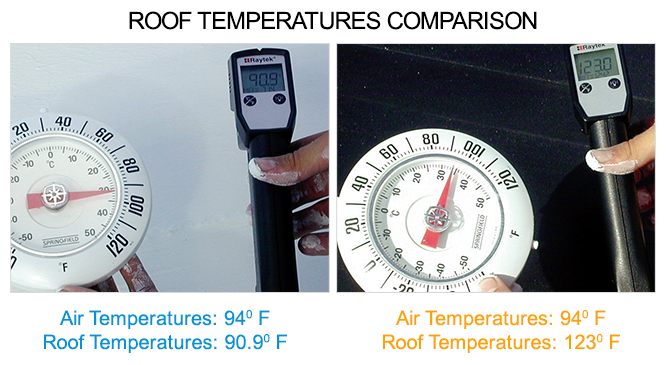
    Below, we take a quick look at how a cool roof can benefit building owners and human populations as a whole.

    The Cool Roof and Its Consumer Benefits

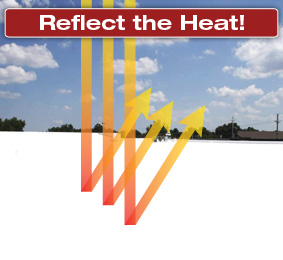
    • Cool roofs have high reflectance and emittance values. Emittance values and reflectance values are formal terms for how much heat a roof is able to release, and how much of the sun’s energy a roof is able to reflect as light back into the sky. The Cool Roof Rating Council, a leading non-profit, third party organization that measures and certifies energy-efficient roofing, says that “cool roofing” is able to reflect and emit a substantial amount of the sun’s energy. Because of its great emittance and reflective properties, a cool roof therefore keeps heat from transferring to a building below, where it will be taxing on an air conditioning system. As a result, building owners enjoy a comfortable interior space during the hot summer months and can recoup 10-30% in cooling savings.
    • Cool roofs reduce buildings’ carbon footprint on the environment. Since cool roofs conserve electricity, they play a direct role in the reduction of greenhouse gas emissions into the air. When buildings use less electricity for their cooling, power plants generate less electricity and release fewer carbon emissions into the air. Cool roofs’ reflective properties also have a substantial impact on lessening global warming and its effects: instead of transferring the sun’s energy to the building below, a cool roof bounces the heat back into the atmosphere as light. This reflectivity also increases the roof’s lifespan, making it less susceptible to deterioration caused by the sun.
    • Cool roofs raise public standards for environmental well-being and public health. The Cool Roof Ratings Council reports that growing public awareness of the benefits of ‘eco-friendly’ roofing has led to improved building codes and more active “green building” programs across the United States. As these building codes incorporate minimal requirements for roofing products that meet minimal energy-efficiency standards, new buildings are constructed with cool roof systems, and more solar radiation is reflected back into the sky and more absorbed heat released during the day. The end result is improved air quality, which helps cut down on health issues arising from the influence of smog or lasting periods of heat (e.g., heat stroke, heat exhaustion, dehydration, or asthma).
    • A cool roof can give a building owner sharp energy savings at electricity demand peaks. A cool roof reduces electricity usage at the hottest periods of the day. As a result, the energy grid does not perform as heavily, and building owners who pay for electricity according to times of usage can see substantial energy savings at peak times of demand for electricity.

    It is clear that a cool roof system can offer a building owner great value: a more comfortable building, less environmentally taxing energy consumption, substantial energy savings, and more. Many roofing product brands build on top of these benefits, though, offering building owners much in the areas of protection and long-term durability.

    cr2

    Conklin Cool Roof Systems and Their Additional Benefits

    roof coating fabricOne such brand is Conklin. Conklin has been a leader in the energy-efficient roofing market since it created the first acrylic roof coating for the commercial roofing industry- an innovation that played a part in propelling energy efficiency as a consumer concern in the nonresidential construction industry. Since its creation of this cool roof coating, Conklin has been a leader in high-performance, energy-efficient roof coating systems for 40+ years. Over 2 billion square feet of roofing have Conklin products applied on them.

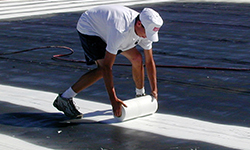
    When applied, a Conklin cool roof system is characterized by a seamless impenetrable membrane that lies on top of an existing commercial roof. Because it is seamless, the roof does not have trouble with leaks and even stands up to powerful outdoor extremes such as hurricane-grade winds or hailstorms. The building’s structural support is reinforced, and the old roof has its life extended for decades without the heavy expenses of roof replacement.

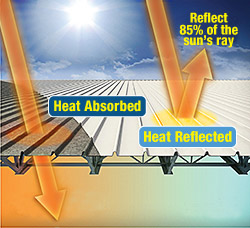
    Conklin cool roofs reflect up to 85% of the sun’s heat in the atmosphere, generating heavy energy savings for building owners. A Conklin cool roof system can pay for itself in just five to seven years with these tremendous savings. Plus, all Conklin roof systems are backed by non-prorated warranties covering materials and labor.

    Should you be interested in learning how a Conklin roof system can be of use to your commercial roof and save you money, give us a call at 800-670-5583. We will be happy to schedule a free roof estimate with a roof contractor in the group.

    The Place of ENERGY STAR® in Determining Cool Roofs

    cool roofToday we build on top of our blog post about “The Benefits of Energy-Efficient Buildings”.
    Cost reduction is a top priority for any business owner or facility manager. With the appearance of energy-efficient building materials in the construction industry, consumer interest has increased in what energy-efficient roofing (or “cool roofs”), among other materials, can do for cutting costs.

    The United States Environmental Protection Agency’s (U.S. EPA) ENERGY STAR® program has been of particular benefit in labeling roof systems that are energy-efficient. But what exactly is the ENERGY STAR® program? And why has it become so relevant in the construction industry? We take a look at some answers below.

    What is ENERGY STAR®?

    According to EnergyStar.gov, ENERGY STAR® is an EPA-established “voluntary program that helps businesses and individuals save money and protect our climate through superior energy efficiency.”

    In its legislation in 2005, the Energy Policy Act, Congress declared ENERGY STAR® to be a “voluntary program to identify and promote energy–efficient products and buildings in order to reduce energy consumption, improve energy security, and reduce pollution through voluntary labeling of or other forms of communication about products and buildings that meet the highest energy efficiency standards.” Since then, thousands of ENERGY STAR® products and services have been brought to market.

    American consumers and investors have also adopted stronger consumer commitments to energy-efficient products and services. The public’s knowledge of ENERGY STAR® is shown by the fact that approximately 85 percent of the American public today recognizes the program’s blue label.

    “ENERGY STAR Roofs”- Earning Qualification

    energy starFor a product or building to be qualified for the ENERGY STAR® logo, it must meet EPA-implement third party testing and certification. The ENERGY STAR® program makes use of testing, third party review, and compliance screening for strengthening consumer trust of qualified products and buildings meeting high energy-saving requirements. Generally speaking, the program breaks down products and buildings into four categories, with products having its own “Products” category and buildings being broken down into “New Homes”, “Commercial Buildings”, and “Industrial Plants” categories. Over 4.5 billion qualified products have been sold in the program’s 20 years of existence, and at present over 1.4 million new homes and over 20,000 facilities have the program’s blue logo.

    These categories are where the program becomes relevant to the construction industry. Industrial plants must be certified and approved by a professional engineer to meet energy performance score of 75 or higher. They must also pass an EPA compliance screen test. For qualification, commercial buildings must achieve an energy performance score of 75 or higher on Portfolio Manager, an online tool for measuring building energy efficiency, and be verified by a qualified licensed professional.

    According to the program, around 40 percent of commercial building space is benchmarked for energy efficiency by the program’s Portfolio Manager tool.

    Cool Roofs and Energy-Efficient Buildings

    Roofing Services

    Our professional commercial roof contractors provide:

    • Roof maintenance & repair
    • Inspections & leak detection
    • Energy efficient roof systems
    • Complete roof replacement
    • Roof life-extending solutions
    Request Free Estimate
    Since it is the building part closest to the sun, the roof plays a big role in the determination of whether a building is energy-efficient. Roofs that have dark colors absorb the sun’s heat and then transfer the heat to the building below. That means that more air conditioning has to be used to keep the building cool. Americans spend almost $40 billion a year cooling their buildings, according to the program.

    For ENERGY STAR® qualification, roofing products must meet “initial and aged solar reflectance values”, or certain rates of reflectivity at different portions of their lifecycle. Another concern the ENERGY STAR® program maintains is a roofing product’s “emittance”, or its “ability to release absorbed heat.” Values between 0% and 100% are used to measure emittance and reflectivity. Roofing products do not have to meet emittance requirements for qualification, but the EPA is looking at adding it as a requirement block for ENERGY STAR® qualification. Most roofing products have emittance values above 85%, with the exception of metal surfaces.

    Cool roofs certified by ENERGY STAR® are said to reflect a greater portion of the sun’s rays than less energy-efficient products. Because of this, they can lower rooftop temperatures by up to 100° and reduce maximum-point cooling demand by 10-15%. Many roofing brands meet these qualifications, but some stand out for other benefits.

    The Conklin Company and High-Performance Cool Roofs

    Conklin’s cool roof systems have been found to recoup energy savings that are so great, building owners find their cool roof systems can pay for themselves in just 5-7 years. These cool roofs reflect up to 85% of the sun’s heat and harmful UV rays.

    In addition to great energy efficiency, Conklin cool roofs are known for providing a seamless membrane across an old roof. The end result is that the old roof is protected from the sun’s deteriorating effects, harsh weather conditions, small and large leaks, and the other roofing issues that arise. In fact, Conklin has been the leading innovator in the cool roof systems market since it created the first acrylic roof coating back in the mid-1970s.

    The Conklin Advantage for Your Needs

    Conklin_RSShould you be interested in learning how a Conklin roof system can benefit your needs, give us a call. Be sure to ask about the commercial roofing industry’s only non-prorated warranties of up to 20 years backing our Conklin roof systems. These warranties cover all materials and labor for their coverage periods.
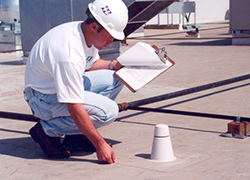
    When to Inspect a Commercial Roof

    roof-rusting2Over time, all roofs experience wear-and-tear or aging. Prolonged exposure to the sun, inclement weather such as heavy rainstorms, leaks forming from water infiltration between seams—these are just a few of the many factors that take their toll on a roof. When problems with a roof arise—even small ones—they demand a prompt response.

    But the roof is often the last thing on a building owner’s mind. It’s also common for the person in charge of the building to try going without servicing the roof for as long as possible in order to save money. However, if it is to last for its service life or beyond, the roof needs regular inspection and frequent maintenance.

    How often then should a roof be inspected? Below are listed some good steps for action.

    When Should a Roof Be Inspected?

    • A visual inspection of the roof should be done at least twice a year. Roofing studies have documented that a roof will last for only one-half of its life if it is not regularly inspected and maintained. A visual inspection will identify existing roof problems, help determine of any subtle issues are at play, and provide a baseline for a roof’s lifespan. A roofing professional who is well-trained in effective roof inspection practices, diagnostics, and repairs is best-suited for making a good visual inspection. The inspector will also need to be highly familiar with the layout, installation and repair, and types of failure particular to the roof system to be examined. More information about the steps involved in a roof inspection can be found in our prior blog post about roof inspections.
    • In general, roof inspections should be timed before and after seasons of severe weather. Depending on the climate of your area, you should have your roof inspections done once before the period with the most severe weather, and then afterward as well. In northern parts of the United States, it is optimal to schedule inspections before and after the wintertime. In these areas, roofs typically experience the most damage from winter storms and the weight of gathering precipitation. In warmer parts of the United States, it is best to schedule roof inspections before and after the summertime. In hotter weather, a roof expands in response to thermal shock. For gauging the effect of thermal energy on your roof, it is optimal to have roof inspections done before and after the peak heating season.
    • Non-visual inspections such as infrared scans should be completed according to the roof’s unique requirements. Non-visual inspections should never replace visual inspections. However, they can be highly complementary to the visual scan, as they can identify subtle issues such as hard-to-detect leaks, note the presence of moisture below a roof surface, and provide a greater, in-depth look at a roof’s status. These inspections should be timed in coordination with visual inspections so that the building owner and staff have good knowledge of their roof’s condition year-round. However, it is recommended that the roof’s condition and age, as well as factors such as how much foot traffic goes on the roof, be taken into consideration when scheduling non-visual inspections.
    • A roof “housekeeping” schedule will vary depending on the roof system used, but can be as often as a quarterly-to-monthly basis. Some roof systems are engineered for fewer maintenance and upkeep requirements than others available on the market. Conklin roof systems are such an example. However, other roofs require more attention, and the more a roof is maintained, the longer it will last for the long term. In general, experts recommend that a building staff account for a roof’s condition, the presence of any debris, any potential trouble, and other points of consideration on a monthly-to-quarterly basis. Consulting with a qualified, experienced roofing professional about your roof needs is best for determining how often your roof should be minimally examined. Also, be aware that some roof warranties come with inspections in their coverage period. Never settle for relying upon your warranty as an alternative to having your roof regularly inspected and maintained; neglecting to do so may even negate your roof’s warranty coverage.


    Call us today at 800-670-5583 to get a free roof estimate. While doing so, do not forget to ask about the non-prorated warranties that cover materials and labor for Conklin roof systems.

    5 Ideas for More Effective Roofing Marketing

    Below, we examine five ways commercial roof contractors can strengthen their roofing marketing for better business promotion. More business promotion means more market exposure, and that means greater chances for “hooking” prospects and leads.

    Steps for More Effective Roofing Marketing

    Free Guide: How to Switch to Commercial

    Commercial Roofing Book

        • Sign up for Google+ as soon as possible. With roof contractors’ busy schedules, spending time on social media may seem like a waste of time. But Google+ has a strong impact on how much and where a business shows up in search rankings on search engines like Google. As many as 9 out of 10 Americans rely upon the Internet to find out about local businesses, and if you do not have a website or are inactive on social media, you are missing out on free opportunities for generating leads. Our partner, Top Roof Marketing offers some great-but-quick thoughts on why being active on Google+ is so essential.
        • If you are on social media, try to become more active. Your activity on social media does not have to be extensive. At the minimum, posting quality content with website links at least once a week is good. However, as is the case with many other things, the more effort you put into your social media efforts, the more you will get out of it. Post pictures of projects you have completed recently so customers and prospects can see the quality of your work. Posting tips for your customers that will educate them more about your industry will help as well- it will build your reputation as a credible authority, and people will be more likely to approach you about using your services. More tips for social media can be found at our Social Media for Roofing Contractors page. For our nationwide contractor network, we recommend that our members post the content we put out and “like” and “share” this content as much as possible. Doing so helps boost our search rankings more, and that gives our members even more roofing leads, among other exclusive benefits.
        • Educate yourself about what is available for marketing. As the old saying goes, “knowledge is power”, and that is just as true in the roofing industry. Many fly-by-night marketing firms or roofing lead generation companies will offer free “marketing guru” advice that may seem beneficial for your roofing company at first glance. But those marketing strategies may not be all that effective in reality—some marketing firms are just looking to build up their business as much as possible without crafting marketing campaigns that are really tailored to roofing contractors’ needs. When someone approaches you about ideas for things like digital marketing—especially “SEO marketing” and “social media marketing”—being at least aware of what is involved with those strategies will help you discern who is genuinely interested in meeting your needs. Plus, you can learn of ways to take advantage of these marketing tools yourself.

      How to Get Commercial Roofing Jobs

      Learn More

      Why Contractors Join Our Network

      • Lead Generation
      • Mentorship Program
      • Complete Training
      • Discounted Pricing
      • Marketing Support
      Learn More

      • Evaluate your marketing efforts and objectives. Sometimes even established roofing companies need revamping. Start by taking a look at your business objectives for the year- how much do you hope to grow your business by? Think in terms of gross sales revenue for the year as well as quantifiable measures for customer retention and the number of leads brought in. Then take a look at the marketing strategies you are using to get your roofing company’s name out there. Are you doing any advertising? What are you doing for that? What is your Return on Investment (ROI)? Your customer acquisition cost (basically, the overall per-customer cost of methods used to get a lead’s attention and then convert him or her to a customer)? Use objective benchmarks to measure your marketing’s effectiveness, and do not be afraid to turn to new strategies or campaigns for greater possible gains.
      • Look for creative ways to attract leads. This is perhaps the most important and most actionable item of these five suggestions. With the arrival of new marketing tools like LinkedIn, there are many ways in which you can reach out to prospects and attract their attention like never before. LinkedIn in particular represents a great opportunity for commercial roof contractors. Many important decision-makers are active on LinkedIn, including business owners, property managers, and key figures in settings like architecture firms or real estate firms. Because these people are accessible through LinkedIn, it makes sense to use this platform for developing key connections that can lead to commercial roof projects. Be sure to check out and learn more about LinkedIn as a way for generating leads for your commercial roofing company.

      Interested in Learning More?

      Should you be interested in learning more ways you can take your roofing marketing to the next level, call us today at 800-670-5583. Contractor members have direct access to commercial roofing veterans who share how to build a strong, profitable roofing business.

      Why a Roof Maintenance Program is Important

      When a building owner has a commercial roof installed or repaired, thereafter it may become the last thing he or she thinks of. But since a commercial roof is one of the most important components of a building—after all, it protects the building’s interior space and contents from harm—it is important to make sure it remains in tip-top shape.

      For an almost-maintenance-free roof, check out the reasons for why a roof maintenance program is important below.

      Reasons Why a Roof Maintenance Program Is Necessary

      • Regular roof inspections and maintenance mean fewer roof repair or replacement bills. No matter what type of commercial roof you may have, it is likely the roof will encounter problems at some point in time. Common commercial roofing problems include roof leaks, roof punctures or tears, moisture trapped under a roof cover, and others. While these are problems-in-themselves, they can also be indicators of bigger roofing issues at play or that are developing. A regular roof maintenance program will identify signs of trouble before bigger issues arise, helping you cut down on expensive roof repair bills or, if the problems are substantial, cost-heavy roof replacement. That ultimately results in more savings in your pocket.
      • Frequent roof inspections will extend the life of your roof. Because current troubles and future problems are taken care with regular roof maintenance, your roof will be free of roof life-altering complications that would otherwise arise as a result of those problems. In the long run, when your roof does need to be serviced it will be likely to have only small repair needs as a result of your tenacity.
      • A roof maintenance program will identify potential causes of roofing problems. Among other things, sitting pools of water or sitting debris can be causes of roofing problems. A regular roof maintenance program will help you keep your roof free of debris, and help you quickly take care of the ponding water before it affects the roof cover and causes leaks. As is the cause with services in other industries, preventative actions will greatly help in the elimination of sources of roofing trouble.
      • Having your roof regularly inspected will help in making sure skylights are properly secured. If a skylight is unsecure or not well-sealed around its framing edge, leaks can penetrate and dislodge a skylight from the roof cover. In turn, when a skylight is dislodged, rain and debris can enter a building during storms with powerful winds or other extreme weather conditions. Making sure that all skylights are suitably secure and well-sealed in a regular roof inspection plan, therefore, will help you save time and money in costly debris pickup and disposal.

      Choosing a professional roof contractor who is licensed, bonded, and insured (or satisfies the professional contractor requirements for the state in which you reside) is best for ensuring that you enjoy the benefits above. We do offer tips for consideration when hiring a roof contractor.

      Should you want a free local roof inspection, give us a call at 800-670-5583.  We will also be happy to discuss the non-prorated warranties covering labor and material costs that back the high-performance, energy-efficient Conklin roof systems we use.

      The Benefits of Energy-Efficient Buildings

      Today, we cover the tremendous benefits offered by energy-efficient buildings. To examine the benefits of these buildings in a fuller light, it would be best to first review what energy efficiency is exactly.

      What is Energy Efficiency?

      green buildingAccording to the Lawrence Berkley National Laboratory, an operational definition of energy efficiency, or “energy-efficient use”, is the use of less energy for providing or obtaining the same service or good. The U.S. Department of Energy states that energy efficiency is an effective way of “saving money… and reducing pollution.”
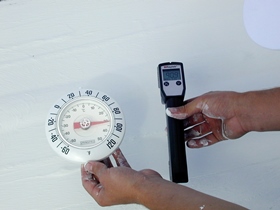
      Over its twenty years of existence, the ENERGY STAR® program has become perhaps the most recognized program for certification of products’ energy-saving capabilities. According to the program’s website, ENERGY STAR® is “U.S. Environmental Protection Agency (EPA) voluntary program that helps businesses and individuals save money and protect our climate through superior energy efficiency”. Since the program’s introduction in 1992, the public’s awareness of the program and its efforts to promote greater energy savings has grown significantly. At present, approximately 85 percent of the American population recognizes the blue ENERGY STAR® brand logo.

      One area in which the ENERGY STAR® program has exerted influence is in the construction industry. Many building materials have the ENERGY STAR® logo as confirmation of their energy-saving power. In the specific area of energy-efficient construction, building owners who want their buildings to be energy-efficient, if not more so, have opted for the application of energy-efficient building materials on their building properties. These energy-efficient materials have undergone strict third party testing and confirmation of their energy-saving capabilities.

      Currently, over 1.4 million home and 20,000 facilities carry the ENERGY STAR® logo.

      Annual Energy Consumption in the United States

      According to the ENERGY STAR® program, Americans spend almost $40 billion in annual cooling costs on their buildings. That accounts for approximately one-sixth of the electricity generated in the United States. Because cooling expenses have been so high, with the introduction of the ENERGY STAR® program in 1992 came strengthened consumer interest in energy-efficient building materials. Since then, building owners across the United States have turned to energy-efficient building systems as a way for cost containment.

      The ENERGY STAR® program has shown strong dividends in producing greater energy savings and utility cost savings, even on a year-to-year basis. In 2013, with ENERGY STAR®’s assistance “American families and businesses… saved $297 billion on utility bills and prevented more than 2.1 billion metric tons of greenhouse gas emissions”, according to a press release recently issued by the program.

      Energy-Efficient Roofing for Energy Costs Reduction

      In the energy-efficient construction industry, one method that has emerged for making a building more efficient in its energy use is energy-efficient roofing. Like other energy-efficient products, many roof systems have been certified with the ENERGY STAR® logo as third-party confirmation of their energy-saving properties.

      ENERGY STAR®-certified roofing has been found to give tremendous benefits:

      • Capable of reflecting more of the sun’s rays and harmful UV rays than “typical” roofing, especially black asphalt roofs. Some commercial roof systems, such as Conklin roof systems, have been found to be capable of reflecting up to 85% of the sun’s heat and UV rays.
      • Capable of lowering roof surface temperatures by up to 100°.
      • Reducing at-maximum cooling demand by 10-15%.

      With these energy benefits, building owners could see up to 30% cost savings on their annual cooling costs. Conklin’s line of ENERGY STAR®-certified roof systems have been found to do so and also extend an existing roof’s life for up to 40+ years, or even more.

      What Else Do Conklin Roof Systems Provide?

      Aside from tremendous energy benefits, Conklin roofing provides an impenetrable, seamless layer of protection over any existing commercial roof. These roof products can be applied to virtually any commercial roof type without a hassle. They also feature certified resistance against hurricane-grade winds, fire breakouts, and hailstorms. A building’s structural support is reinforced by Conklin roofing products, but without any deadweight added. Plus, Conklin’s products are elastomeric, meaning that they contract and expand with temperature changes.

      When they are applied over an existing roof, Conklin roof restoration products feature a highly reflective surface that gives the roofing its energy-saving capabilities. That is what makes a building energy-efficient for the long run. In fact, the energy savings that Conklin products give can be so tremendous, they pay for themselves in recouped energy cost savings in just five to seven years.

      Conklin roof products are also the only roofing materials backed by non-prorated warranties that cover labor and material costs for up to 20 years. Contractors warranty the labor, and as the manufacturer Conklin warranties the materials used.

      Should you be interested in learning how to make your building energy efficient with Conklin roofing products, call us today at 800-670-5583. We will be happy to give you a free roof estimate as well.

      (More information about the ENERGY STAR® program and the benefits of qualified roofing products can be found at the links listed below.)

      Sources:

      https://www.energystar.gov/certified-products/detail/roof_products

      https://www.energystar.gov/about/

      Green Roofs vs. White Roofs

      With demand for energy-efficient buildings on the rise, many building owners have been turning to energy-efficient roofing. But there are a number of options for energy-conserving roof systems available on today’s market, and two options stand out as an excellent alternative to a black roof—green roofs and white roofs.

      As to which of these commercial roof systems offers greater benefits, advocates on both sides have brought up suitable points. Today, we cover a recently completed case study that took a look at the benefits of green roofs, white roofs, and black roofs.

      Case Study: Lawrence Berkley National Laboratory Study on Roofing Energy Efficiency

      white roofAs noted in a February-published news article on SustainableBusiness.com, Lawrence Berkley National Laboratory conducted a study that analyzed the cost-effectiveness and energy-conserving power of green roofs, white roofs, and black roofs. Spanning 50 years, the study involved the close monitoring of 22 commercial flat roofs and assumed a 20-year lifespan for black and white roofs and a 40-year life span for green roofs.
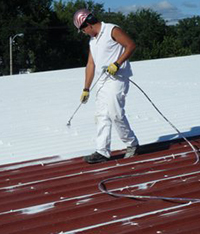
      The white roofs were found to reflect three times more sunlight than the green roofs, keeping the interiors of the buildings on which they were installed drastically lower. Thus, they were considered to the best ‘cool roofs’ in the study. Particularly, the white roofs were found to be up to 50° cooler during the summertime. Compared to the monitored black roofs, the white roofs saved $25 per square meter; in contrast to the white roofs, the green roofs had an additional cost of $71 per square meter.

      Therefore, from the standpoint of being economical and saving energy, white roofs beat out green roofs. It should be noted that the sample size of 22 commercial roofs for the study is hardly conclusive, though. Add to that the fact that the geographic location of a commercial roof can be a factor, and one quickly comes to the conclusion that the study is not foolproof. Other dimensions could have factored in the study results as well.

      Green roofs did hold some advantages over white roofs, namely being the better choice for storm water runoff and production of better air quality.

      The article can be found at: https://www.sustainablebusiness.com/index.cfm/go/news.display/id/25492

      Other Case Study of Green Roofs vs. White Roofs

      The Berkeley Labs’ study did reflect findings from a much smaller study, namely “The Battle of the Bulbs” competition conducted in Chicago in the spring of last year. In that competition, a green roof was pitted against a white roof for determination of which roof type produced lower electric bills. The white roof emerged as the winner, producing more than $40,000 in cost savings over the green roof.

      Closing Thoughts

      Roofing Services

      Our professional commercial roof contractors provide:

      • Roof maintenance & repair
      • Inspections & leak detection
      • Energy efficient roof systems
      • Complete roof replacement
      • Roof life-extending solutions
      Request Free Estimate
      While the study was not a “smoking gun” for white roofs, it did demonstrate some of the factors why a white roof can be highly beneficial for energy conservation and short-term and long-term cost savings. With Conklin roof coatings, a building owner can see up to 30% cost savings on his or her annual cooling costs. Plus, with Conklin roof systems’ ENERGY STAR® certification, building owners may be able to enjoy a slew of tax benefits and advantages.

      Should you be interested in learning how a Conklin roof system can benefit your building, backed by a non-prorated warranty that covers labor and material costs for up to 20 years, give us a call at 800-670-5583 for a free room estimate.


      The Benefits of Metal Roof Restoration

      metal roof coatingAccording to industry statistics, there is currently around 60 billion square feet of residential and commercial metal roofing in the United States. With roof contractors adding an additional 2 billion square feet of metal roofing per year, this roofing material has emerged as one of the most popular roofing options in America.

      But like all roofs, metal roofing can experience small issues that can lead to expensive repair needs if left unaddressed. Five common problems that often come up include: metal roof leaks arising from pronounced roof tears; sitting pools of water; rusting arising from prolonged exposure; blow-offs arising from poor roofing installation; and punctures appearing as a result of frequent foot traffic, poor maintenance efforts, or poor or improper installation.

      Below, we take a look at one solution that is cost-effective and long-lasting: a metal roof restoration.

      Metal Roof Restoration: A Cost-effective Alternative to Roof Replacement

      When a metal roof experiences issues, the natural choice may be to opt for a complete roof replacement. However, a roof replacement has several cost factors or other influential dimensions that bear consideration. These include:

      • Roof replacement is time-consuming. Consider what is involved with an entire roof replacement: tearing off of all old roofing materials and replacing them with new insulation and new metal paneling. Because this multi-step process takes time to complete, the timing of a building’s operations can be delayed for a long time.
      • Roof replacement exposes a building’s contents to outdoor conditions. Because roof replacement involves tearing off old materials and installing new ones in their place, a building’s contents are oftentimes exposed to the outdoor elements. If adequate sheltering is not put into place, the building’s contents may be compromised. That can be a huge business expense, especially if the ruined contents are technological or security equipment-based.
      • Roof replacement is more expensive than a roof restoration. With roof replacement, a building owner will incur many costs: tear-off costs, disposal costs, landfill costs, greater material costs by volume of materials used, and more. In fact, it has been estimated that with a Conklin metal roof restoration, a building owner can save up to 50% on avoided roof replacement costs.
      • Roof replacement is no guarantee that the same problems will not appear again. Because a new metal roof has the same characteristics as an old metal roof, there is always the likelihood that the roof will encounter the same problems again.

      Metal Roof Restoration: Alternative to Roof Replacement or Fixes

      Roofing Services

      Our professional commercial roof contractors provide:

      • Roof maintenance & repair
      • Inspections & leak detection
      • Energy efficient roof systems
      • Complete roof replacement
      • Roof life-extending solutions
      Request Free Estimate
      With a Conklin metal roof restoration, an existing metal roof has a protective roof coating applied right over it. This Conklin Metal Roof Restoration System adds decades to the existing roof’s life—it has been known to make an existing roof last for over an additional 20 years. The Conklin restoration system is also engineered to guard against rust, reflect up to 85% of the sun’s rays for tremendous energy savings, and form a seamless, watertight membrane across the existing metal roof’s surfacing layer. The end-result is a highly effective and reliable roofing system that is ENERGY STAR®-certified and provides premium protection against the harshest weather conditions. It is therefore highly energy-efficient roofing.

      Our Conklin Roofing Solutions

      With Conklin’s metal roof restoration solution, building owners can see up to 50% savings in cooling costs for the year. Should your metal roof need a cost-effective, lasting solution against rust or other problems, call us at 800-670-5583 for a free estimate.